


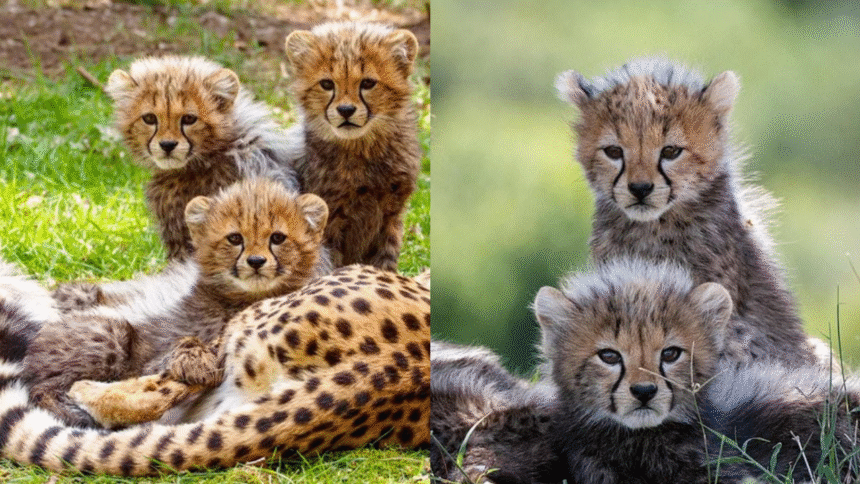
A historic moment has taken place at Kuno National Park in Madhya Pradesh. The first India-born female cheetah has given birth to five healthy cubs, marking a major achievement in the country’s ongoing cheetah reintroduction project. This milestone has brought new hope to India’s wildlife conservation efforts and highlighted the success of the ambitious project aimed at restoring the presence of cheetahs in Indian jungles after more than seven decades.
A Remarkable Step in India’s Conservation Story
According to forest officials, the mother cheetah, born in India under the reintroduction project, delivered the cubs earlier this week. The news was confirmed by the monitoring team stationed inside Kuno National Park, which has been closely tracking the health and progress of all cheetahs brought to India from Namibia and South Africa.
This is the first time that an Indian-born cheetah has successfully reproduced, proving that the animals have started adapting to local conditions. It also reflects that the ecosystem in and around Kuno National Park is now supporting the survival and growth of this species. Officials have said that both the mother and cubs are under careful observation and appear to be in good health.
The Journey of Project Cheetah
The cheetah reintroduction project, also known as Project Cheetah, was launched in September 2022 when the first batch of eight cheetahs arrived from Namibia. The aim was to reintroduce the species that had gone extinct in India in 1952 due to hunting and habitat loss. The project symbolizes one of India’s most ambitious wildlife restoration missions.
So far, over 20 cheetahs have been brought to Kuno National Park in Madhya Pradesh from Namibia and South Africa under this plan. The project has seen both challenges and milestones since its inauguration, but this latest birth marks a turning point. It shows that the species is not just surviving but beginning to thrive in India’s environment once again.
Birth Brings a Boost to Biodiversity Goals
The birth of five new cubs underlines the importance of sustained efforts in wildlife conservation. Experts believe that this event will encourage India’s biodiversity goals and inspire greater attention toward habitat restoration, prey management, and ecological balance.
Officials from the National Tiger Conservation Authority and the Ministry of Environment, Forest, and Climate Change expressed their satisfaction over this success. They said that the project’s positive outcomes are a direct result of India’s long-term planning, field management, and collaboration with international experts.
Conservationists also view this as an encouraging sign for rewilding programs across India. They believe that the Kuno model could be studied and replicated for reviving other species across different parts of the country.
International Attention on India’s Achievement
The news of the first India-born cheetah giving birth to five cubs has gained global attention. Wildlife researchers and environmental organizations worldwide have praised India for taking a leadership role in rewilding efforts.
Dr. Laurie Marker, a wildlife expert from Namibia who helped plan the cheetah relocation, said that this birth shows strong signs of adaptation. She emphasized that reproduction in the wild is the most important indicator of a successful wildlife translocation.
Similarly, local communities around Kuno National Park have expressed happiness over this development. Many residents, who have participated in awareness programs and forest-friendly livelihood initiatives, view this success as a reminder of how humans and wildlife can coexist when conservation is prioritized.
Ongoing Care and Monitoring
The Madhya Pradesh Forest Department has put special arrangements in place to ensure the safety of the newborn cubs. Constant camera surveillance, drone monitoring, and expert veterinary care are being used to keep a close watch on the mother cheetah and her cubs.
Forest rangers have been instructed to maintain minimal human interference near the cheetah’s habitat. Officials confirmed that the area where the cubs were born remains under strict protection, with regular patrols to prevent any disturbance. Once the cubs grow older, experts will decide when they can be released into a larger open area within the park to explore their surroundings freely.
Building a Future for Cheetahs in India
The cheetah project is not just about bringing back a species—it’s about restoring balance to India’s grassland ecosystem. Cheetahs play an important role in controlling herbivore populations, ensuring that grassland habitats remain healthy and sustainable. With successful births like this, Kuno National Park is becoming a living example of how science, government policy, and community involvement can come together to revive nature.
As the cubs grow, they will serve as a new generation of cheetahs born and raised on Indian soil. Their survival and health in the coming months will be crucial to evaluate the long-term success of Project Cheetah.
A Moment of National Pride
The birth of five cheetah cubs from an India-born mother has filled wildlife lovers across the country with pride. It stands as proof of India’s commitment to wildlife protection and habitat restoration. The Ministry of Environment has said that while challenges remain — including health monitoring, future breeding, and adequate prey availability — the positive developments so far show remarkable progress.