

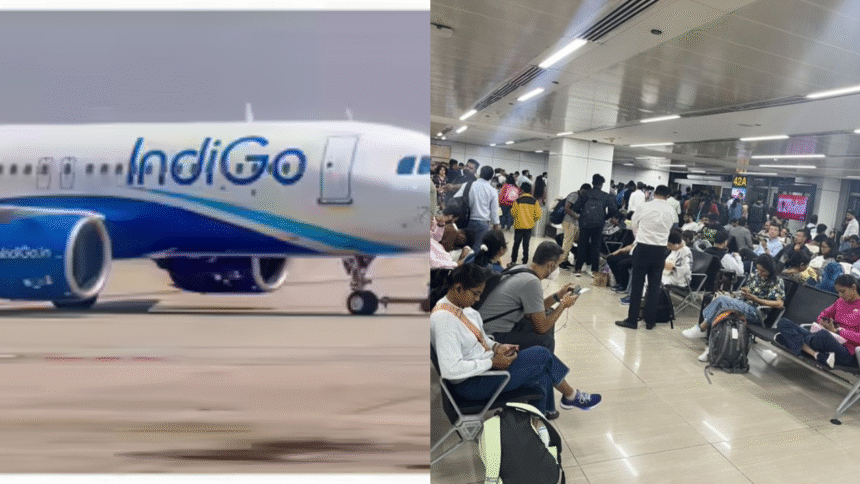
A major disruption recently hit airports across India, with Mumbai and several other major cities reporting large‑scale flight cancellations and delays. The problem started after a serious technical glitch affected the central check‑in and boarding system used by multiple airlines, forcing many flights to be cancelled and leaving thousands of passengers stranded for hours. This unexpected breakdown created long queues, heated arguments and confusion at airport terminals, especially in Mumbai, Delhi, Bengaluru and Dehradun, where operations were badly affected.
What happened at airports
According to airport and airline sources, a fault in the common passenger service system used at several airports led to a complete halt in issuing boarding passes and baggage tags. Because the system could not connect properly, staff had to stop check‑in for many flights and could not process passengers in time. As a result, around 200 flights across the country were reportedly cancelled, while many others were delayed for long periods or rescheduled to later slots.
The impact was felt most strongly at major hubs such as Mumbai, Delhi, Bengaluru and Dehradun, which handle a high volume of domestic and international services every day. Some airlines decided to ground flights temporarily until the system stabilised, while others tried to operate with manual processes wherever possible, but this was slow and limited.
Situation at Mumbai Airport
Mumbai Airport witnessed some of the most chaotic scenes, with passengers crowding check‑in counters and departure gates as information changed minute by minute. Many travellers said they had reached the airport well in advance, only to find that their flights were repeatedly delayed or suddenly cancelled after hours of waiting. Staff tried to manage the rush by making frequent announcements and redirecting passengers, but the heavy load and technical issues made it difficult to maintain order.
Tensions rose as frustrated passengers demanded clarity about refunds, rebooking options and alternative travel arrangements. In some cases, heated arguments reportedly broke out between passengers and airline staff over lack of timely updates and long queues at counters. Security personnel were deployed near certain gates and check‑in zones to prevent any serious law‑and‑order situation and to help manage crowd flow.
Technical failure and response
Initial reports indicate that the disruption began with a breakdown in the airline connectivity and reservation interface at the system provider level. This fault affected several key functions such as check‑in, seat allocation, printing of boarding passes and updating real‑time flight status. When the system became unstable, airlines had no option but to temporarily halt operations for safety and regulatory reasons, which led to cascading delays through the day.
Airport authorities and the system vendor launched an emergency technical review to identify and fix the error. Backup servers and alternative connectivity routes were activated in phases, allowing partial restoration of services after some time, but the backlog of flights and passengers took much longer to clear. Airlines coordinated with air traffic control to reassign slots and adjust schedules, trying to accommodate as many affected passengers as possible on later flights.
Impact on passengers
For travellers, the disruption meant missed meetings, cancelled holiday plans and extended waiting times inside crowded terminals. Elderly passengers, children and those with connecting flights were among the worst affected, as they struggled to find assistance and clear information on revised timings. Many passengers complained that they did not receive advance alerts on their phones and only learnt about cancellations after reaching the airport.
Some airlines arranged refreshments and basic facilities for those who had to wait several hours, while others focused on quickly processing refunds or rebookings through customer care counters. Travel agents and online booking platforms also reported a surge in calls and messages from worried customers seeking alternative routes or compensation options.
Current status and advice
By late evening, technical teams reported that the core fault had been brought under control and that systems were gradually returning to normal operations. However, airlines warned that residual delays could continue for some time as they worked through the backlog of cancelled and rescheduled flights. Passengers have been advised to check the latest status of their flights through official airline websites, apps or customer helplines before leaving for the airport.
This incident has once again highlighted the heavy dependence of modern air travel on centralised technology platforms and the need for strong backup plans. Aviation experts suggest that better redundancy, periodic stress testing and clear communication protocols can help reduce the impact of such failures in the future, especially at high‑traffic hubs like Mumbai. For now, operations are stabilising, but the day’s events have raised serious questions about system resilience and passenger communication across India’s aviation networ