

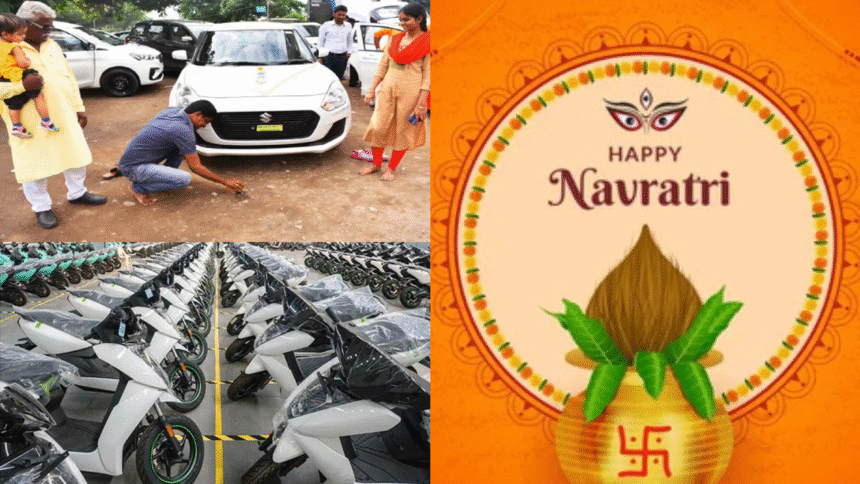
The festive season of Navratri and Dussehra 2025 has brought a remarkable boost to the automobile sector in Maharashtra, with over 1.15 lakh new vehicles registered across the state during the 10-day festival period from September 22 to October 2. This represents a healthy 7.37% rise compared to the last year’s festive window, reflecting strong consumer confidence and the positive impact of recent GST rate cuts which have made vehicles significantly more affordable.
According to official data released by the Maharashtra Transport Department, the total new registrations during this period amounted to 1,15,125 vehicles. Two-wheelers dominated the surge with 70,381 registrations (excluding mopeds), while passenger cars accounted for 29,909 new registrations (excluding taxis). The growth is attributed mainly to the enthusiasm surrounding the festivals, attractive festive offers from dealerships, and the government’s tax incentives under the GST 2.0 reform implemented last month.
Pune and Pimpri Chinchwad Lead Growth
Among all regions, Pune and Pimpri Chinchwad emerged as the leaders in vehicle registrations, reinforcing their position as major automotive markets in Maharashtra. Pune RTO recorded the highest registrations with 13,885 new vehicles, comprising 7,833 two-wheelers and 4,635 cars. Pimpri Chinchwad followed closely behind with 9,194 registrations, including 4,891 two-wheelers and 3,608 cars.
The Pune region’s overwhelming contribution to the festive sales boom highlights the city’s growing appetite for both conventional and electric vehicles. This festive season, electric vehicle (EV) sales gained momentum as well. Pune saw 814 EV registrations during the Navratri period, primarily electrified two-wheelers, which reflects the city’s inclination towards greener mobility solutions amid rising fuel prices and environmental concerns.
GST Rate Cut Spurs Demand
One of the key drivers behind this surge is the recent GST rate reduction on automobiles, which came into effect in September 2025. The new GST slabs have reduced rates on small cars and two-wheelers, resulting in notable price cuts for consumers. This reform under GST 2.0 has simplified tax rates to two main slabs of 5% and 18%, enhancing affordability and boosting demand just in time for the festive season.
Industry experts and dealers attribute the jump in bookings and registrations directly to the GST benefits. Several car manufacturers and dealerships reported increases in footfall and inquiries from customers eager to capitalize on the cost savings. Hyundai Motor India, for example, recorded nearly 11,000 dealer billings on the very first day of Navratri, marking its highest single-day sales performance in five years. Tata Motors also saw a robust response, delivering 10,000 vehicles on the opening day of the festival.
Consumer Sentiment and Festival Timing
The choice of Navratri and Dussehra periods for vehicle purchase is deeply rooted in Indian tradition, with devotees considering these days highly auspicious for new beginnings and significant purchases. The automotive market in Maharashtra leveraged this cultural sentiment to create a festival-related buying frenzy, with dealerships offering attractive discounts, exchange bonuses, and easy financing options.
Consumers interviewed during the festive period expressed satisfaction with their purchases timed around these celebrations. Many buyers shared that the GST price cuts made owning a vehicle easier on their budgets, and the festive timing added emotional and cultural value to their decisions. From college students buying their first two-wheelers to families upgrading to new cars, the sentiment was unanimous that this year’s festival season was an opportune moment for vehicle ownership.
Electric Vehicles on the Rise
The rise of electric vehicles was a notable highlight of this year’s festive sales surge. Pune RTO data revealed a total of 814 electric vehicles registered during Navratri, predominantly electric two-wheelers, showing that green mobility is gaining ground in urban Maharashtra.
“Festive deals combined with government incentives have made electric vehicles an attractive option for many first-time buyers and budget-conscious consumers,” said Deputy RTO Swapnil Bhosale. “As charging infrastructure expands and fuel prices rise, the shift towards EVs is expected to accelerate further in the coming months.”
Outlook and Market Impact
The strong vehicle sales performance during Navratri and Dussehra is expected to set a positive tone for the remainder of the festival season, including Diwali, which traditionally witnesses high consumer spending. Market analysts predict that the combination of festival cheer, attractive pricing due to GST reforms, and growing awareness and adoption of electric vehicles may continue to drive sales momentum well into the year-end.
The Maharashtra automobile industry’s growth during this period not only benefits manufacturers and dealers but also supports related sectors including financing, insurance, and vehicle servicing — all critical components of the economic ecosystem.