


Google may have just given the world an early glimpse at its next big move in the smart home space. During last week’s Made by Google ’25 showcase an event focused primarily on the newly unveiled Pixel smartphones, wearables, and accessories eagle-eyed viewers spotted something unexpected: a never-before-seen Nest smart speaker powered by Gemini, Google’s advanced AI platform.
The teaser was fleeting and subtle no official announcement was made from the stage. But for a brief moment during a segment featuring Formula 1 driver Lando Norris and NBA star Giannis Antetokounmpo, the camera caught Norris speaking directly to what appeared to be a compact, cylindrical smart speaker. Its design did not match any current Nest product, sparking speculation that Google was inadvertently previewing its next-generation Nest device.
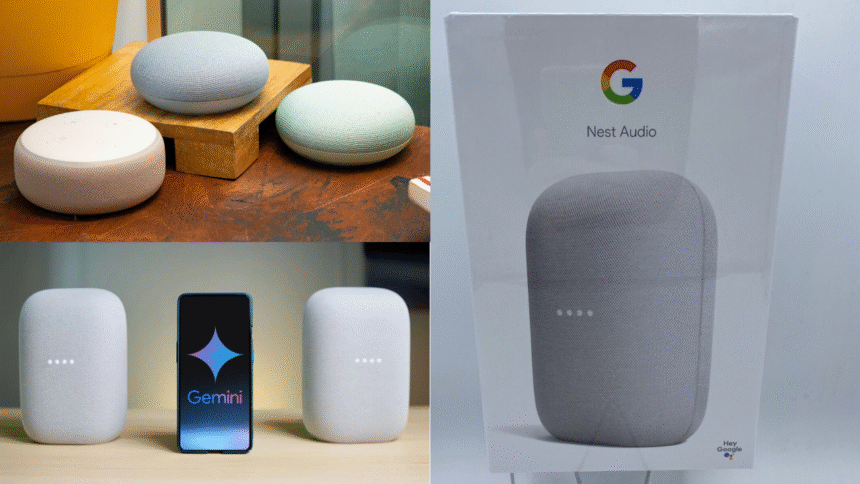
A New Era for Google Smart Speakers Google currently sells two smart speakers:
Both devices have been popular but are long overdue for a refresh. Since those launches, the smart home market has evolved significantly, with competitors like Apple’s HomePod Mini and Amazon’s Echo range rapidly iterating.
Now, as Google transitions its entire product ecosystem to Gemini — replacing Google Assistant with its more conversational, AI-driven successor — the timing for a hardware refresh couldn’t be better. The teased device could be the very first speaker engineered specifically for Gemini rather than retrofitted for Assistant.
What We Saw in the Clip
The unannounced product appeared to be a mid-sized speaker, offering a form factor between the compact Nest Mini and the larger Nest Audio. Design-wise, the device resembles the Apple HomePod Mini, with a soft cylindrical shape. A ring of LEDs at the base illuminated while it was in use, signaling voice activity.
Unlike Google’s Nest Hub smart displays, this new speaker does not feature a display or camera, suggesting it’s designed as an audio-first device. This could streamline its role: acting as a home’s central AI assistant while still offering high-quality sound for music, podcasts, and media playback.
Reported Features and Specs
According to reports from Android Headlines, Google’s upcoming smart speaker may include a host of modernized features, making it a significant improvement over its predecessors. These include:
- Gemini-first integration: Built natively for Gemini Live and Learn with Gemini, offering more natural conversations than with Google Assistant.
- Fabric finish in four colors: Bright red (official name still unconfirmed), Jade (light green), Obsidian (black), and Porcelain (white).
- Immersive sound: 360-degree balanced audio to rival Apple’s and Amazon’s offerings.
- Matter support: Wide compatibility with smart home ecosystems, ensuring easier connections across different brands.
- Automations via Gemini: Ability to set up routines, control devices, and create personalized household automations.
- Sound Sensing: Advanced detection for unusual household noises, such as broken glass or smoke alarms, sending real-time alerts to your smartphone.
- Pairing with Google TV Streamer: Option to combine multiple speakers with Google TV for a surround-sound home theater experience.
This combination gives the product strong competitive potential, bridging music quality with advanced smart home intelligence.
Why Gemini Changes the Game
Google Assistant, while popular, had begun to feel dated compared to the conversational fluidity of today’s AI models. Gemini represents Google’s effort to reimagine how people interact with their devices and services.
On this smart speaker, users can expect:
- Detailed natural dialogue rather than short commands.
- Context-aware responses across multiple turns.
- Dynamic learning that adapts to personal preferences.
- Smarter home management, integrated with evolving AI automations.
By embedding Gemini at the core of its hardware, Google is effectively making this device its flagship AI companion. That alone could set it apart in the competitive smart speaker space.
The Missing Details
While speculation is growing, key information remains undisclosed:
- Official name: Google has yet to confirm whether it will fall under the “Nest” branding or debut under an entirely new product line.
- Price point: Early comparisons suggest a mid-tier product positioned between the current Nest Mini and Nest Audio.
- Launch date: Analysts are divided between a late-October release to capitalize on holiday shopping or an announcement deferred until Spring 2026, potentially aligned with the anticipated Pixel 10a launch.
What This Means for Smart Homes
If the leaks and reports prove true, this new speaker represents Google’s first true Gemini-native smart home device. Beyond refreshing outdated Nest hardware, it signals broader ambitions: positioning Gemini as the heart of the home, much like how Google Search defines the web.
The AI-powered speaker would not just play music or answer questions — it would actively learn, automate, and protect households. Features like Sound Sensing combined with Matter support further emphasize Google’s goal of creating a universal smart home ecosystem powered by its AI.
For users already within the Google ecosystem, the teased device could become the central hub of connected living, offering a more seamless and intuitive experience than ever before.
Google’s upcoming Gemini-powered Nest smart speaker:
AI Evolution Focus: Emphasize how Gemini represents the next evolution of Google’s AI, moving beyond traditional assistants toward more immersive, adaptive, and conversational AI experiences in the home.
Competitive Landscape: Compare Google’s new device subtly to competitors like Apple’s HomePod Mini and Amazon Echo, highlighting how Gemini-powered features could give Google an edge in natural conversation and smart home integration.
Privacy and Security: Mention the potential privacy benefits of having a non-camera, mic-focused design with advanced AI running locally or with enhanced encryption, appealing to privacy-conscious consumers.
Sustainability: If there are any indications regarding materials or manufacturing, include notes on sustainability—Google has often emphasized eco-friendly practices in hardware.
Developer Ecosystem: Mention the possibility of new or expanded developer tools and APIs around Gemini, opening more custom smart home automation and skills tailored for this new speaker.
Multi-Device Integration: Highlight how the new speaker’s ability to pair with Google TV and other devices suggests Google’s push toward a tightly integrated, multi-room audio and home entertainment experience.
Future-Proofing with Matter: Stress the importance of Matter protocol support for future-proofing smart home compatibility across brands, making adoption easier for consumers.
Learning Capabilities: Underline how Gemini’s “Live and Learn” dynamic AI model allows the speaker to adapt over time to voice preferences, household routines, and context, creating a highly personalized smart home assistant.
Potential for Voice Biometrics: Speculate on the potential use of voice biometrics for personalized, secure responses based on who is speaking to the device.
Sound Quality Innovation: If known or speculated, mention any new audio technology or speaker tuning measures to raise expectations for superb sound fidelity.