
Wednesday, June 3, 2026
Home Blog Page 288

Air India called the iconic Maharaja mast ‘Tata’, these changes after rebranding

Air India

 Air India, which was going through a crisis, not only got its old owner Tata Group, but now this airline has been rebranded and given a new look. Tata-owned Air India, one of the country’s largest airlines, changed its logo and livery yesterday. Let us tell you about the new airline today.

At one time, Air India, which was in trouble, was not only handled by its old owner Tata Group, but now the airline has been rebranded and presented in a new look and style. Tata-owned Air India, one of the country’s largest airlines, changed its logo and livery yesterday. Today we are going to tell you about the new dress of Air India.

What changed from rebranding If only the logo is changed in rebranding, then it is not as much fun as it is when the logo is changed along with the dress. The name of the Air India aircraft will now be written in a new font on the fuselage and belly.

The livery of the aircraft features an expanded color palette of the classic Air India red and orange, with the use of deep red, brinjal and gold on the tail and belly of the aircraft. The airline has removed the Air India written in Hindi from the side and replaced it with belly paint. The tail of any flight attracts the most attention. In this new livery, the tail includes Vistara’s golden window sills, a mix of the iconic red and purple, a nod to the airline’s history and future. The rest of the aircraft uses the same color combination, with red wing tips and gold accents on the belly.

Air India CEO and MD Campbell Wilson says that the first aircraft to wear the new livery will be the airline’s A350, which will arrive in December 2023. The current Air India fleet consists of 120 aircraft divided between the Airbus A320 family and Boeing’s wide-body 777 and 787. Air India’s recent orders from Airbus and Boeing include 210 Airbus A320neo family aircraft and 40 A350s plus 190 737 MAX, 20 787s and 10 777Xs from Boeing.

Maharaja the ‘Tata’ Air India’s historic Maharaja mascot has not been given a place in the new logo. Many will remember the Maharaja and its history but it is clear that Air India is now putting its past to rest to build its future.

However, the airline has not completely phased out the Maharajah mascot. The airline said the Maharaja’s presence will extend to the airline’s premium classes and airport lounges. The airline’s decision to retain Maharaja has been inspired by the nostalgic appeal of the airline’s old passengers.

Shares of these companies including LIC rose, Sensex and Nifty are doing business with a boom 

Shares

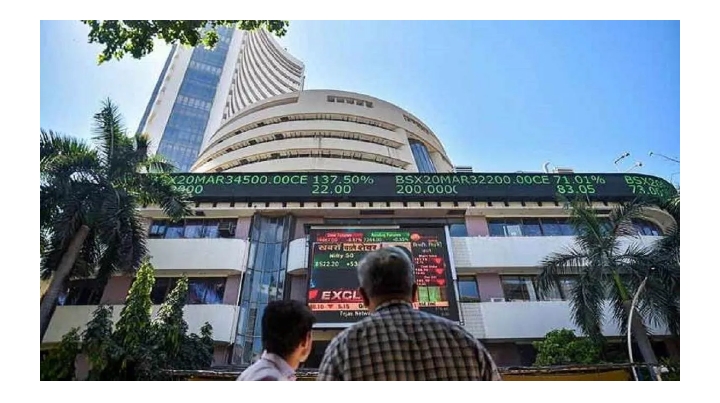
LIC Q1 Results Many companies are announcing their quarterly results. Life Insurance Corporation of India (LIC) has announced the quarterly result on the last day. The net profit of the company has increased manifold this quarter. After the results, the company’s shares are trading with a boom. Today, both the indices of the stock market opened seven down.

Life Insurance Corporation of India (LIC) has announced its quarterly results yesterday. Today, as soon as the market opens, the shares of the company are trading fast. While the company’s shares closed down yesterday at the time of closing the market. The company has earned manifold net profit in this quarter. The net profit of the company has gone up to Rs 9,544 crore.

Shares of the company are up nearly 6 per cent in the market today. The company’s stock has seen a boom on both the indices of the stock market. The company’s stock is trading at Rs 676.95 per share, up 5.42 per cent, on the BSE. At the same time, the shares of the company are trading at a speed of 5.81 per cent on the NSE. The company’s shares are trading at Rs 679 per share on NSE.

LIC’s quarterly results LIC Company has announced the April-June quarter results of the current financial year 2023-24 yesterday. This quarter the company’s net profit has gone up to Rs 9,544 crore. At the same time, the net profit of the company was Rs 683 crore in the same period last year.

Net income rose to Rs 1,88,749 crore in the June quarter from Rs 1,68,881 crore in the year-ago period, it said in a regulatory filing on Thursday. The company’s net income from investments increased to Rs 90,309 crore during the quarter as compared to Rs 69,571 crore in the April-June period of 2022-23. The company’s non-performing assets stood at 2.48 percent. It was 5.84 percent in the same period a year ago.

Increase in the stock of this company Shares of Supreme Industries, REC and Ashok Leyland have jumped today. The company has announced on the previous day that it will be added to MSCI India Index along with five other companies. Shares of Supreme Industries climbed 16.25 per cent to hit a 52-week high of Rs 4,480 on the BSE. REC stock jumped 6.48 per cent to hit a 52-week high of Rs 230.70. Ashok Leyland gained 2.55 per cent to reach its one-year high of Rs 191. Shares of HDFC Asset Management Company advanced 2.29 per cent, Cummins India (2.23 per cent), Power Finance Corporation (2 per cent), IDFC First Bank (1.65 per cent) and Astral Ltd (1.14 per cent).

Financiers for Start-ups: Understanding the Role of NBFCs and P2P Lenders

Financiers for Start-ups

In the world of entrepreneurship, access to timely and adequate funding is crucial for start-ups to scale and succeed. While traditional banks have been the go-to source for financing, the landscape of business financing has witnessed significant changes in recent years. Non-Banking Financial Companies (NBFCs) and Peer-to-Peer (P2P) lenders have emerged as powerful alternatives, providing flexible and accessible funding solutions to start-ups. In this article, we will explore the role of NBFCs and P2P lenders in supporting start-ups, their significance in the financial ecosystem, and how they are transforming the financing landscape for aspiring entrepreneurs.

Understanding NBFCs

NBFCs are financial institutions that offer a wide range of banking services, similar to traditional banks, but without the legal status of a bank. They play a vital role in providing credit to individuals and businesses, including start-ups, and are regulated by the Reserve Bank of India (RBI). NBFCs have gained popularity as a flexible and efficient source of funding for start-ups that might face challenges in obtaining loans from traditional banks due to stringent eligibility criteria.

Empowering Start-ups with Tailored Solutions

One of the significant advantages of NBFCs is their ability to offer customized financing solutions tailored to the specific needs of start-ups. Unlike traditional banks, NBFCs assess the creditworthiness of start-ups based on multiple factors, including future growth prospects and potential revenue streams. This approach allows them to support innovative and high-potential ventures that may not have an extensive financial track record but demonstrate promising business models.

Faster Loan Processing and Disbursal

NBFCs are known for their swift loan processing and disbursal procedures. For start-ups, time is of the essence, and delays in securing funding can hinder their growth prospects. NBFCs leverage technology and data-driven processes to expedite loan approvals and disbursals, ensuring that start-ups can access funds when they need them the most.

Understanding P2P Lenders

P2P lending platforms are online marketplaces that connect individual lenders with borrowers, including start-ups, eliminating the need for traditional financial intermediaries. P2P lending has gained traction in recent years as a transparent and efficient way of borrowing funds for start-ups. These platforms use advanced algorithms to match borrowers with lenders based on their risk profile and loan requirements.

Accessibility and Inclusivity

P2P lending has democratized access to finance, particularly for start-ups and MSMEs. It allows entrepreneurs to reach a vast pool of potential lenders and present their business ideas directly to investors. This direct approach fosters transparency and inclusivity, giving start-ups from diverse backgrounds and geographies an equal opportunity to secure funding for their ventures.

Lower Interest Rates and Fees

P2P lending platforms often offer competitive interest rates and lower fees compared to traditional financial institutions. This cost advantage is beneficial for start-ups, as it reduces the overall financial burden and enhances their ability to invest in business expansion and innovation.

Combining Technology with Finance

Both NBFCs and P2P lenders leverage technology to streamline their operations and enhance the customer experience. Digital onboarding, automated credit assessment, and real-time tracking of loan applications are some of the ways in which technology is transforming the financing landscape for start-ups. These advancements have made the borrowing process more efficient and user-friendly.

Data-Driven Decision Making

Data analytics plays a pivotal role in the lending decisions of NBFCs and P2P platforms. They use data points such as credit scores, transaction history, and social behavior to evaluate the creditworthiness of start-ups. This data-driven approach allows for more objective and informed lending decisions, reducing the reliance on conventional collateral-based assessments.

The rise of NBFCs and P2P lenders has revolutionized the financing options available to start-ups in India. These alternative financial institutions offer flexible, efficient, and accessible funding solutions that cater to the unique needs of entrepreneurs. By leveraging technology, data analytics, and innovative approaches to credit assessment, NBFCs and P2P lending platforms are empowering start-ups with the financial resources they need to fuel their growth and achieve their entrepreneurial dreams.

In conclusion, NBFCs and P2P lenders have emerged as game-changers in the Indian start-up ecosystem, redefining the way businesses access funding. Their role in providing tailored financing solutions, leveraging technology, and promoting inclusivity makes them indispensable partners for aspiring entrepreneurs on their journey to success.

Latest= https://happenrecently.com/zepto/

Impact Investment in India: Supporting Socially Conscious Start-ups

Impact Investment

In recent years, there has been a growing recognition of the need for businesses to do more than just generate profits. Impact investment, a form of socially responsible investing, has emerged as a powerful tool to support start-ups that are dedicated to making a positive impact on society and the environment. In this article, we will explore the concept of impact investment, its significance in the Indian context, and how it is fostering a new generation of socially conscious start-ups.

Understanding Impact Investment

Impact investment refers to investments made into companies, organizations, and funds with the intention of generating social and environmental impact alongside financial returns. Unlike traditional investments that focus solely on financial gains, impact investors prioritize initiatives that address pressing societal and environmental challenges. These challenges may range from poverty alleviation and healthcare access to sustainable agriculture and clean energy.

The Significance in the Indian Context

India, with its diverse and complex social issues, presents a compelling landscape for impact investment. The country is home to a large population facing challenges in education, healthcare, and livelihood opportunities. Impact investment plays a vital role in channeling capital towards businesses that create positive change while promoting economic growth and sustainability. As per a report by the Global Impact Investing Network (GIIN), the impact investment market in India is expected to reach USD 10 billion by 2025.

Empowering Socially Conscious Start-ups

Impact investment has become a catalyst for the growth of socially conscious start-ups in India. These start-ups are mission-driven and prioritize social and environmental goals at the core of their business model. They harness innovative approaches to address pressing issues, combining financial viability with social impact. For instance, start-ups focused on clean energy provide affordable and sustainable alternatives to traditional energy sources, reducing carbon emissions and promoting environmental conservation.

Addressing Key Social Challenges

One of the key advantages of impact investment is its ability to address social challenges that might be overlooked by traditional funding sources. Start-ups working in areas such as education, healthcare, sanitation, and financial inclusion are gaining support from impact investors who recognize the potential for scalable and sustainable solutions. These investments not only uplift marginalized communities but also contribute to the country’s progress and development.

Creating a Thriving Ecosystem

The influx of impact investment is creating a thriving ecosystem for socially conscious start-ups in India. Apart from financial support, impact investors often provide mentoring, networking opportunities, and strategic guidance to help start-ups navigate challenges and scale their operations. This nurturing environment helps start-ups attract top talent, collaborate with like-minded organizations, and gain visibility among potential customers and partners.

Measuring Impact and Returns

One of the challenges faced by impact investors and start-ups alike is measuring the social impact of their initiatives. Unlike financial returns, which can be quantified more easily, social impact requires robust metrics and evaluation frameworks. To address this, impact investors collaborate with experts and industry bodies to develop standardized impact measurement methodologies, ensuring transparency and accountability in the impact investment ecosystem.

Government Support and Policy Framework

The Indian government has recognized the significance of impact investment in driving socio-economic development and has taken steps to support the sector. Initiatives such as the Social Alpha Fund and Atal Innovation Mission aim to nurture social start-ups and foster innovation in critical sectors. Additionally, tax incentives and regulatory reforms have been introduced to encourage more investors to participate in impact investment.

Impact investment has emerged as a powerful force in supporting socially conscious start-ups in India. By aligning financial goals with social and environmental impact, impact investors are fostering a new generation of businesses that prioritize social good alongside profitability. These start-ups are addressing key challenges and driving positive change in sectors ranging from education to healthcare and clean energy. As the impact investment ecosystem continues to grow, it is poised to play a pivotal role in shaping a more inclusive and sustainable future for India.

In conclusion, impact investment holds immense potential to drive positive change in India, empowering socially conscious start-ups and addressing critical societal challenges. By channeling capital towards businesses that prioritize social impact, impact investors are creating a powerful synergy between financial returns and social progress.

Latest= https://happenrecently.com/zepto/

Indian Web Browser: IT Ministry challenges developers to make Indian web browser

Indian Web Browser:

The Ministry of Electronics and IT recently launched an Indian Web Browser Development Challenge. The Indian Web Browser Development Challenge was an open challenge competition. The objective of this competition was to prepare an indigenous web browser for the country. According to the press release, technology experts, innovators and developers from across the country were invited under the Indian Web Browser Development Challenge.

The Ministry of Electronics and IT recently launched an Indian Web Browser Development Challenge. According to the press release, the Ministry of Electronics and IT organized the Indian Web Browser Development Challenge on Wednesday. What is Indian Web Browser Development Challenge Actually, Indian Web Browser Development Challenge was an open challenge competition. The objective of this competition was to prepare an indigenous web browser for the country. According to the press release, under the Indian Web Browser Development Challenge, technology experts, innovators and developers from across the country were invited.

It is to be known that at present Google’s web browser Chrome is mostly used to use the Internet. Google is an American company. In such a situation, India is working on a plan to bring its own web browser. Technology experts from all over the country participated in this competition organized by the Ministry of Electronics and IT (Indian Web Browser Development Challenge), more than 200 participants from different corners of the country were present. People associated with government departments, startups, industry participated in this competition. The Indian Web Browser Development Challenge was conducted with both online and offline mode.

Panel discussion facility for the participants According to the press release, panel discussion facility was also kept in the Indian Web Browser Development Challenge to answer the questions of the participants. The queries of the participants were answered by MeitY, CCA and C-DAC officials in this panel.

New announcement regarding payment limit in UPI Lite, not 200, now you will be able to pay offline up to Rs 500 

UPI Lite

User is getting an offline payment option through UPI. Near Field Communication technology will be used through UPI-Lite on device wallets. With this technology, the user will get the facility of offline payment on UPI. That is, in any situation, the payment can be made even if the data is not on the user’s phone.

The Reserve Bank of India has made new announcements regarding UPI Lite. The Central Bank RBI has informed about the introduction of offline payment through UPI. RBI has increased the limit of payment through UPI Lite to Rs 500. It may be noted that till now the option of payment up to Rs.200 was available through UPI Lite without UPI PIN with a maximum limit of Rs. Apart from this, the facility of conversational payment will also be provided on UPI.

According to RBI Governor Shaktikanta Das, new announcements have been made regarding UPI to promote the access and use of digital payments in the country.

 Big announcements of the central bank regarding UPI

Through conversational payment on UPI, the user can interact with the payment before making a payment. Users will also be able to interact with the AI ​​powered system to make payments with the conversational payment feature. User is getting offline payment option through UPI. Through UPI-Lite On Device Wallet, the user can use Near Field Communication technology. With this technology, the user will get the facility of offline payment on UPI. That is, in any situation, the payment can be made even if the data is not on in the user’s phone. The limit of payment in offline mode has been increased from Rs 200 to Rs 500. It is known that in UPI Lite, the user gets the facility to keep an amount of up to Rs 2000.

What will be the benefit of UPI offline payment According to Suren Goyal, partner of RPS Group, UPI is a useful feature for offline payment users. With the help of this feature, the user will not need to depend on the internet for UPI transactions. With the help of UPI offline payment feature, users will be able to make payments easily from any location.

India’s economy is growing rapidly, Finance Minister Nirmala Sitharaman said in the Lok Sabha

India’s economy is growing rapidly

The debate on the no-confidence motion will continue in Parliament today. Even today, the process of debate is going on in the Parliament regarding this no-confidence motion. Union Finance Minister Nirmala Sitharaman said in the Lok Sabha today that India’s economy is growing rapidly. The best example of this is Morgan Stanley’s upgraded rating. This time Morgan Stanley has upgraded India’s rating.

A vote of no confidence has been issued in Parliament today. Even today, the process of debate is going on in the Parliament regarding this no-confidence motion. Union Finance Minister Nirmala Sitharaman on Thursday said that India is the fastest growing economy in the world. Today RBI Governor Shaktikanta Das said in the press conference that India is the 5th most powerful economy in the world. Nirmala Sitharaman gave an example on the growing economy in India. He said that brokerage firm Morgan Stanley has also upgraded India’s rating. This clearly shows that the Indian economy is doing well.

Apart from this, he said that in 2013, Morgan Stanley included India in the list of five weak economies of the world. At the same time, Morgan Stanley has upgraded India’s rating a few days back. In just 9 years India’s economy has gone uphill. Despite the Kovid epidemic, the country has developed economically. Today India is the fastest growing economy in the world.

Taking a jibe at UPA, Nirmala Sitharaman took a jibe at the UPA government, saying that citizens should have got benefits when UPA was in power, but this did not happen. At the same time, people are already getting benefits in the NDA government. No one is deprived of benefits. Along with the development of the country, people are also developing. Further, he said that the UPA has wasted an entire decade. When UPA was in power, there used to be a lot of corruption. On the other hand, the NDA has clamped down on a lot of corruption. There is no change in the country just by speaking. It is very important for it to be delivered in real life. UPA used to show people only dreams, while NDA made people’s dreams come true.

The Prime Minister will answer Prime Minister Narendra Modi today i.e. on Thursday will answer the debate on the no-confidence motion brought by the opposition against the government. He can address the house at 4 pm. Fierce debate is going on in the Lok Sabha for the last two days regarding the no-confidence motion. After this debate, PM Modi’s answer will come today. Let us tell you that this proposal was brought by the Indian National Developmental Inclusive Alliance (INDIA) on Manipur violence.

The increasing supremacy of rupee showed India the way to become a superpower

Increasing supremacy of rupee

Indian currency became so strong that every country is known by its flag and currency. Since independence till today, the flag of India flutters gracefully on the world stage and the Indian currency, the rupee, has slowly established itself in the world. Today we will tell you about the increasing influence of the rupee, how after 76 years of independence, the rupee is slowly leaving its mark on the world.

On August 15, India will celebrate its 77th year of independence. Any country is identified by its flag and its currency. Since independence till now, the flag of India has been waving with great pride on the world stage and the currency of India “Rupee” is also slowly gaining its foothold in the world.

Today we are going to tell you about the increasing supremacy of rupee, how in 76 years of independence, rupee is slowly leaving its mark in the world. It is said that if you want to understand the present, you have to go into the past. So let’s go back to the past of Rs.

What is the history of rupees According to the historian, “Rupee” was used for the first time by Sher Shah Suri. Then gold and copper coins were used in this era. The tomb of Sher Shah Suri is currently in Sasaram city of Bihar. The history of the rupee dates back to the 6th century BC. The first Indian coins were minted by the Mahajanapadas (state-republics of ancient India), also known as Puranas, Karshapanas or Panas. These Mahajanapadas included Gandhara, Kuntala, Kura, Panchala, Sakya, Surasena and Saurashtra.

The first Mauryan emperor, Chandragupta Maurya, issued coins stamped with silver, gold, copper or lead. In the 12th century, the Turkish Sultan of Delhi replaced the coins bearing the royal designs of Indian kings with his own Islamic calligraphy. In 1526 AD, the Mughal Empire unified an empire-wide currency system. It was during this period that the rupee developed when Sher Shah defeated Humayun and issued a 178 gram silver coin called the rupee. These coins were also used during the Mughal, Maratha and British Indian eras.

If we talk about money during the British period, then before the British came, there were only coins in the country. For the first time during the British period, the Bank of Hindustan General Bank and the Bank of Bengal issued paper currency in India in the 18th century, which was the first paper currency in British India. After the Revolution of 1857, the British made the rupee the official currency of India and put the portrait of King George VI on bank notes and coins. The Reserve Bank of India issued the first five-rupee note with the portrait of George VI in 1938. This was followed by Rs 10 notes in February, Rs 100 notes in March and Rs 1000 and Rs 10,000 notes in June 1938.

What is the current status of the rupee, as we told you at the beginning of this article that the rupee is gradually gaining ground in the world, let us now tell you how it is happening. In fact, after independence, the country became independent, but India was still a slave in the eyes of the world, for which it was very important that along with the flag, the Indian currency should also be made of rupees. Efforts to make rupee an international currency in the country have been going on for years, not from today.

International currency means how many countries do business with your currency or your currency is accepted. In this step, in the year 2013, RBI took a big step and allowed foreign investors to hold “masala bonds”. These were rupee denominated bonds which made it easy for foreign investors to buy and sell such assets.

Now so many countries do trade in rupees, due to the various economic policies of the government and RBI, the Indian currency rupee will give India the recognition of a superpower in the world. You can only guess from the fact that at present 18 countries of the world have agreed to trade in ‘Rupee’.

Not only this, in December 2022, India and Russia have completed their first trade in rupees. Let us tell you that Malaysia, Mauritius, Myanmar, United Kingdom, Russia, New Zealand, Sri Lanka, Oman, Seychelles, Singapore, Tanzania, Uganda, Botswana, Fiji, Germany, Guyana, Israel and Kenya are the countries that have allowed trade in Rupee. Is.

Rapid development of infrastructure and facilities being provided to MSMEs are changing the picture of Uttar Pradesh. 

MSMEs are changing the picture of Uttar Pradesh. 

Uttar Pradesh is ready to play the role of growth engine of New India. The World Bank recently lauded the efforts of the Yogi Adityanath-led Uttar Pradesh government for its development efforts in the last six years. Uttar Pradesh is the state with the largest number of MSMEs in India. According to research there are around 9.5 million MSMEs. Read the full news.

Uttar Pradesh is capable and ready to play the role of growth engine of New India. Recently, the World Bank has praised the Yogi Adityanath-led Uttar Pradesh government for its development efforts in the last six years. Let us tell you that a 20-member World Bank team led by Executive Director Parameshwara Iyer is traveling to many parts of the country and working with the government in various areas including infrastructure development, industrialization, waste disposal, poverty alleviation, planned urbanization and environmental protection. Evaluating efforts.

UP is moving forward under the leadership of PM – Durga Shankar Prasad According to Durga Shankar Prasad, Principal Secretary, Government of Uttar Pradesh, Uttar Pradesh is moving forward under the vision of Prime Minister Narendra Modi and the leadership of Chief Minister Yogi Adityanath. Investors have shown interest in MSMEs of Uttar Pradesh. The government aims to strongly take the state’s economy to 1 trillion and Deloitte is assisting us in this as a consultant. Encouragement to MSME sector Today, the economy of Uttar Pradesh is progressing rapidly, so MSME has a major contribution in it. The Global Investors Summit was held in February 2023, where investments worth 35 lakh crore were committed, of which more than 1.6 lakh crore were for the MSME sector.

Maximum MSME in UP Uttar Pradesh is the state with maximum MSME in India. According to a survey, there are about 95 lakh MSMEs here. In this, more than 16 lakh entrepreneurs are registered on the portal, through which more than 1 crore 10 lakh people have got employment. To encourage the MSME sector, the state government is providing accident insurance cover of up to five lakh rupees to small (micro category) entrepreneurs. Apart from this, it is also providing an easy loan facility.

One district, one product, UP government’s one district, one product scheme is discussed in the whole country. It was launched by Chief Minister Yogi Adityanath in January 2018 to promote the handicrafts of the state and help the handicraft workers financially. Apart from this, the objective of this scheme is to encourage indigenous and specialized products and crafts at the local level so that small traders or MSMIs can take their products to the world level and provide employment to more and more people.

Rapid infrastructure development happening in UP Rapid infrastructure development Rapid infrastructure development is happening in Uttar Pradesh. With time, the transport facility in Uttar Pradesh is getting better. To facilitate the movement of people and trade, many expressways have been built and many more are under construction. Apart from this, work is also going on fast on the new airport and rail. A few months back Union Road Transport and Highways Minister Nitin Gadkari had said, before the end of 2024, Uttar Pradesh will have road infrastructure like the United States and the development of roads will change the face of the state.

The Rise of Fintech Start-ups: Transforming India’s Financial Services Landscape

Fintech Start-ups

The financial services industry in India has undergone a remarkable transformation with the emergence of fintech start-ups. Fintech, short for financial technology, refers to the use of technology to deliver innovative financial products and services. Fintech start-ups have disrupted traditional banking and financial institutions, offering convenience, efficiency, and accessibility to millions of customers. In this article, we will explore the rise of fintech start-ups, their impact on the financial services landscape, and the opportunities they present for India’s economy.

The Growth of Fintech Start-ups

Over the past decade, India has witnessed a surge in fintech start-ups, driven by factors such as increasing smartphone penetration, a young and tech-savvy population, and supportive government policies. According to a report by NASSCOM, India is home to more than 2,000 fintech start-ups, making it one of the fastest-growing fintech ecosystems in the world. These start-ups cover a wide range of services, including digital payments, peer-to-peer lending, robo-advisory, insurance technology, and blockchain-based solutions.

The Impact on Financial Inclusion

One of the most significant contributions of fintech start-ups is their role in advancing financial inclusion in India. With a large unbanked and underbanked population, traditional banking services often failed to reach remote and rural areas. Fintech solutions, on the other hand, leverage digital technology to provide financial services to the unbanked and underserved sections of society. Mobile wallets, for instance, have enabled millions of people to access digital payment services, making transactions faster, safer, and more convenient.

Enhanced Customer Experience

Fintech start-ups have placed customer experience at the core of their offerings. Through user-friendly interfaces and seamless integration of services, fintech platforms have made banking and financial operations more accessible and hassle-free. Customers can now open bank accounts, apply for loans, invest in mutual funds, and purchase insurance policies, all at their fingertips. This emphasis on customer-centricity has not only improved the overall user experience but also fostered customer loyalty and trust.

The Power of Data and Analytics

Data-driven insights have become a game-changer for the fintech industry. Fintech start-ups harness vast amounts of data, including customer behavior, spending patterns, and credit histories, to assess risk and make informed decisions. This has revolutionized the lending process, enabling faster loan approvals and disbursals based on algorithms and machine learning. Moreover, data analytics has also facilitated targeted marketing and personalized financial solutions, enhancing the value proposition for customers.

Challenges and Regulation

While the growth of fintech start-ups is promising, they also face challenges unique to the financial industry. Cybersecurity and data privacy concerns remain critical issues, as fintech platforms deal with sensitive financial information. Regulatory compliance is another area of focus for fintech start-ups, as they navigate a complex regulatory landscape. Striking the right balance between innovation and regulation is crucial to ensure sustainable growth and build consumer trust.

Driving Financial Inclusion and Economic Growth

Fintech start-ups have the potential to play a pivotal role in India’s economic growth. By increasing financial inclusion, these start-ups empower individuals and small businesses, driving entrepreneurship and economic participation. Access to affordable credit and investment opportunities also fuels consumption and investment, contributing to overall economic development.

The rise of fintech start-ups has undoubtedly transformed India’s financial services landscape. By leveraging technology, data, and innovation, these start-ups have disrupted traditional banking and financial models, offering customers greater convenience and accessibility. The focus on financial inclusion and customer-centricity has widened the reach of financial services to previously underserved sections of society. As the fintech ecosystem continues to evolve, collaboration between fintech start-ups, regulators, and traditional financial institutions will be critical to ensure sustainable growth and foster a thriving fintech industry in India.

In conclusion, the rise of fintech start-ups is not just a trend; it is a transformative force that has the potential to redefine India’s financial services sector. By embracing technology and innovation, fintech start-ups are paving the way for a more inclusive, efficient, and customer-centric financial ecosystem in India.

Latest= https://happenrecently.com/zepto/