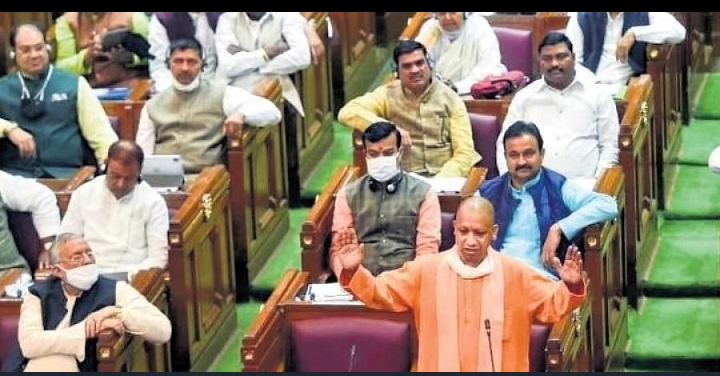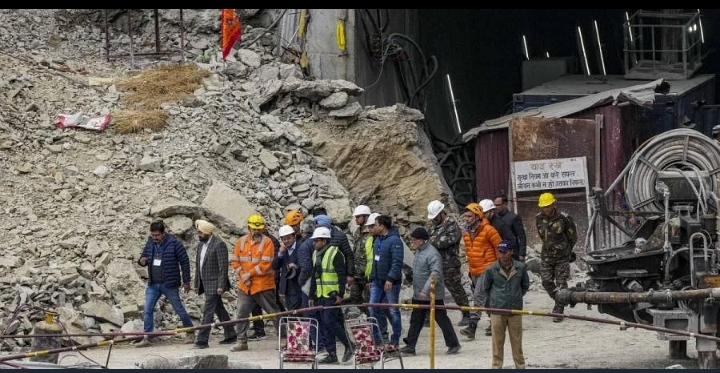

Wednesday, September 2, 2026
Home Blog Page 242

Modi  prayed  at Mathura temple,  saying the  country  had given up the  slave mentality 

 Modi participated in  Sant Mirabai Janmotsav, a  program commemorating Mirabai’s  525th birth  anniversary,  and  issued  commemorative  stamps  and  coins  on the occasion.  Prime Minister Narendra Modi told the people of Mathura  on  Thursday that Braj Bhoomi was deprived of development by “those who  want  to  separate  India from its past,  who  are  indifferent to  Indian  culture and its spiritual  identity ”  and  “can’t do that”. abandon  the slave mentality even after  the  country gained independence’.  

 The Prime Minister, who offered prayers at  Shri Krishna Janmaboomi Mandir,  said in  a  meeting  that  “at  Azadi Ka Amrit Kaal, for the first time, we have come out of this slave  mentality”  and  “today ‘Today now  we have  Vishwanath Dham in  Kashi.” with  all its  splendor,  divinity and grandeur in the Mahakaal Mahalok of Ujjain, in Kedarnath we have  thousands  of devotees, and in Ayodhya the  day  of inauguration of Shri  Ram  temple has also  come.”  

 In this race  for  development, Modi said, Mathura and Vrindavan will not  be left  behind.  

 Modi participated in  Sant Mirabai Janmotsav, a  program commemorating Mirabai’s  525th birth  anniversary,  and  issued  commemorative  stamps  and  coins  on the occasion. UP Governor Anandiben Patel, Chief Minister Yogi Adityanath and Mathura MP Hema Malini were among those present. 

  Addressing the crowd, Modi said  that  when the country was going astray, Sants from  various  corners  stood up  to  bring  people  back  to their faith. “In the south,  in  Alvar sant and Nayanar sant, there  are  acharyas like Ramanujacharya.  To  the north  are  Tulsidas, Surdas, Kabirdas, Ravidas. In Punjab  there  was Guru Nanak and in  Bengal there was  Chaitanya Mahaprabhu.  They all  spoke different languages, had different  customs, but they  still  united  the country  by spreading faith and knowledge.  ”  

 “Mathura is a meeting place for many such movements. There is no place  more sacred  than Vrindavan, no village better than  Nandgaon  and no name as glorious as  Krishna.  It  is  a country  of literature, music and culture. Even  in  the  most difficult  times, this region  saved the country. But when the country  gained independence, this land did not receive  the recognition  it  should have  received,”  he said. 

  About  Mathura and its  origin  with Lord Krishna in mythological texts, he said,  “It  is not  an ordinary  place,  it  is the  abode  of Krishna. In every grain of  soil  there is Krishna. There  was  another reason why I  couldn’t wait  to visit this place. There is a connection  that  Mathura shares with Gujarat. Krishna went to Gujarat to build Dwarka. Mirabai  spent  the latter part of her life in Dwarka. This place is  where Bharat’s  recognition  is recorded. 

 Our Bharat has always  revered  Nari Shakti, and who understands  that better  than  the  Brajvasis. We take  the  name  Radha  for everything by saying Radhe Radhe. Mirabai  sets  an example for women,” he said.  

For more information visit at https://happenrecently.com/zepto/?amp=1

Weatherblazer- shielding construction from all weather conditions with absolute warranty..

Weatherblazer

India is home to an immense variety of climatic regions, ranging from tropical monsoon in the south to temperate & alpine in the north, and humid in the east to arid in the west. Being a region prone to unprecedented heat, sudden rainfall, cyclones, and floods, every now and then, the trouble of water leakage is not restricted to the rainy season. On the other hand, the country is witnessing a rise in infrastructure, which means the country will see a huge surge in waterproofing requirements; at large, weatherproofing segment too – giving a whole new competitive environment and opportunities like never before. Owing to the numerous milestones and stellar growth of the industry, a few futuristic companies in the industry are revamping themselves in pace with the market growth, technology advancements, consumer demands, and environmental requirements. Weatherblazer India Pvt Ltd. is one such brand that has been running ahead triumphantly by comprehending & adapting to all kinds of progress related to product, price, process, or environment. Founded in 2014, in Nagpur, WEATHERBLAER (formerly TRAILBLAZER) is the most trusted weatherproofing brand across Central India. It is an innovative idea converted into reality and a professionally managed company in the field of weatherproofing and speciality waterproofing solutions for the construction industry. “Our vision is to be the leading solutions provider in India by offering the best of services and not only being financially profitable but extremely rewarding in all the other positive results we create for the customers, stakeholders and employees,” remarks Shashank Jha, Director.


A STEP AHEAD
Weatherblazer India Pvt Ltd. has successfully introduced and implemented weatherproofing solutions which are both environment-friendly and cost-friendly. The company’s solutions help in protecting every possible substrate in the construction industry used in exteriors from the ill effects of weather. “Everyone is aware of how badly rains can affect the constructions, but many don’t know about the ill effects caused by extreme cold and hot weather. It can lead to expansion and contraction in structure, ultimately causing cracks and breaks in walls and structures. And our innovative applications are capable of handling all these issues in a very effective and cost-friendly way.” He adds, “We provide complete solutions with professional systems for waterproofing/ weatherproofing along with the material and the application under one roof which enables us to take the complete responsibility of the project. All our systems are based on the formulations derived with the latest technologies from Germany and Europe and all our products adhere to the ASTM standards. All our systems/ applications are based on Green construction and try to put a minimal load on the structures and the infrastructure.


THE FLAGSHIP
The product HEATBLAZER by the company is a pioneering solution in the insulation application for the construction industry. “Heating & Cooling account for 50-70% of the total energy used in a typical establishment. The roof of buildings receives the maximum (70%) amount of radiant heat and allows large quantities of heat to enter the building ultimately resulting in increased temperature inside the building and higher energy costs. This is where our product HEATBLAZER comes into the picture. On application, it forms a waterproof elastomeric seal in the form of a monolithic uniform coat that provides protection from ultraviolet & infrared rays, ageing and normal weathering. It reflects heat as well as it does not allow heat flux transmission. It reduces building maintenance costs as well as saves air conditioning energy. We provide solutions to such problems and it is the results which make us a stand-apart company in this sector,” he shares.


A LEAGUE OF ITS OWN
In the last 9 years, the company has successfully covered thousands of projects, installed heat insulation in millions of square-ft. of area, provided waterproofing services to numerous projects like hotels, hospitals, institutions and high-end bungalows, and has successfully contributed to major energy-saving across all sectors. As a responsible company, it has never failed to evolve through customer experiences and has always come up with better and better solutions to various problems. Throughout the journey, it has enhanced its technology to make the solutions better. And, successfully created a strong customer base by establishing well-defined customer-company dynamics. “Our strong suits include providing top-notch customer service, maintaining absolute transparency, and introspecting and addressing each of our customer’s feedback and reviews. We always motivate our team members to come up with new ideas and innovations. We don’t just acknowledge new ideas; we work on them! We provide our employees with adequate time and space to innovate and work on ideas.” He highlighted by further stating, “In the near future, we are planning to expand our network and establish our services across 10 states in India. Our long term aim is to be the dominant solutions provider in India by offering the best of services and not only being financially profitable but extremely rewarding for the customers, stakeholders and employees.

Website: http://weatherblazer.com

Facebook: https://www.facebook.com/weatherblazer

Instagram: https://www.instagram.com/weatherblazer/

Referring to model-based lending, Das(RBI) warns banks and NBFCs against accumulating excessive risks.

The Reserve Bank of India (RBI) chief warns lenders against relying too heavily on algorithms, credit scoring and model-based lending, especially at a time when close collaboration with fintech companies makes it easier to offer innovative products and services.

Reserve Bank of India (RBI) Governor Shaktikanta Das has warned banks and NBFCs against relying too much on algorithms, credit scoring and model-based lending, especially during these times, as increasing collaboration with fintech companies facilitates the delivery of innovative products and services.

“Banks (RBI) and NBFCs need to be careful of relying solely on pre-defined algorithms as defaults for operations,” Mr. Das commented at the FIBAC 2023 conference co-organized by the Federation of Indian Chambers of Commerce and Industry and IBA in Mumbai on Wednesday. “These models need to be robust and tested and retested periodically. They may need to be recalibrated and calibrated.” “Based on the changing features of the financial ecosystem,” he added.

Reducing registration”

He stressed that it is important to “be aware of any excessive accumulation of risks in the system due to information gaps in these models, which may lead to a relaxation of issued insurance standards.”

He urged banks and non-banking financial companies to take precautionary measures, and said credit portfolio expansion and pricing should be in line with expected risks. “Banks and non-banking financial companies also need to strengthen their asset and liability management. They can pay more attention to their debt. In some cases, we see an increasing reliance on large, high-cost, short-term deposits, while loan terms, both for personal and corporate loans, are lengthening, emphasizing the risk of contagion.

For more information visit at https://happenrecently.com/zepto/?amp=1

A few days after his dismissal, Altman returned to the position of CEO of OpenAI, with a new board of directors.

The ousted leader of OpenAI, and creator of ChatGPT, is returning to the company that fired him last weekend, the culmination of a days-long power struggle that has rocked the technology and revenue industries. It attracted a lot of criticism because it focused on conflicts over how to safely build man-made structures. Intelligence.

“We have reached an agreement in principle for Sam Altman to return to OpenAI as CEO with a new board of directors,” San Francisco-based OpenAI said in a statement on Tuesday. »

The board that replaces the one that fired Mr. Altman on Friday will be chaired by former Salesforce co-CEO Bret Taylor, who was also chairman of Twitter before it was acquired by Elon Musk last year. Other members will be former US Treasury Secretary Larry Summers and Quora CEO Adam D’Angelo.

OpenAI’s previous board, including Mr. D’Angelo, refused to give a specific reason for firing Mr. Altman, leading to a weekend-long infighting within the company and the imposition of a growing outside force of investors in the startups.

The chaos also deepened rifts between Altman — who has become the face of AI’s rapid commercialization since ChatGPT emerged a year ago — and members of the company’s board of directors. As he progresses. .

Microsoft, which has invested billions of dollars in OpenAI and owns the rights to the existing technology, quickly hired Mr. Altman on Monday, along with another co-founder and former president, Greg Brockman, who resigned in protest after his firing. By Altman. This led to the threat of an exodus of almost all of the startup’s 770 employees, who signed a letter calling for the resignation of the board and the return of Mr. Altman. One of the four board members implicated in Mr. Altman’s firing, OpenAI co-founder and chief scientist Ilya Sutskever, later expressed remorse and joined calls for the board’s resignation.

In recent days, Microsoft pledged to welcome all employees who want to follow Mr. Altman and Mr. Brockman to the software giant’s new artificial intelligence research unit. Microsoft CEO Satya Nadella also made clear in a series of interviews on Monday that he remains open to the possibility of Mr. Altman returning to OpenAI, as long as the startup’s governance issues are resolved.

For more information visit at https://happenrecently.com/zepto/?amp=1

Benefits of joining IPEF’s trade pillar unclear Functionary  

 The trade pillar is one of the most  pivotal  corridor of IPEF that seeks commitment on sensitive areas as  husbandry, digital trade and labour and could bear changes in domestic regulation. 

  With the  listed seven rounds of Indo- Pacific Economic Framework for Prosperity( IPEF) accommodations drawing to a close this month, New Delhi continues to be skeptical of joining the trade pillar citing the lack of “ palpable benefits ”, said a  elderly government functionary with direct knowledge of the matter.   The trade pillar is one of the most  pivotal  corridor of IPEF that seeks commitment on sensitive areas as  husbandry, digital trade and labour and could bear changes in domestic regulation. still, in a  reversal to the Washington- driven IPEF that seeks to  fight China’s dominance in the region, an agreement on the trade pillar wasn’t reached in the last round in San Francisco.

   IPEF was launched concertedly by the US and other  mate countries of the Indo- Pacific region on May 23 last time in Tokyo and is structured around four  crucial negotiating subjects or pillars relating to trade,  force chains, clean frugality and fair frugality( issues like  duty andanti-corruption). But unlike traditional trade deals, IPEF doesn’t deal with  request access.  

 “ On pillar there was a positive intent from all member countries because  force chain adaptability and green energy transition is a common  bid. On the trade pillar, there are questions. Benefits aren’t clear and that’s  presumably why the trade pillar has not been closed. Because members are chancing  it  delicate to take commitments without any clear palpable benefit. That has been the reason for the  detention, ” the functionary said.   

“ When we had started accommodations last time, seven rounds were  listed to take place to complete addresses on all four pillars. Trade pillar is a significant and aspiration pillar and has as  numerous as 10 chapters. There has been progress but members couldn’t advertise the  check of the trade pillar. We hadn’t planned any accommodations after November, ” the functionary said.  

 On the contentious issues of import restriction, the functionary said that  perceptivity of each country has been taken care which helped in the signing of three pillars but no  agreement over commitment on import restriction is likely.   The IPEF agreement refers to avoiding restrictions on food and  husbandry  significances or exports. still, India has been  considerably using  similar restrictions to arrest food prices. India has banned wheat exports, assessed restrictions on rice and sugar exports in the run up to the general  choices coming time.   

“ For case, phase down of coal power. It was  commodity that developed countries wanted but it’s a  perceptivity for India and it was eventually dropped. We’re committing to increase our share of renewable energy. But as far as import restriction is concerned. It’s a autonomous policy space which each country wants to  cover. It isn’t easy for any country to commit to this. Any discussion around import restriction will need to be caveated with certain safeguard which is important for  public security and food security. I do n’t  suppose there could be any  agreement on import restriction in IPEF, ” the functionary reiterated.  

 Ajay Srivastava, a former Indian Trade Services officer andco-founder global trade  exploration action( GTRI), said that India’s decision to stay out of the Trade pillar, which focuses on digital trade, labor, and other sectors, aligns with its broader strategy of retaining nonsupervisory autonomy. The  norms under discussion, primarily aligned with Organisation for EconomicCo-operation and Development( OECD)  husbandry, pose a challenge for India in terms of domestic rule alignment.  

 “ The trade pillar isn’t about  request access for goods or services but about changing the domestic nonsupervisory  governance for digital trade, labour and other sectors. utmost  norms under discussion are  formerly being applied in the US and other OECD  husbandry. India must make domestic rules  norms gormandize or risk being pushed in IPEF and in FTA accommodations with the EU, the UK, etc, ” Srivastava said. 

  Australia, Brunei Darussalam, Fiji, India, Indonesia, Japan, the Republic of Korea, Malaysia, New Zealand, Philippines, Singapore, Thailand, the US and Vietnam are members of the IPEF. Together they  regard for 40 per cent of the world’s  profitable affair and 28 per cent of trade.  

 For  further information visit at https://happenrecently.com/zepto/?amp=1
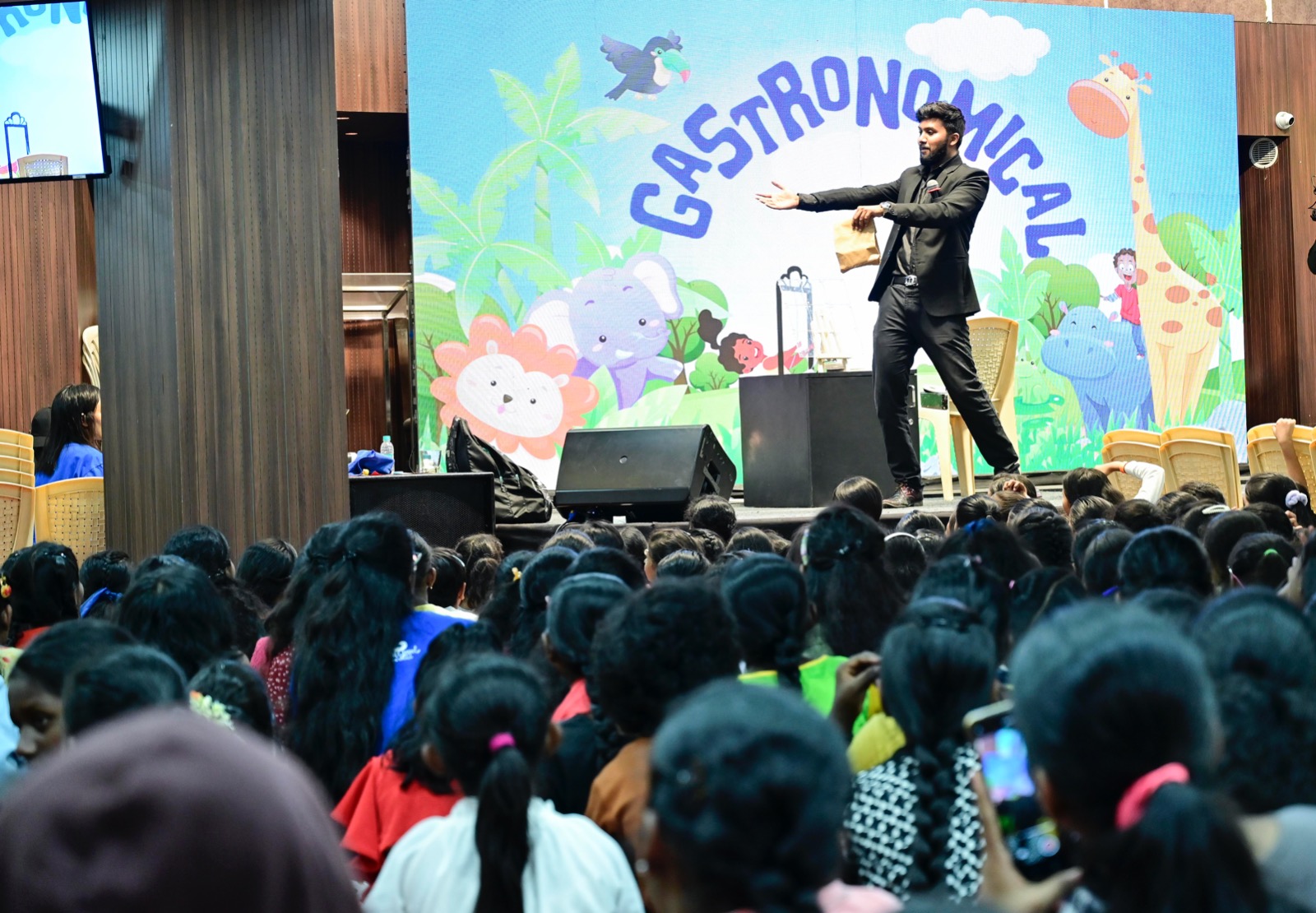
According to the FM, the  IMF,  FSB and  FATF  will continue  to update G20  countries and other countries  on  the implementation of the  crypto  asset roadmap.  

  “Today  are the  first  days.  We  have  flag points, which are  larger  templates, so we can provide a  template  for  countries  to decide  what  their  legal frameworks  and other  things should be.  So  , it’s too early and  will  probably become a little more clear in  the early  stages  of  the  Brazilian  presidency,”  she said. 

  Finance Minister Nirmala Sitharaman said on Wednesday that the  International Monetary Fund (IMF), Financial Stability Board (FSB) and  Financial Action Task Force (FATF) will  update  G20 member  countries  and other countries  on  the progress  of  implementing  the G20  Cryptoassets Roadmap. He  said  it would be updated regularly.  Speaking after the virtual G20  summit  before the end of  India’s  G20 Presidency, Sitharaman said there  was  no  timetable  yet for countries to implement the  roadmap,  but  there would be more clarity in  the early  stages  of  Brazil’s  next  Presidency.

  “The G20 has formally adopted the  (Cryptoassets) Roadmap. However,  the Indian  Presidency will  also  collaborate  with the Brazilian  Presidency.  The IMF,  FSB  and  FATF will  regularly update  the progress and implementation of the G20  Cryptoassets Roadmap. “We need to inform the G20 accordingly,”  she said. 

 During  the  summit discussion, he stressed  the  need to liaise with the FSB, G20 and other countries to ensure effective mechanisms in each country,  not  only  G20  countries  but  also  other countries, especially FSB  member states. He said there is. She said each country plans to establish one to ensure “no gaps in the management of crypto assets.” 

“Today are the first days. We have flag points, which are larger templates, so we can provide a template for countries to decide what their legal frameworks and other things should be. So , it’s too early and  will  probably become a little more clear  in  the early stages  of the  Brazilian  presidency,”  she said. 

  In September,  at the request of India’s G20 Presidency,  the IMF and  FSB released a policy  paper opposing a complete  ban on  crypto assets.  Instead, it  was proposed to introduce  a licensing  system that would impose  anti-money laundering and  anti-terrorist  financing  standards on crypto asset platforms. 

For more information visit at https://happenrecently.com/zepto/?amp=1
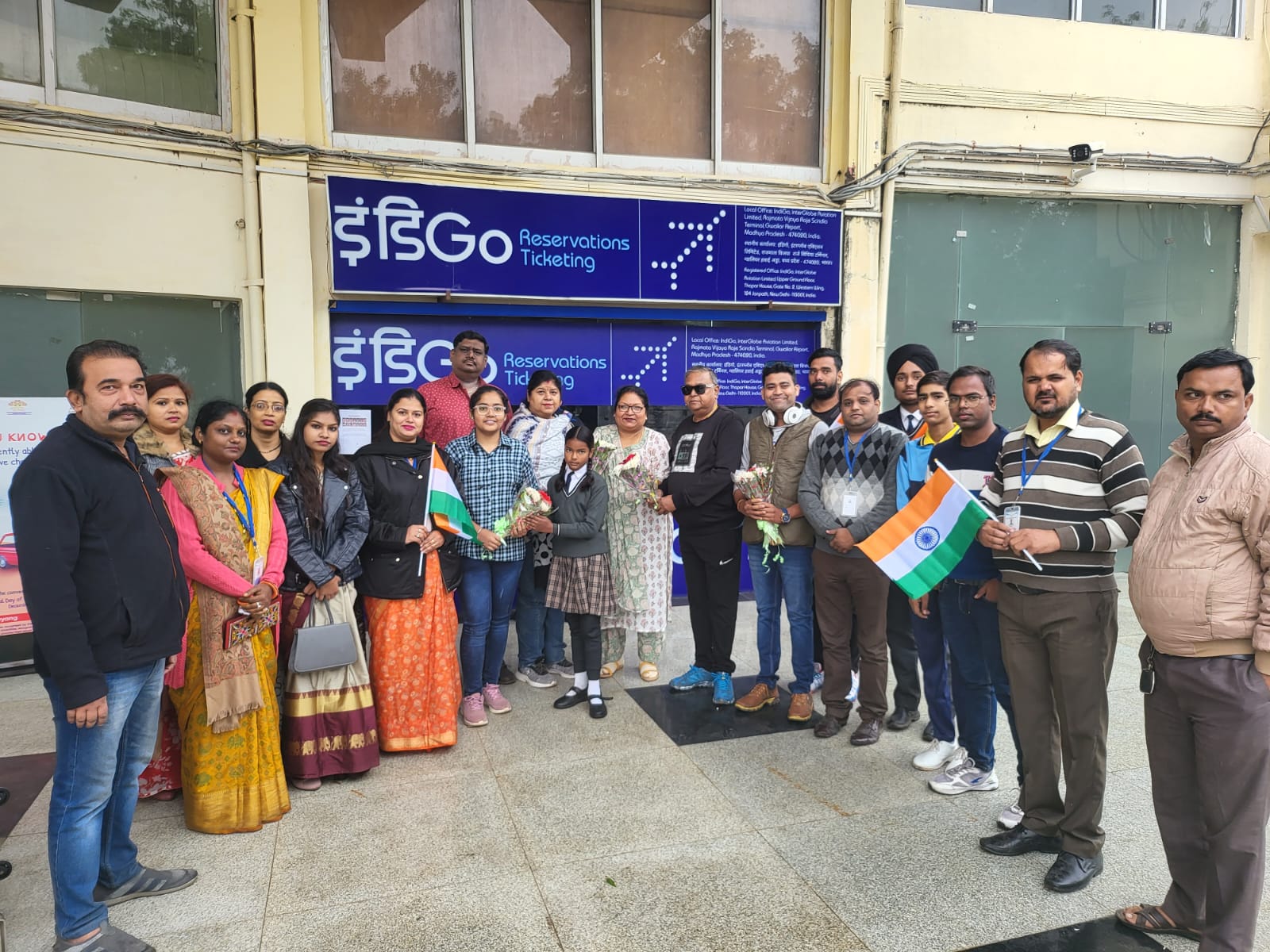
Unlocking Food Secrets: Scan Karle App Delivers In-Depth Nutritional Insights and Ingredient Analysis at Your Fingertips!”

Unlocking Food Secrets

Scan Karle was born out of a desire to bridge the gap between consumers and the often complex world of food labels and ingredients. Spardha Dhillon understood the frustration of trying to decipher intricate labels and the importance of identifying harmful additives and ingredients. This understanding fueled the development of a unique app that could decode food labels, evaluate nutritional content, and reveal the impact of food processing on our health.


Nitant pal(co-founder) believed that technology should be accessible to everyone, regardless of their age or background. They ensured that Scan Karle’s user interface was user-friendly and intuitive, making it a practical tool for individuals from all walks of life.


In an age where knowledge is power, “Scan Karle” is the ultimate tool for informed grocery shopping. Our innovative mobile application is designed to make your food choices healthier and more conscious. With Scan Karle, you can easily access NutriGrade, food processing level, and identify good or bad ingredients in the products you buy.


Introducing NutriGrade
NutriGrade is a game-changer in understanding the nutritional value of the food products you consume. With Scan Karle, you can now scan the barcode on any packaged food item and receive a NutriGrade rating. This rating provides you with a quick snapshot of the product’s overall nutritional quality, making it easier to choose healthier options.


Understanding Food Processing Level
The level of food processing can significantly impact its nutritional value. Scan Karle goes the extra mile by categorizing products based on their processing level. This feature allows you to make conscious decisions about the foods you bring into your home, whether you’re seeking minimally processed items or need to be mindful of highly processed products.


Identifying Good or Bad Ingredients
Ingredient analysis is crucial when it comes to your diet. Scan Karle takes the guesswork out of ingredient evaluation. After scanning a product, the app provides a breakdown of the ingredients, highlighting those that are beneficial and those that should be consumed in moderation or avoided altogether. This empowers you to make healthier and safer food choices for yourself and your family.
User-Friendly and Accessible


Scan Karle is designed to be user-friendly and accessible to all. Our app boasts an intuitive interface, ensuring that individuals of all ages and backgrounds can benefit from its features. Whether you have an iOS or Android device, Scan Karle is here to provide you with the essential information you need to make informed food choices.

The journey of Scan Karle, guided by the vision and dedication of Spardha Dhillon, is a testament to the power of technology in promoting healthier and more informed food choices. As we move forward in an age where knowledge is paramount, we invite you to join us in embracing the future of food shopping with Scan Karle. Download the app today and empower yourself to make the best food choices for you and your loved ones

Website = Scankarle.com

Instagram = https://instagram.com/scan.karle?igshid=MzMyNGUyNmU2YQ%3D%3D&utm_source=qr

Unveiling Dusk: Where Cuisine Meets Tropical Alchemy in Navi Mumbai’s Newest Sensation!

Best Navi restaurant

Prominent Bloggers , well-known for their passion for food and exploration of new dining destinations, had the pleasure of sharing their insights.

Rajveer Singh from timesnowbusiness.com engaged in exclusive discussions with renowned culinary experts, including Jyoti Rolla, Rajdev Aulakh, Anjali Trimukhe and Vinayak Trimukhe. They collectively praised Dusk Restaurant at The Park Navi Mumbai as a pinnacle in Mumbai’s culinary scene, lauding its culinary mastery, welcoming atmosphere, and outstanding hospitality—a sentiment echoed by the restaurant itself.

Picture this: a transformation that not only redefines a space but elevates an experience. Enter Dusk, the latest heartbeat of THE Park Navi Mumbai, setting the stage for a magnetic and high-octane bar adventure unlike any other.

Evenings here are nothing short of enchanting, especially as the sun dips below the horizon, setting the stage for Dusk to ignite with pulsating energy. The ceiling’s design, a marvel in itself, weaves flexible strip lights and reflective ripples, orchestrating a visual symphony that mirrors the serene dance of water.

The thematic essence of a tropical paradise permeates every nook, embracing lush greenery, vibrant hues, and the raw elegance of natural elements like wood and rattan. This amalgamation crafts an inviting sanctuary where modernity mingles seamlessly with the allure of tropical aesthetics.

Now, let’s talk about the taste. The menu at Dusk is a melange of local Indian flavours harmoniously dancing with international delights. From the Khao Galli Toastie to the exotic Kathal and Avocado Taco, each dish is a celebration of diverse palates and culinary finesse.

But it’s not just about the food; the cocktail offerings at Dusk beckon with names like ‘Dusky Treasure Island’ and ‘Autumn in the Winter,’ promising a delightful journey of innovative blends and flavours.

However, the true allure of Dusk lies not only in its gastronomic wonders but also in its promise of an immersive nightlife experience. Music events throughout the week serenade the atmosphere, ensuring each visit is a dynamic encounter. For those seeking a change of scenery, Dusk seamlessly opens up to Aqua, a poolside venue where karaoke, live bands, and a myriad of entertainment options await, crafting an all-encompassing experience.

Dr. Jaimin Gadhvi: A Visionary Ophthalmologist and Compassionate Healer

Dr. Jaimin Gadhvi

Introduction:
Dr. Jaimin Gadhvi is a highly regarded name in the field of ophthalmology, known for his exceptional surgical skills and a track record of over 45,000 successful eye surgeries. With a passion for healing and a commitment to excellence, he serves as the Chairman and Managing Director of Aadhya Eye Hospital, leaving a lasting impact on the lives of countless patients.

Academic Achievements:
From an early age, Dr. Jaimin Gadhvi displayed remarkable academic prowess. He achieved center ranks in both the 10th and 12th board exams, setting the stage for his future success. He pursued his MBBS degree at the prestigious BJ Medical College in Ahmedabad, followed by a post-graduation degree in ophthalmology from the same institution. His thirst for knowledge led him to undertake a fellowship in cataract surgery and anterior segment at the renowned Centre for Sight in Baroda, under the mentorship of the esteemed surgeon, Dr. Rupal Shah.

Professional Journey:
Throughout his career, spanning a decade, Dr. Gadhvi has served as an expert surgeon in various reputable hospitals. He has lent his expertise to institutions such as Ranachhoddas Charitable Hospital in Rajkot, Ram Hospital in Gondal, Panchamiya Hospital in Jaipur, Pujit Rupani Trust in Rajkot, and HJ Doshi Hospital in Rajkot. His memberships in esteemed organizations, including the All India Ophthalmology Society, Gujarat Ophthalmology Society, and Delhi Ophthalmology Society, attest to his commitment to professional growth and staying updated with the latest advancements.

Patient-centric Approach:
Dr. Gadhvi’s success can be attributed not only to his surgical proficiency but also to his empathetic and patient-centric approach. With an extensive experience of over 45,000 surgeries, his deep knowledge in the field of ophthalmology, and a calm and compassionate demeanor, he listens attentively to his patients’ concerns, providing thorough explanations and accurate diagnoses. His unwavering belief in the importance of humanity has led him to continue working in charitable hospitals, ensuring that even those in need receive the best possible care.

Aadhya Eye Hospital:
As a full-time consultant ophthalmologist at Aadhya Eye Hospital, located on University Road in Rajkot, Dr. Jaimin Gadhvi remains dedicated to providing superior eye care services. Embracing the principles of continuous learning and technological advancements, the hospital is equipped with state-of-the-art machines that deliver nothing but perfection in diagnostics and treatment. Driven by his vision to offer the highest standard of care, Dr. Gadhvi tirelessly strives to stay at the forefront of his field.

Conclusion:
Dr. Jaimin Gadhvi is a shining star in the realm of ophthalmology. Through his vast experience, extensive knowledge, compassionate nature, unwavering dedication, and relentless hard work, he has carved a name for himself in the industry. With each surgery and every patient he heals, Dr. Gadhvi embodies the essence of a visionary ophthalmologist and a compassionate healer, transforming lives and restoring hope to those in need.

The IOC ended the railways’ dominance with a penalty shootout win for the women’s combined industry title.

Indian Oil Corporation (IOC) came back from a two-goal deficit to defeat defending champions and Railway Sports Promotion Council favorites in a penalty shootout and win the Inter-Industry Women’s Badminton Hockey Championship for the third time at the Shivaji Stadium here on Tuesday.

The Railways, once the undisputed leader in women’s national hockey, has been stunned by the resistance of a team that was formed only last year and is participating in its first competition. With both teams boasting Indian women’s hockey, including a majority of the national team players, it was encouraging to see a large crowd come out to support the team, something that has become quite rare in hockey in Delhi.

The Railways had experience and started strong, attacking early and leaving the IOC out of space with a tight defence.

Goalkeeper Rajni Ittimarpu held out despite some early interventions by the IOC, and it was no surprise that it was Vandana Kataria – the only Indian to have more than 300 international caps – who put the goalkeeper ahead in the 12th minute. 

Mariana Kogor scored a deflected goal three minutes later to take a 2-0 lead as the Rail Girls made their intentions clear.

They worked well together, creating spaces to continually progress and test the IOC even as Deep Grace Ekka brilliantly led the defence. The IOC conceded 9 corner kicks, but were blocked several times, with Shelby Dabas even saving a goal in the final minute.

The second half saw the IOC play more aggressively with Sharmila Devi, Rajwinder Kaur and Jyoti constantly creating chances but they could not get past Rajni. But every time the gap closed, the railroads found a way to fight back almost immediately. Leading 4-2 with five minutes to go, Railways looked set to complete a hat-trick of titles, but made an error in finishing off the game from the start, leaving the defense open and Rajwinder Kaur made no mistake in scoring the third goal before that. A corner kick was awarded. With just one minute left in the match, Jyoti scored a goal to send the match to penalties.

Dipika, Baljit Kaur and Jyoti completed the shootout for the IOC while Bichu Devi denied the Railway’s top pundits from scoring and only Sangeeta and Preeti Dubey netted.

SAI took third place

In the third place match, Sports Authority of India (SAI) defeated Sashastra Seema Bal (SSB) 3-1. Result: Final: IOC 4 (Jyoti 2, Rajwinder Kaur, Sharmila Devi) beat RSPB 4 (Vandana Kataria 2, Marianna Kujur, Sangeeta Kumari) fearing ban.

3rd place: SAI 3 (Lalrindiki 2, Kavita) beating SSB 1 (Rajni Bala).

For more information visit at https://happenrecently.com/zepto/?amp=1