


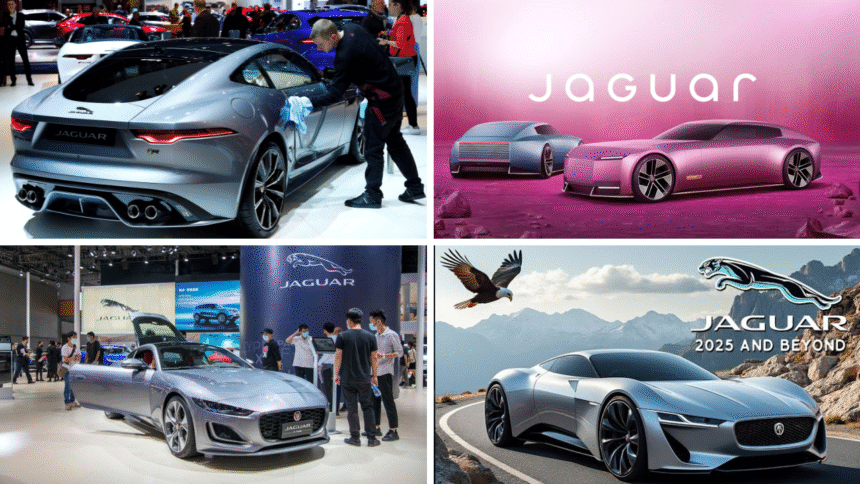
“Jaguar” has long been synonymous with elegance, performance, and innovation. But the journey of this iconic British marque is as remarkable as the vehicles it has produced. From humble beginnings in the early 20th century to its bold leap into an all-electric future, Jaguar’s story is a testament to resilience, reinvention, and a relentless pursuit of excellence.
A Legacy Born in Blackpool
The roots of Jaguar trace back to 1922, when two motorcycle enthusiasts – William Lyons and William Walmsley established the Swallow Sidecar Company in Blackpool, England. Initially, the enterprise specialized in crafting stylish sidecars for motorcycles, quickly gaining a reputation for quality and design flair. This growing success inspired Lyons to expand into automobile body manufacturing, working with notable brands like Austin and Fiat during the late 1920s.
By the early 1930s, Lyons had set his sights on a bigger vision: creating complete automobiles. This ambition culminated in 1935 with the launch of the SS Jaguar – the first vehicle to bear the Jaguar name. With its sleek styling and powerful performance, it set the tone for what would become the brand’s hallmark: the fusion of luxury, style, and speed.
A New Name for a New Era
In the aftermath of World War II, the “SS” initials carried unwanted associations with Nazi Germany’s SS forces. Determined to preserve the brand’s identity while distancing it from any negative connotation, Lyons rebranded the company as Jaguar Cars Limited in 1945. This period marked the dawn of Jaguar’s golden era.
Models like the XK120, the elegant Mark 2 saloon, and the revolutionary E-Type sports car catapulted Jaguar to international fame. The E-Type, in particular, earned a place in automotive history as one of the most beautiful cars ever made – even Enzo Ferrari called it “the most beautiful car in the world.” Jaguar had successfully established itself as a symbol of British motoring excellence.
Mergers, Challenges, and a Fight for Independence
In 1968, Jaguar merged with the British Motor Corporation (BMC) to form part of the British Leyland conglomerate – a government-backed effort to consolidate the UK’s struggling auto industry. However, the move brought challenges. Quality control issues and financial instability plagued the brand, threatening its hard-earned reputation.
The 1980s brought a turning point. Under Prime Minister Margaret Thatcher’s privatization program, Jaguar regained independence in 1984. Freed from the bureaucracy of British Leyland, Jaguar sought to reclaim its position at the top of the luxury market, focusing on craftsmanship and performance.
A Global Journey Through Ownership
In 1989, the Ford Motor Company acquired Jaguar, aiming to bolster its luxury portfolio. Ford invested heavily in modernizing production and expanding Jaguar’s lineup. Yet, despite technological improvements, profitability remained elusive.
A major chapter in Jaguar’s story began in 2008, when Tata Motors – part of India’s Tata Group – acquired both Jaguar and Land Rover from Ford, forming Jaguar Land Rover (JLR). Tata’s approach was patient and strategic, providing long-term investment in design, engineering, and advanced technology. Under this stewardship, Jaguar experienced a resurgence, introducing critically acclaimed models such as the XE, XF, the high-performance F-Type, and the all-electric I-PACE – which won the prestigious 2019 World Car of the Year award.
Embracing the Future: All-Electric by 2025
Today, Jaguar stands at the forefront of a transformative era in the automotive industry. As part of JLR’s “Reimagine” strategy, the brand has committed to becoming an all-electric luxury marque by 2025. This bold move aligns with global sustainability goals and reflects changing consumer priorities toward environmentally responsible mobility.
The transition to electric power will not come at the cost of Jaguar’s identity. True to its heritage, future Jaguar vehicles will continue to deliver exhilarating performance, uncompromising luxury, and avant-garde design. With cutting-edge battery technology, advanced connectivity, and autonomous-ready systems, Jaguar is poised to redefine the meaning of luxury driving for the 21st century.
A Century of Excellence – And Beyond
From a small sidecar workshop in Blackpool to a globally recognized symbol of British engineering, Jaguar’s story is one of adaptation and vision. Each era has brought challenges – from post-war rebranding to the trials of corporate mergers – but Jaguar has consistently emerged stronger, driven by innovation and a commitment to its core values.
As Jaguar approaches its all-electric future, it carries forward a century’s worth of design brilliance, motorsport success, and luxury craftsmanship. Whether it’s the timeless beauty of the E-Type or the futuristic performance of the I-PACE, Jaguar remains an emblem of aspiration and prestige.
“Jaguar has always stood for innovation, performance, and elegance,” said [Executive Name], [Executive Title] at JLR. “Our shift to an all-electric lineup is not just a response to environmental imperatives – it’s a natural evolution of our brand. We are shaping the next generation of luxury vehicles that will inspire, excite, and endure.”
With its eyes firmly set on a sustainable and electrified horizon, Jaguar continues to blend heritage with innovation, proving that even after more than 100 years, the leaping cat is still ready to pounce.
Jaguar
Jaguar is a British luxury automotive brand known for its distinctive blend of performance, style, and craftsmanship. Founded in 1922, the company has produced some of the most iconic vehicles in history, including the XK120, Mark 2, E-Type, and I-PACE. Today, as part of Jaguar Land Rover, Jaguar is committed to reimagining the future of luxury mobility through electrification and cutting-edge technology.