
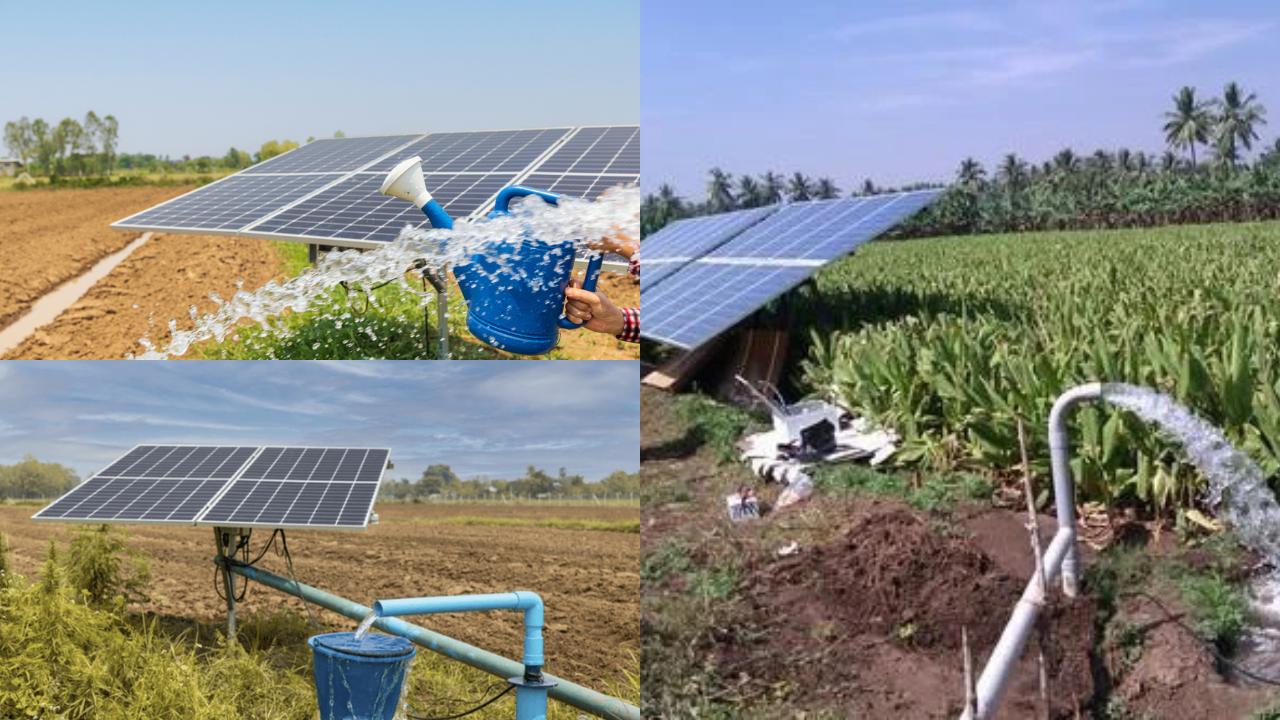

Maharashtra’s industrial sector is set to face higher operational costs following a government announcement to raise power duty rates on industries. The revision comes as part of the state’s effort to generate revenue for its flagship solar pump scheme, aimed at providing clean and sustainable irrigation solutions to farmers across Maharashtra.
The move, which is expected to impact a wide range of businesses operating in the state, has sparked discussions within trade, commerce, and agricultural circles. While industries express concern about cost competitiveness, the government maintains that the step is necessary to support Maharashtra’s long-term energy transition and agricultural upliftment.
Government’s Rationale Behind the Hike
The newly announced power duty hike reflects the state’s policy priority of promoting renewable energy within the agricultural sector. By channeling the additional revenue collected from industries, the government intends to fast-track distribution of solar pumps to farmers, particularly in drought-prone districts.
Officials emphasized that Maharashtra’s agriculture continues to depend heavily on groundwater irrigation, with a significant share of pumps still operated using electricity or diesel. The solar pump scheme is seen as a solution to reduce farmers’ dependency on high-cost energy inputs while aligning with the state’s green energy transition goals.
“The decision was taken keeping in mind both agricultural growth and sustainability,” a senior state official said. “The additional duty collected from industries will not only finance distribution of solar pumps but also reduce the subsidy burden on the state government in the long run.”
Impact on Industries
The announcement, however, has raised concerns within Maharashtra’s industrial sector. Manufacturers, small and medium enterprises (SMEs), and large-scale industries alike will experience an uptick in their monthly power bills. Businesses already grappling with rising raw material costs, inflation, and fluctuating market demand worry that the power duty hike could eat into profit margins.
Industry associations have called for consultations with the government, stating that while they support renewable energy adoption, the burden should not disproportionately affect competitiveness. Some have warned that higher power costs could discourage fresh investments in Maharashtra’s industrial clusters, potentially impacting employment and growth.
The auto, textile, chemical, and engineering manufacturing hubs in regions such as Pune, Nagpur, Aurangabad, and Thane are expected to be among the most impacted areas.
Balancing Industry and Agriculture Needs
The government has defended its policy as a temporary measure to scale up solar pump deployment. By reducing reliance on conventional electricity and diesel in agriculture, officials argue that energy stress on the industrial grid will eventually ease. Over the coming years, widespread adoption of solar irrigation could free up significant power supply which industries currently face shortages of during peak demand periods.
Furthermore, subsidies for conventional power connections for farmers have long been seen as a drain on the state’s resources. By transitioning to solar, the scheme could stabilize long-term energy planning and create broader benefits for all stakeholders, including industries.
Solar Pump Scheme: A Flagship Initiative
The Solar Pump Yojana, launched by the Maharashtra government, aims to distribute solar-powered pumps to farmers at subsidized rates. The scheme targets marginal, small, and medium-scale farmers who struggle with irregular power availability and mounting electricity bills. Solar pumps not only offer a reliable irrigation source but also reduce dependence on erratic monsoon rainfall.
The government has claimed that demand for solar pumps has grown significantly across Vidarbha, Marathwada, and western Maharashtra, with a waiting list of farmers applying under the scheme. Officials say the additional revenue from power duty hike will accelerate distribution and help clear the backlog.
Environmental and Economic Perspective
Environmentalists and renewable energy experts have welcomed the decision, noting that Maharashtra has one of the highest agricultural electricity consumption rates in the country. Transitioning to solar is not only cost-effective but reduces carbon emissions associated with conventional energy use.
Additionally, successful deployment of solar irrigation solutions can prevent overexploitation of groundwater by enabling better monitoring and efficiency. From an economic standpoint, farmers can save on monthly power bills, enhancing rural incomes in the long run.
Experts argue that if executed effectively, the scheme could make Maharashtra a leader in decentralized solar irrigation models nationally, setting an example for other states.
Industry Voices and Future Outlook
Despite broad agreement on the importance of sustainable agriculture, industry leaders stress the need for balance. Some business chambers have urged the government to consider phased implementation of the duty hike, while others propose exemptions for energy-intensive sectors that are critical for exports and job creation.
On the other hand, farmer unions have cautiously welcomed the move, insisting that the government must ensure timely delivery and transparency in distribution of solar pumps. They highlight that unless farmers receive the promised equipment on schedule, the rationale behind taxing industries will be undermined.
As Maharashtra positions itself at the crossroads of industrial development and agricultural sustainability, the coming months will be critical in determining whether the revised duty structure can achieve its intended purpose without deterring growth.
Conclusion
The power duty hike on industries marks a significant policy shift by the Government of Maharashtra to prioritize long-term sustainability in the agricultural sector. While businesses brace for increased costs in the immediate future, the broader vision of scaling renewable energy solutions for farmers reflects the state’s commitment to balancing economic growth with environmental responsibility.