

PhonePe & GPay now for 3L+ desi travelers—trial launch FY26
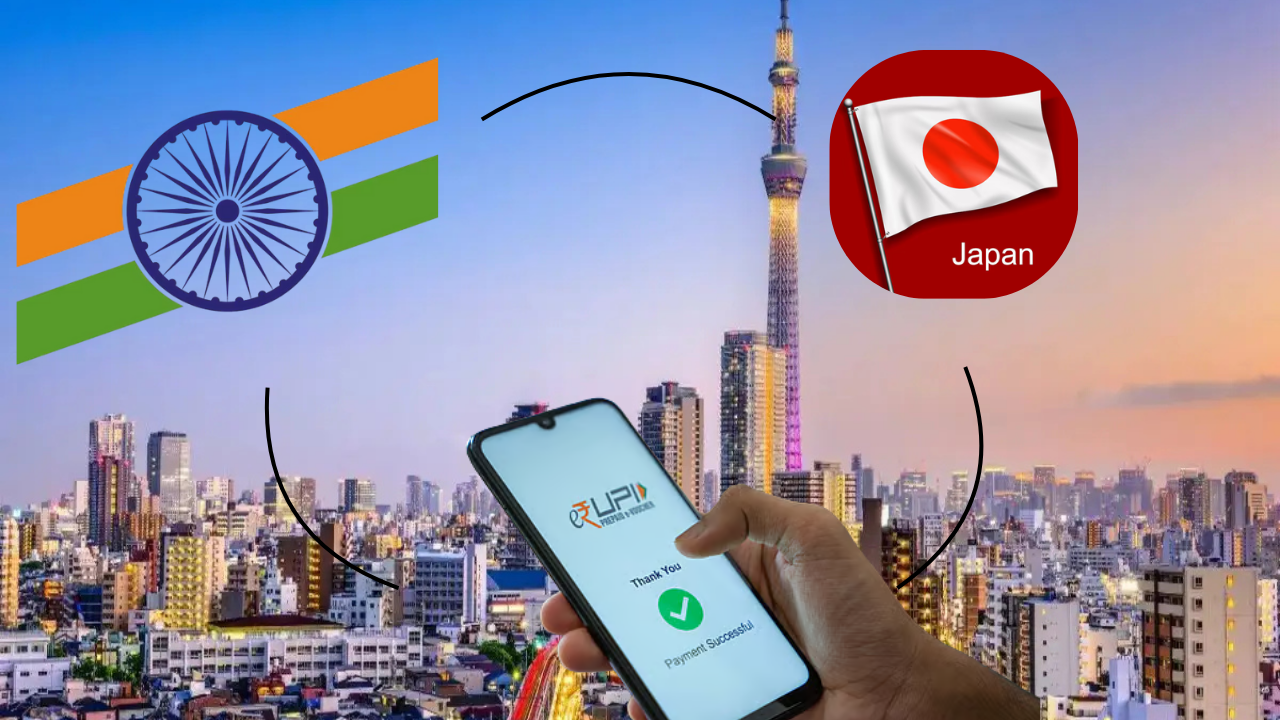
India’s Unified Payments Interface (UPI), the world’s largest real-time payment system, is gearing up for a landmark entry into Japan. This exciting development, announced through a strategic partnership between the National Payments Corporation of India (NPCI) and Japanese tech giant NTT Data, marks a significant milestone in India’s digital diplomacy. As Indian tourists flock to Japan in record numbers, UPI’s trial launch in fiscal 2026 will make payments seamless, affordable, and familiar for desis traveling abroad.
How UPI in Japan Will Work for Indian Travelers
Imagine landing in Tokyo or Kyoto, pulling out your PhonePe, Google Pay, or BHIM app, and scanning a QR code at a local shop or restaurant to pay instantly from your Indian bank account. No foreign cards, no currency exchange hassles, no extra fees—just the simplicity of UPI that we Indians love and trust daily. This is the promise of the upcoming trial rollout.
NTT Data, a leading Japanese IT services firm, has inked a Memorandum of Understanding (MoU) with NPCI International Payments Ltd (NIPL) to enable UPI acceptance at merchants under its network. In the pilot phase, Indian tourists will be able to use their existing UPI apps for QR-based retail payments at select locations like souvenir shops, eateries, and tourist services. Transactions will be processed in real-time, debited directly from users’ Indian bank accounts, ensuring security and convenience without needing a local wallet or card.
The initiative couldn’t come at a better time. Indian tourist arrivals in Japan surged past 315,000 in 2025 alone, making Indians one of the fastest-growing inbound segments for the Land of the Rising Sun. With bilateral ties strengthening under initiatives like the India-Japan Comprehensive Economic Partnership Agreement (CEPA), this move aligns perfectly with booming people-to-people exchanges. Travel experts predict even higher footfalls in 2026, fueled by affordable flights, cultural attractions, and events like the upcoming cherry blossom season.
UPI’s Incredible Journey: From India to Global Fintech Leader
Launched in 2016 as a flagship initiative under the Digital India campaign, UPI has revolutionized payments in Bharat. What started as a domestic solution has ballooned into a global phenomenon. Today, UPI powers over half of the world’s instant payment transactions by volume, processing billions of seamless transfers monthly at zero or minimal cost. Its secret sauce? Interoperability—any UPI app can scan any QR code from any bank, making it inclusive for everyone from street vendors in Nagpur to high-street malls in Mumbai.
The Japan foray is the latest in UPI’s international conquest. It’s already live or accepted in eight countries: Bhutan, Singapore, Nepal, UAE, Sri Lanka, Qatar, Mauritius, and France. In places like Singapore and UAE, UPI has empowered millions of Indian expats and travelers to pay effortlessly. The International Monetary Fund (IMF) has hailed UPI as a model for emerging economies, praising its scalability, low infrastructure needs, and role in financial inclusion.
Experts like Rohit Mahajan, Founder and Managing Partner at plutos ONE, call this expansion a testament to India’s fintech prowess. “Enabling UPI in Japan aligns merchant ecosystems with evolving consumer behavior. It shows our payment infrastructure is not just scalable but globally competitive,” he notes. Similarly, Ravi Gosain, President of the Indian Association of Tour Operators (IATO), emphasizes how it promotes cashless travel and deepens India-Japan bonds in tourism and digital economy.
Why Japan? A Strategic Win for India’s Digital Power
Japan, with its advanced economy and mature digital payments landscape dominated by players like PayPay and LINE Pay, presents a tough yet prestigious testing ground. Unlike developing markets, Japan boasts high QR adoption but fragmented systems. UPI’s entry here isn’t just about tourists—it’s a vote of confidence in India’s Digital Public Infrastructure (DPI). By exporting UPI, Bharat is positioning itself as a fintech exporter, much like how G20 leaders recognized India’s UPI stack during the 2023 summit.
This partnership builds on years of India-Japan collaboration. Remember PM Modi’s visits and the Quad framework? Digital payments are the next frontier. NTT Data’s involvement signals deeper integration plans, potentially linking UPI with Japan’s networks for reciprocal payments. For Indian merchants, this could mean easier acceptance of Japanese yen via UPI in the future. It’s a win-win: Japan gains from India’s 1.4 billion-strong digital economy, while India amplifies its soft power through technology.
From a tourism angle, it’s a game-changer. Indian travelers often complain about card surcharges and cash-handling woes abroad. UPI eliminates these, encouraging more impulse buys—from sushi stalls to high-end electronics. Industry watchers predict a 20-30% uptick in spending by Indian tourists once live, boosting Japan’s post-pandemic recovery while showcasing India’s innovation.
Broader Implications for India’s Global Fintech Ambitions
UPI’s Japan launch is more than a payment tweak; it’s India flexing its digital muscle on the world stage. In an era where countries vie for tech supremacy, UPI embodies ‘Make in India’ success. NPCI, the not-for-profit behind UPI, has processed trillions in transactions without a single major breach, proving reliability at scale. Globally, nations from Brazil to Europe are studying UPI for replication.
For everyday Indians, this means pride. Whether you’re a startup founder in Bengaluru or a family planning a Japan trip from Nagpur, UPI’s reach makes the world smaller and payments simpler. It also opens doors for MSMEs—imagine Indian exporters receiving payments via UPI-linked international QR codes. As NPCI eyes more markets like the US and Europe, UPI could redefine cross-border remittances, cutting costs from 6-7% to near-zero.
Challenges remain, of course. Regulatory alignments, currency conversions, and merchant onboarding need ironing out. But with NPCI’s track record and NTT Data’s local expertise, the pilot is poised for success. Fiscal 2026 rollout means we could see it operational by mid-next year, just in time for peak travel season.
A Proud Moment for Every Indian
As UPI steps into Japan, it’s a reminder of how far India has come—from demonetization queues to global fintech leadership in a decade. This isn’t just about payments; it’s about India’s digital power expanding borders, fostering growth, and making ‘Bharat First’ a reality worldwide. Stay tuned for updates as the trial unfolds—your next Japan trip might just be UPI-powered!