

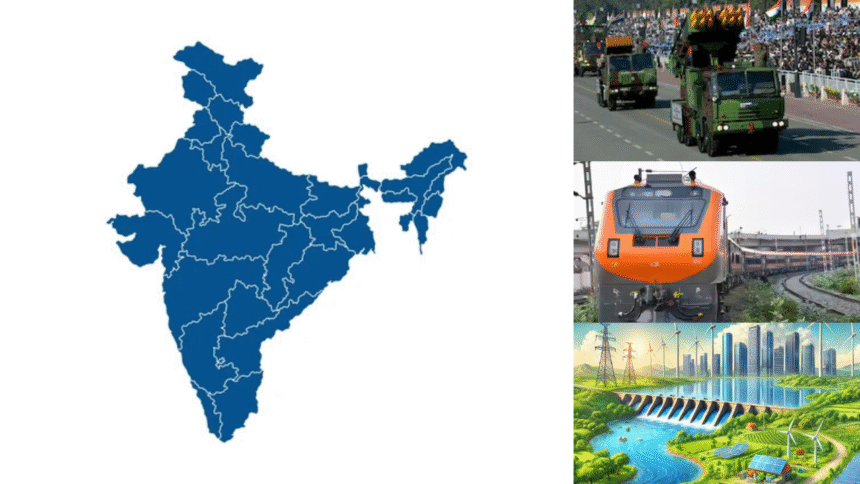
The Indian government has unveiled a series of special incentives for the private sector. This move aims to boost strategic investments across three vital areas: defence, rail infrastructure, and renewable energy. As the country pushes for economic growth and sustainable development, these sectors have emerged as top priorities in recent policy discussions.
Industry leaders and government officials are confident that these incentives will strengthen national capabilities, create jobs, and mark India’s progress towards self-reliance. The initiative reflects the government’s ambition to not only modernize infrastructure but also embrace cutting-edge technology with active participation from private companies.
Defence Sector: New Avenues for Business
Defence manufacturing has become a focal point for India’s ambition to reduce dependency on imports and achieve atmanirbharta, or self-reliance. The government’s new package offers tax benefits and fast-track clearances for private firms entering the defence production ecosystem.
Home-grown companies can now collaborate with major global players and local startups to build advanced defence equipment. The policy specifically encourages investment in components manufacturing, assembly, and research & development. Industry sources reveal that these measures may lead to the creation of thousands of jobs, with Maharashtra and Madhya Pradesh among the most active regions for new defence contracts.
Senior officials in the Defence Ministry have also hinted at more liberalized foreign direct investment (FDI) norms. This is expected to bring technical expertise and international capital, raising product quality and increasing domestic competitiveness. “India’s defence growth depends on strong public-private partnerships,” a senior official stated recently.
Rail Infrastructure: BEML’s Coach Factory Project Gains Momentum
Another major announcement is the BEML rail coach project, drawing national attention for its scale and long-term impact. BEML Limited, a leading player in rail manufacturing, is spearheading a large coach factory that is set to transform India’s public transportation.
The factory, situated strategically to cater to Western and Central Indian rail networks, promises to add thousands of high-tech rail coaches to the country’s lines over the next decade. What makes this project stand out is the emphasis on ‘Make in India’—at least 85% of components will be sourced locally, stimulating regional supply chains and small businesses.
Thanks to government-backed incentives, such as subsidized land, low-interest loans, and R&D grants, BEML and its private partners will be able to streamline production and roll out coaches equipped with modern safety features and energy-efficient technologies. The new plant will also facilitate training centers for engineers and technicians, preparing local talent for future demands.
“Railways are the backbone of our economy, and this initiative will provide much-needed capacity and create skilled jobs,” said an executive overseeing the project. Stakeholders predict that these developments will attract further investment in rail infrastructure across the states of Maharashtra and Madhya Pradesh.
Renewable Energy: Neemuch Hydroelectric Power Plant Gets a Push
India’s energy policy is increasingly focused on renewables, and Neemuch in Madhya Pradesh has become the site of a landmark hydroelectric power project. The government’s incentives package includes tariff guarantees, easier licensing, and priority grid access for private players engaged in sustainable energy.
The Neemuch plant will harness river potential to generate clean electricity, projected to power over one million homes in the region. This large-scale facility will use state-of-the-art technology to ensure high efficiency and minimal ecological impact. Local officials highlight employment opportunities for engineers, unskilled labor, and logistics staff, marking a boon for the regional economy.
Private companies have responded with enthusiasm, expressing interest in partnering with local authorities and international experts. The state government has also emphasized the importance of renewable energy in meeting climate goals and reducing reliance on fossil fuels. “Neemuch is set to become a model for green energy projects in central India,” said the district energy officer.
Opportunities for Startups and Local Businesses
The policy rollout has been particularly encouraging for startups and small businesses. With simplified application procedures and financial support, young entrepreneurs can now bid for contracts and participate in auxiliary services such as logistics, maintenance, and innovation.
Experts believe these incentives will create a ripple effect, sparking entrepreneurship and skills development within Maharashtra and Madhya Pradesh. Local chambers of commerce are already organizing workshops and matchmaking events to bring together investors and business owners.
Building a Brighter Future
India’s latest strategy to promote private sector involvement in defence, rail, and renewable energy represents a major step towards economic progress. As projects like the BEML coach factory and Neemuch power plant move forward, the lasting impact will be felt through job creation, environmental sustainability, and world-class infrastructure.
With ongoing focus on inclusive growth, stakeholder collaboration, and transparent policy implementation, the government hopes to inspire greater participation—and confidence—from the private sector.