

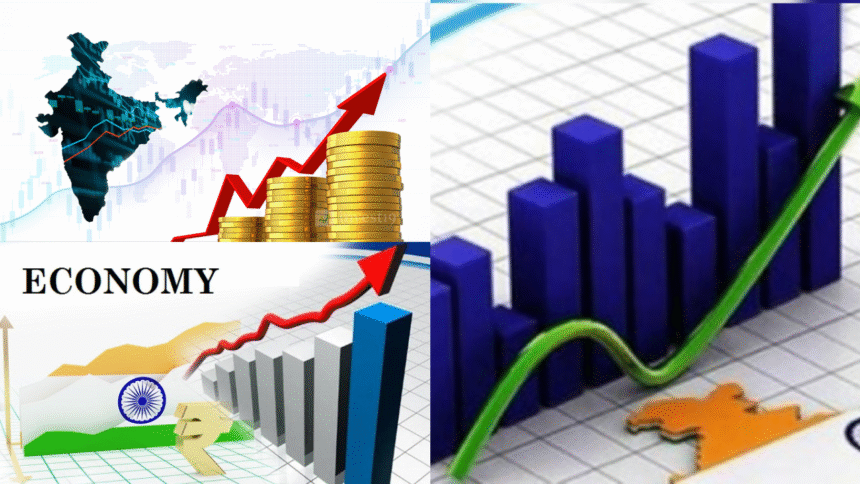
India’s economy witnessed a historic surge in private sector activity in August, recording its fastest pace of growth in recent history. According to the latest economic indicators, the expansion was primarily driven by strong demand in the services sector, signaling robust consumer confidence, increased investment activity, and a thriving domestic market. However, the rapid growth also triggered the sharpest rise in prices in more than a decade, sparking discussions about inflationary pressures and the policy outlook.
Record Expansion in Private Sector Activity
Business activity across India’s private sector – encompassing both manufacturing and services – recorded unprecedented momentum in August. Analysts attribute the acceleration to rising domestic demand, a resilient labor market, and consistent business optimism across industries. The services sector, in particular, emerged as the key driver of growth, reflecting rising consumer spending on sectors such as travel, hospitality, healthcare, technology, and financial services.
While India’s manufacturing sector also continued to perform well, the service economy accounted for the bulk of the expansion, with companies reporting strong order books and improved capacity utilization. The performance highlights India’s ongoing structural transformation toward a more services-led growth model.
Strong Demand Leads to Price Pressures
The surge in demand, however, has come at a cost. Businesses reported input price inflation climbing to the highest levels seen in over a decade, translating into higher output prices for consumers. This sharp rise in prices, particularly in services, is being attributed to higher wages, elevated commodity costs, and increased spending power of Indian households.
Economists caution that while price increases reflect healthy demand, they also pose challenges for monetary policy. Persistent inflationary pressures could prompt the Reserve Bank of India (RBI) to recalibrate its stance on interest rates, striking a balance between sustaining growth momentum and ensuring price stability.
Services Sector Takes the Lead
The services sector stood out as the star performer in August, with businesses in industries such as technology services, logistics, financial services, tourism, and retail reporting higher-than-expected demand. The resilience of India’s middle class and the continued growth in digital adoption have further fueled the sector’s success.
Hospitality and travel operators reported a strong rebound as consumer spending on leisure and business travel surged. Similarly, healthcare and technology firms noted increasing demand for services ranging from digital health platforms to IT consulting, reflecting India’s rapid embrace of innovation and digital transformation.
Dr. Ananya Mehra, Chief Economist at Global Insights, said:
“India’s private sector expansion in August underscores the nation’s role as one of the fastest-growing major economies in the world. The services-led boom reflects strong domestic fundamentals, rising consumption, and resilience despite global uncertainties. However, the sharp rise in prices is a reminder that policymakers will need to carefully balance growth with inflation control.”
Ravi Sharma, CEO of a leading IT services firm, noted:
“We are witnessing unprecedented demand for technology-driven solutions, both domestically and globally. This reflects not just cyclical growth but structural strength in India’s services sector, which is now a pillar of the economy.”
Outlook for the Indian Economy
India’s economic trajectory remains strong, with GDP growth projections for FY 2025-26 expected to outpace most major economies. Analysts predict that if the current momentum continues, India could see one of its strongest growth phases in recent history, driven by:
- A rapidly expanding middle class with growing purchasing power.
- Increased infrastructure spending and government-led reforms.
- Continued growth in digitalization and adoption of AI-driven solutions.
- Strong inflows of foreign direct investment (FDI) into technology, manufacturing, and services.
However, risks remain. Inflationary pressures could erode purchasing power if not contained, and global uncertainties such as supply chain disruptions, energy price volatility, or geopolitical developments could test India’s resilience.
Policy Implications
With record growth comes the responsibility of sustaining economic stability. Economists believe the RBI will closely monitor inflationary trends before deciding on future interest rate actions. At the same time, the government may step up supply-side measures to control input costs, boost productivity, and ensure that high growth does not disproportionately affect consumer affordability.
India’s record expansion in private sector activity in August 2025 highlights both the opportunities and challenges of rapid economic growth. The services sector has emerged as a powerful engine of expansion, fueling employment, innovation, and consumer demand. Yet, the sharpest rise in prices in over a decade signals the need for prudent economic management.
As India continues its economic journey, the dual task of nurturing growth while containing inflation will define the next phase of policy and business strategy. For now, the historic expansion serves as a testament to India’s resilience, dynamism, and growing role in the global economy.