


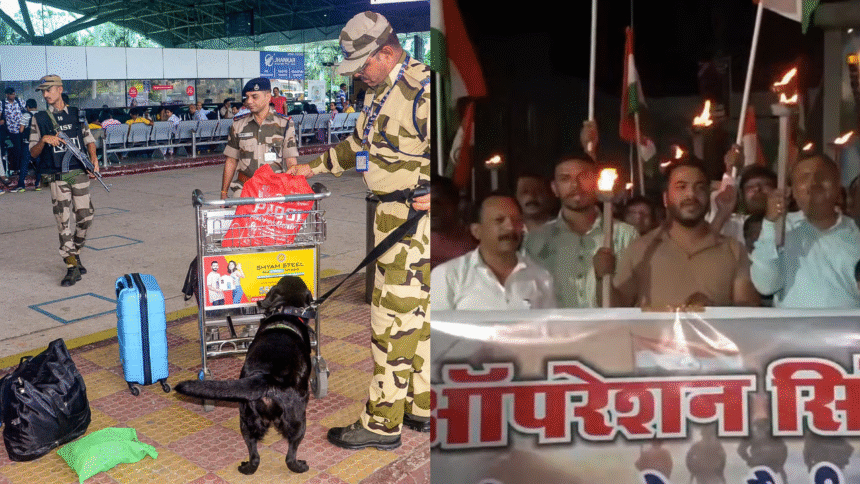
Police and intelligence agencies step up vigilance around key government locations
The city of Nagpur has been placed under a high-security alert following intelligence reports of a possible response from the Pakistan-based terrorist organization, Jaish‑e‑Mohammad (JeM), after the recently concluded military strike known as Operation Sindoor. Acting swiftly on these inputs, the law enforcement and intelligence agencies have taken preventive steps, turning the city into a high‑security zone to ensure the protection of key government installations and the safety of citizens.
Tight Security Around Key Government Areas
According to official sources, a multi-layered security cordon has been created around the Maharashtra Vidhan Bhavan (State Assembly), the Chief Minister’s residence ‘Varsha’, and major government offices in the Civil Lines area. Police personnel from multiple units, including the Anti‑Terrorism Squad (ATS), Quick Response Teams (QRTs), and local intelligence officers, have been deployed in and around these sensitive zones.
Checkpoints have been strengthened on main roads leading to the Assembly and Secretariat, and surveillance cameras have been recalibrated for 24/7 live monitoring. Sniffer dogs and bomb detection squads are being used to inspect vehicles entering these restricted zones.
Nagpur Police Commissioner Dr. Ravindra Kadam stated, “This is purely a precautionary step following central intelligence alerts. There is no need for panic, but citizens are requested to remain vigilant and report any suspicious activity immediately.”
Operation Sindoor and the Possible Threat
Operation Sindoor — a recent counter‑terror operation carried out by Indian security forces — is believed to have targeted a significant JeM network near the border. The success of the operation reportedly dealt a critical blow to the group’s structure, leading intelligence agencies to anticipate reactionary threats.
While the government has not disclosed operational details of Operation Sindoor, defense sources confirmed that it was aimed at neutralizing extremist cells responsible for earlier infiltration attempts and terror plans. Following this, various sensitive cities across India, including Nagpur, have been placed under heightened security monitoring.
An official from the Ministry of Home Affairs (MHA) told Happen Recently, “Some intercepted communications and electronic intelligence suggest the possibility of retaliatory action by JeM affiliates. The security alert is part of a national‑level preventive strategy to minimize any potential risk.”
Cities on Alert, Coordination Between Central and State Agencies
Apart from Nagpur, other key urban centers such as Mumbai, Delhi, Jammu, and Chandigarh are also under increased surveillance. In Nagpur, the focus has been on government infrastructure, public places, transport hubs, and crowded markets.
The Central Industrial Security Force (CISF) and Railway Protection Force (RPF) have intensified patrolling at Nagpur Railway Station, Dr. Babasaheb Ambedkar International Airport, and major city bus terminals. QR codes and identity checks are being conducted at random intervals to ensure safety inside the premises.
A senior police officer further mentioned, “We are maintaining continuous coordination with central intelligence units and the Indian Air Force communication base located near Nagpur. Any movement or threat call is being cross-verified through multiple channels before taking on-ground action.”
Security for Political and Administrative Leadership
The office of Maharashtra Chief Minister Eknath Shinde has also tightened security arrangements following the advisory. The Chief Minister is scheduled to attend several meetings in Nagpur this week as part of the ongoing winter session of the State Assembly, and the police are ensuring route barricading and controlled access to legislative premises.
Special security passes with RFID tracking have been introduced for journalists, staff members, and authorized personnel entering the Assembly complex. Emergency response drills are also being conducted within the Vidhan Bhavan campus to prepare staff and security guards for any untoward scenario.
Police Urge Public Cooperation
The Nagpur Police have urged city residents to remain calm but alert. Public advisories have been issued requesting citizens to avoid spreading rumors, refrain from taking photographs of security arrangements, and immediately contact the nearest police control room if they notice abandoned bags, unclaimed vehicles, or suspicious movement.
Helpline numbers (100, 112, and the Nagpur Control Room direct line) are being actively monitored, and additional personnel have been assigned to handle intelligence tips and emergency calls.
Citizens are also encouraged to use the ‘Nagpur Police Mitra’ mobile app to report incidents digitally. The app allows users to share GPS locations and images directly with police monitoring teams.
Balancing Security and Normal Life
Despite the alert, city life in Nagpur has not come to a standstill. Educational institutions and businesses remain open, though security checks at public places like malls, cinema halls, and parks have intensified. Traffic flow around Civil Lines, Seminary Hills, and Kasturchand Park has been diverted temporarily during peak hours.
Commissioner Kadam reassured residents that the police are fully prepared to handle any situation. “Our aim is to maintain both security and public normalcy. The people of Nagpur have always cooperated responsibly during such times, and their support once again will help us keep the city safe,” he said.
Nationwide Vigil and Next Steps
As India continues to monitor cross-border intelligence following Operation Sindoor, security experts have emphasized that timely alerts like this one are part of a larger proactive defence strategy. By increasing vigilance in tier‑1 and tier‑2 cities, authorities aim to deter potential threats before they can materialize.
Central agencies are expected to review the situation over the coming days, and any updates will be communicated through official channels.