


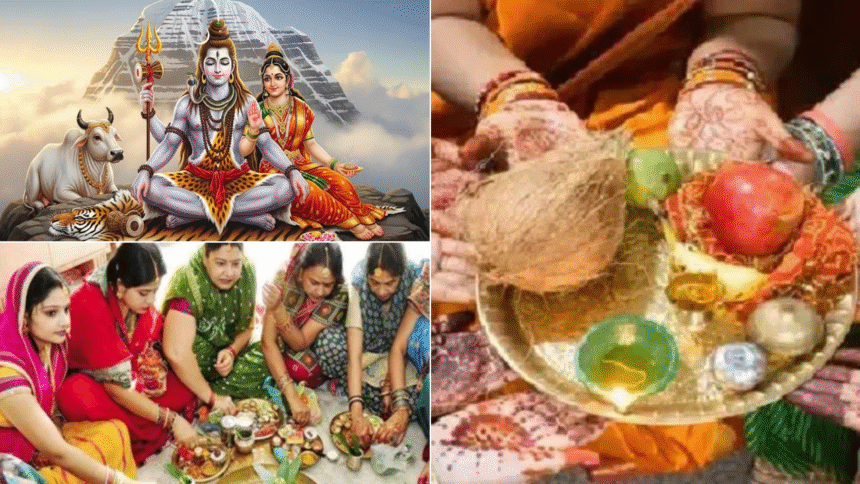
As India steps into the festive season, one of the most significant festivals for married women, Hartalika Teej 2025, is being celebrated with immense devotion and cultural grandeur. Observed on the third day of the Shukla Paksha in the month of Bhadrapada, this festival holds a deep spiritual and emotional meaning for married women who fast and pray for the long life, well-being, and prosperity of their husbands. The occasion, rooted in age-old traditions, also highlights the unwavering devotion of Goddess Parvati toward Lord Shiva, making it a symbol of marital harmony, love, and sacrifice.
The Sacred Ritual of Hartalika Teej Hartalika Teej derives its name from two words – “Harat” meaning abduction and “Aalik” meaning a female friend. According to Hindu mythology, Goddess Parvati’s friend once took her to a dense forest to save her from being forced into marriage with Lord Vishnu. It was there that Parvati performed severe penance to please Lord Shiva. Her austerity, dedication, and steadfast devotion moved Lord Shiva, who finally accepted her as his eternal consort.
In commemoration of this divine union, women across India, especially in states like Rajasthan, Uttar Pradesh, Madhya Pradesh, Bihar, and Jharkhand, observe Hartalika Teej. They perform Nirjala Vrat (a fast without food or water), adorn themselves in festive attire, and offer prayers to Goddess Parvati and Lord Shiva for a happy married life.
The rituals include worshipping beautifully decorated clay idols of Lord Shiva and Goddess Parvati, reciting sacred stories (Teej Vrat Katha), and singing devotional songs. Married women, as well as unmarried girls seeking an ideal life partner, take part in the festivities.
Hartalika Teej and Karwa Chauth – The Distinctive Differences Though both Hartalika Teej and Karwa Chauth are dedicated to the long life and prosperity of one’s husband, the traditions, rituals, and timings differ significantly.
Timing of the Festival
Hartalika Teej falls in the month of Bhadrapada (August-September) during the monsoon season.
Karwa Chauth is observed in Kartik month (October-November), right before Diwali, during the autumn season.
Mythological Significance
Hartalika Teej is rooted in the legend of Goddess Parvati’s intense penance and her divine marriage with Lord Shiva.
Karwa Chauth is linked to the devotion of married women who fast for their husbands’ safety and longevity, often tracing back to folklore and community traditions in northern India.
Fasting Rituals
On Hartalika Teej, women observe a Nirjala fast, refraining from both food and water throughout the day and night.
On Karwa Chauth, women fast from sunrise to moonrise but traditionally break their fast after sighting the moon, drinking water, and eating with their husband’s hand.
Worship Practices
Hartalika Teej puja focuses on worshipping Shiva-Parvati idols with offerings of flowers, fruits, and special items, while listening to the Teej Vrat Katha.
Karwa Chauth involves worshipping Karwa (clay pots), Goddess Gauri, and later performing rituals after moonrise with husbands.
Cultural Expressions
Hartalika Teej celebrations are marked by song, dance, swings, and traditional attire, especially in rural areas.
Karwa Chauth is more intimate and family-oriented, with women dressing up in bridal-like attire, applying mehndi, and waiting eagerly for the moonrise.
Symbol of Women’s Devotion and Empowerment Both Hartalika Teej and Karwa Chauth underline the sacred role of women in Indian traditions. These festivals are not only about fasting but also about reinforcing the values of love, patience, and sacrifice in marital life. The rituals symbolize women’s strength, devotion, and ability to shape and protect familial bonds.
In recent years, these festivals have also gained modern interpretations. Many couples now observe these fasts together, showcasing mutual respect and equality in marriage. While traditionally it was women who fasted for their husbands, an increasing number of men too have begun fasting for the well-being of their wives, reflecting evolving societal values.
Nationwide Celebrations in 2025 In 2025, Hartalika Teej is being celebrated with grandeur across India. Temples dedicated to Lord Shiva and Goddess Parvati are adorned with flowers and lights, and large community gatherings are being organized. Women are seen in vibrant green sarees, applying intricate mehndi designs, and exchanging festive gifts. The markets are buzzing with jewelry, clothes, and puja items, reflecting the festival’s economic and cultural significance.
From Rajasthan’s colorful traditions to Uttar Pradesh’s temple fairs, and from Bihar’s folk songs to Madhya Pradesh’s community prayers, the festival is uniting millions of women under one common bond of devotion and cultural pride.
Conclusion Hartalika Teej 2025 is not just a festival but a celebration of timeless values that form the essence of Indian marital traditions. It serves as a reminder of Goddess Parvati’s unwavering devotion to Lord Shiva, inspiring generations of women to embody faith, strength, and resilience.
While Karwa Chauth and Hartalika Teej may differ in rituals and regional significance, their underlying message remains the same – the power of love, commitment, and spiritual connection in marriage. As modern couples embrace these traditions with renewed perspectives, the festivals continue to bridge the gap between the ancient and the contemporary, making them as relevant today as they were centuries ago.