


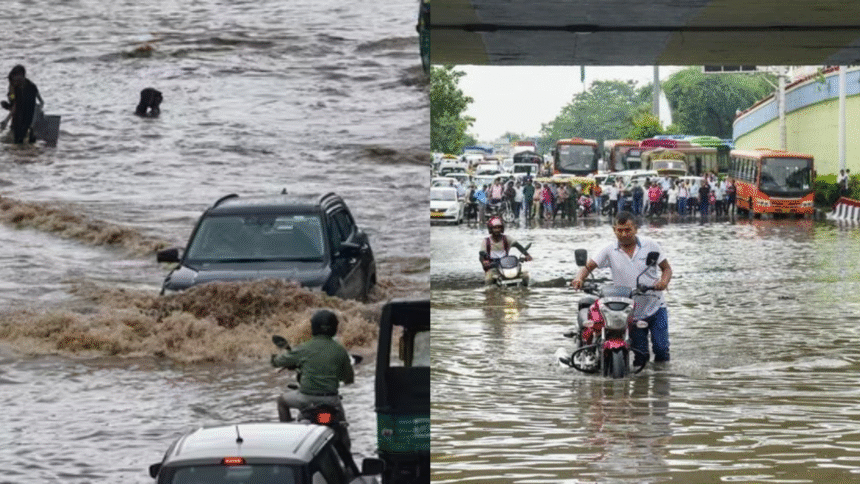
Heavy monsoon rains once again brought life to a standstill in the Delhi-NCR region, with Gurugram witnessing unprecedented traffic gridlock on Monday. Thousands of commuters were stranded for nearly six to eight hours, as rain-triggered waterlogging and congestion paralyzed major arterial roads, including key highways connecting the city to the national capital.
The incident has sparked widespread outrage across social media, where residents voiced frustration over the inability of infrastructure to withstand seasonal downpours despite Gurugram’s status as one of India’s wealthiest suburbs. Known for its gleaming skyscrapers, multinational corporate hubs, and upscale residential complexes, Gurugram faced a stark contrast on Monday as traffic stretched for over 10 kilometres on one highway, with images and videos of stalled vehicles going viral online.
Chaos on Roads as Rain Disrupts Commutes
According to eyewitnesses, office-goers, schoolchildren, and residents were caught in a “nightmarish” situation, with some commuters reporting being stuck in their vehicles for more than half a day. A viral video showed dozens of lanes on a key highway clogged with cars, creating an endless snarl that reflected the city’s infrastructural vulnerabilities.
Some social media users expressed exasperation with posts like, “Gurugram is drowning. You pay exorbitant rent to come home to this.” Others resorted to humour, suggesting that they might reach their homes faster on foot or that sleeping in offices would be a more practical option.
Authorities Advise Work-from-Home
In response to the chaos, disaster management authorities in Gurugram advised offices, schools, and colleges to shift to remote working and online classes on Tuesday, as more rainfall was predicted. “The safety of residents is the priority. We urge people to stay indoors unless travel is absolutely necessary,” officials said in a statement.
Meanwhile, the Delhi government also issued weather alerts, citing rising water levels in the Yamuna river, which has already breached the danger mark. Low-lying areas near the riverbanks have been inundated, prompting evacuation efforts. The iconic Old Railway Bridge, connecting key parts of Delhi across the Yamuna, was closed to traffic due to the surging waters.
Delhi Chief Minister Rekha Gupta, in a social media post, reassured citizens that the situation was being closely monitored. “Our teams are on the ground, coordinating with disaster management authorities to ensure the safety of residents,” she stated.
A Widespread Monsoon Crisis
The crisis in Gurugram is not an isolated event but part of a broader monsoon emergency gripping India. Torrential rains this season have been significantly more intense, wreaking havoc across several northern states, including Himachal Pradesh, Uttarakhand, Punjab, and parts of Indian-administered Kashmir.
Himachal Pradesh, a state already prone to landslides and flash floods, has reported 310 deaths in rain-related incidents since June 2025, according to official data. Fatalities have been caused by flash floods, road accidents, and landslides triggered by incessant downpours. In Punjab, at least 29 people have died due to flooding, with fresh warnings issued as more rainfall is expected.
Experts say the combination of rapid urbanization, inadequate drainage systems, and climate-induced extreme weather events has made Indian cities increasingly vulnerable during the monsoon season. Gurugram, despite being a corporate powerhouse that hosts regional headquarters of companies like Google, Meta, American Express, and Samsung, has often faced criticism for its fragile civic infrastructure and lack of preparedness against seasonal flooding.
Political Repercussions and Citizen Anger
Monday’s gridlock has ignited political debate, with frustrated residents questioning why Haryana’s state government, led by the Bhartiya Janata Party (BJP), has failed to strengthen Gurugram’s infrastructure despite its economic significance. Civic activists argue that the repeated flooding and traffic chaos during rains point to systemic issues in urban planning, drainage design, and disaster response.
“The government cannot continue to treat heavy rainfall as an unforeseen event,” said one resident activist group. “Every monsoon exposes the same cracks in the system, yet corrective action remains limited.”
Looking Ahead
Meteorological authorities have predicted more rainfall across Delhi-NCR over the next 48 hours, raising concerns of further disruption. Residents living near the Yamuna have been urged to relocate to safer locations, while emergency teams remain on high alert for potential flash floods.
Authorities reiterated their appeal to citizens: avoid unnecessary travel, work from home where possible, and cooperate with relief measures. For commuters who faced Monday’s ordeal, however, the assurances provide little consolation.
“The city can’t afford to lose productive hours and compromise safety every time it rains,” said a commuter stuck in traffic for nearly seven hours. “Gurugram deserves better.”
Monsoon Reality Check
India’s annual monsoon, which typically lasts from June to September, is both a lifeline and a challenge. While the rains replenish reservoirs and support agriculture, they also bring recurrent flooding and landslides, especially in urban centers with overburdened drainage systems. This year, officials and meteorologists alike acknowledge that rainfall intensity has been higher than usual, underscoring the urgent need for climate-resilient infrastructure.
As Gurugram recovers from one of its longest traffic snarls in recent history, the incident serves as a reminder of the pressing need to align urban development with sustainability, resilience, and preparedness. Until then, the city’s residents may continue to find themselves stranded – both in traffic and in hope.