


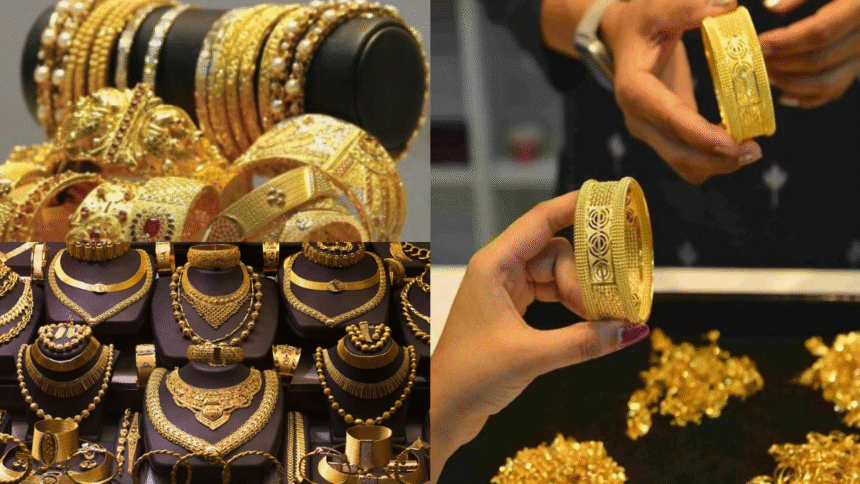
The shine of precious metals has reached dazzling new heights in Indian and global markets. Both gold and silver prices have surged to their all-time highs, crossing psychological milestones that were once thought to be out of reach. Gold has, for the first time in history, crossed the ₹1.05 lakh mark per 10 grams, while silver has rallied to nearly ₹1.25 lakh per kilogram.
The sharp rise is being witnessed not only on the Multi Commodity Exchange (MCX) in futures trading but also in India’s domestic bullion markets, making gold and silver the most sought-after assets amidst economic uncertainties.
Gold and Silver Touch Lifetime Highs
Gold prices have been moving at rocket speed, smashing through old records. On Monday, gold futures for October 3 expiry on the MCX opened at ₹1,03,899 per 10 grams. By noon, prices had spiked sharply to ₹1,05,729 per 10 grams, reflecting a dramatic single-day surge of ₹1,830.
Silver too has mirrored this momentum, with its futures price climbing by nearly ₹3,000 per kilogram to reach a record-breaking ₹1,24,990. The rally signals not just short-term investor enthusiasm but also a broader trend of sustained demand for safe-haven assets in volatile times.
Domestic Market Shows Strong Parallel Rally
The surge is not limited to commodity exchanges. In the physical market, Indian consumers are also witnessing soaring prices. Data from the Indian Bullion Jewellers Association (IBJA) shows that on August 29, 24-carat gold was priced at ₹1,02,388 per 10 grams. By Monday morning, it had shot up to ₹1,04,792, an increase of ₹2,404 within days.
Since the beginning of 2025, gold has risen by a staggering ₹28,630 per 10 grams, underlining its position as a reliable hedge against inflation and currency volatility.
Silver’s performance has been equally impressive. On August 29, silver was trading at ₹1,17,572 per kilogram. By Monday, the price had touched ₹1,23,250, marking a jump of ₹5,678 in a single trading session. The consistent rise in both metals underscores their appeal as a safe investment option during times of uncertainty.
Retail Buyers Paying More Due to Taxes and Charges
While IBJA provides standard benchmark rates across the country, retail buyers end up paying higher prices when purchasing gold jewelry. This is because the final cost includes 3% Goods and Services Tax (GST) and making charges, which vary across jewelers and regions. As a result, customers pay significantly more than the bullion market rates, especially for crafted ornaments.
What’s Driving the Rally?
Experts attribute the meteoric rise in gold and silver prices to multiple global and domestic factors:
- US Federal Reserve Policies: Growing expectations of a rate cut by the Federal Reserve have boosted the appeal of gold and silver as safe-haven investments.
- Trade Tensions and Policy Uncertainty: Ongoing concerns over US President Donald Trump’s tariff policies and unresolved India-US trade issues have created market jitters, driving investors toward precious metals.
- Rupee Depreciation: The weakening of the Indian rupee against the US dollar has made imported gold more expensive, amplifying the price surge in Indian markets.
- Seasonal Demand: With India’s festive and wedding season approaching, consumer demand for gold jewelry has surged, further tightening supply and raising prices.
Expert Analysis
According to Business Today, Jatin Trivedi, Vice President, Research Analyst (Commodity & Currency) at LKP Securities, highlighted that tariff-related uncertainties and pending trade deal issues between India and the US have been fueling the rally. He added that rupee weakness has played a pivotal role in making gold costlier in domestic markets.
Trivedi further noted that in the near term, gold prices are expected to remain in the range of ₹1,00,000 to ₹1,05,000 per 10 grams, while silver is likely to sustain its bullish momentum.
Impact on Consumers and Investors
For investors, this rally is a golden opportunity. Those who invested earlier in the year have seen returns of nearly 30%, with gold proving once again to be a robust hedge against inflation and global uncertainty.
For consumers, however, the rising prices pose challenges. With festivals and weddings around the corner, buying jewelry has become significantly more expensive. Adding GST and making charges further escalates costs, forcing many buyers to reconsider or reduce purchases.
Future Outlook
With geopolitical tensions, uncertain trade policies, and expectations of monetary easing, analysts believe gold and silver will continue to remain volatile but upwardly biased. In India, cultural and seasonal demand will provide an additional boost.
While short-term corrections may occur, the long-term trend for precious metals remains strong. Market experts suggest that investors should maintain a cautious but optimistic stance, as gold and silver could witness fresh highs in the coming months.