
In a coordinated diplomatic appeal, twenty-six countries, including the United Kingdom, France, and Canada, have issued a joint statement calling for an immediate end to the ongoing war in Gaza. The statement condemns the “horrifying” killing of hundreds of Gazan civilians who were attempting to access aid under Israel’s current delivery model, which the signatories describe as “dangerous, destabilizing, and degrading to human dignity.”
The countries’ joint declaration marks one of the most unified international calls for a ceasefire since the conflict began, highlighting urgent humanitarian concerns and warning of catastrophic consequences if immediate action is not taken.
“The Israeli government’s aid delivery model is dangerous, fuels instability and deprives Gazans of human dignity,” the statement read, underscoring the collective alarm over the rising civilian death toll and worsening living conditions in the enclave.
ISRAEL RESPONDS, REJECTING STATEMENT
The Israeli government has firmly rejected the criticism. Oren Marmorstein, spokesperson for Israel’s foreign ministry, responded that the statement was “disconnected from reality” and reiterated that the government “rejects” its assertions. Israel maintains that its military operations are aimed at dismantling Hamas’ military capabilities and securing the release of Israeli hostages believed to be held in Gaza.
ESCALATING HUMANITARIAN CRISIS
The joint statement comes as international food security experts warn that Gaza is on the brink of a famine-like disaster. According to the Integrated Food Security Phase Classification (IPC), a global body specializing in food security analysis, more than 1.5 million people in Gaza—approximately two-thirds of the territory’s pre-war population—are at risk of severe malnutrition or starvation until at least October.
The IPC report states that “goods indispensable for people’s survival are either depleted or expected to run out in the coming weeks.” Nearly 500,000 people are already classified as facing “catastrophe” (IPC Phase 5), the most severe level of food insecurity, while an additional 1.1 million are in the “emergency” category (IPC Phase 4), the second highest on the scale.
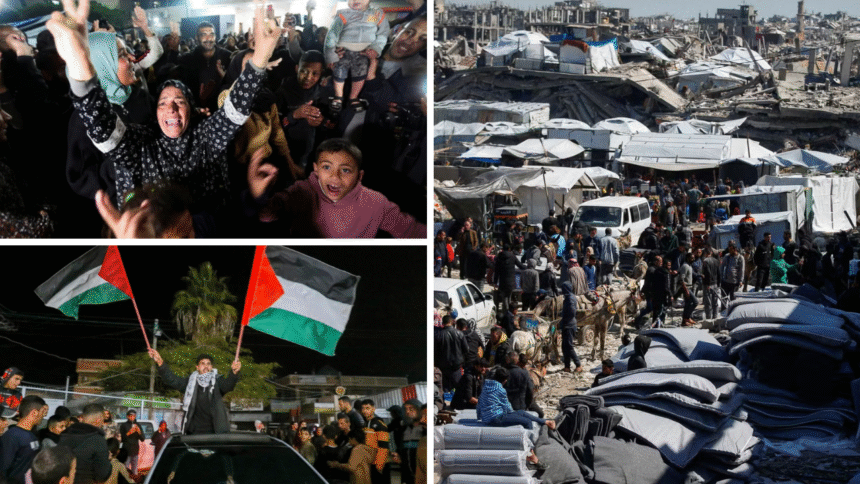
Aid agencies have repeatedly stressed that restricted access to essential supplies, combined with the destruction of infrastructure and mass displacement, is accelerating the crisis. Medical experts also warn of an imminent public health emergency due to shortages of clean water, medicines, and sanitation facilities.
GROUND ASSAULT IN CENTRAL GAZA
Tensions escalated further on Monday as Israel launched its first ground assault on Deir al-Balah in central Gaza. The area, now overcrowded with thousands of displaced civilians from southern Gaza, is also believed to be a location where some Israeli hostages are being held.
Eyewitness accounts describe chaotic scenes as families fled bombardments, seeking shelter in already overcrowded facilities, including schools and makeshift camps. Humanitarian organizations on the ground have warned that the military action in such a densely populated area risks significant civilian casualties and could worsen the already dire humanitarian conditions.
INTERNATIONAL DIPLOMATIC PRESSURE BUILDS
The signatory countries of the joint statement have urged all parties to respect international humanitarian law, ensure the unimpeded delivery of aid, and prioritize civilian safety. While their message stops short of outlining specific sanctions or punitive measures, diplomatic insiders suggest that further coordinated action could follow if the conflict continues unabated.
This appeal reflects growing frustration among international actors over the prolonged hostilities, which have now entered a new phase with Israel’s intensified ground operations. The ongoing violence has already displaced the majority of Gaza’s population, with no clear pathway toward a ceasefire or peace negotiations.
HUMAN RIGHTS AND AID ORGANIZATIONS REACT
Global humanitarian and human rights organizations have welcomed the statement as a long-overdue acknowledgment of the severity of the crisis.
“This level of coordinated diplomatic condemnation is significant,” said one spokesperson for a leading humanitarian agency. “However, words must be followed by concrete action to stop the bloodshed and ensure lifesaving aid reaches those who need it most.”
Several aid agencies have reiterated calls for the establishment of secure humanitarian corridors, increased funding for relief efforts, and an immediate suspension of hostilities to allow critical supplies to enter Gaza without obstruction.
NEXT STEPS
While the joint statement represents a notable diplomatic push, its practical impact remains uncertain. Israel has shown no indication of halting its military operations, and political divisions within the broader international community continue to complicate efforts toward a negotiated peace.
Nonetheless, the united front displayed by these 26 countries could signal a turning point in international engagement, especially if followed by more assertive measures in global forums such as the United Nations.
As the conflict continues, the situation in Gaza remains volatile, with mounting civilian casualties, deteriorating humanitarian conditions, and a growing risk of famine. Without swift and coordinated intervention, experts warn that the territory could face one of the worst humanitarian crises in recent history.