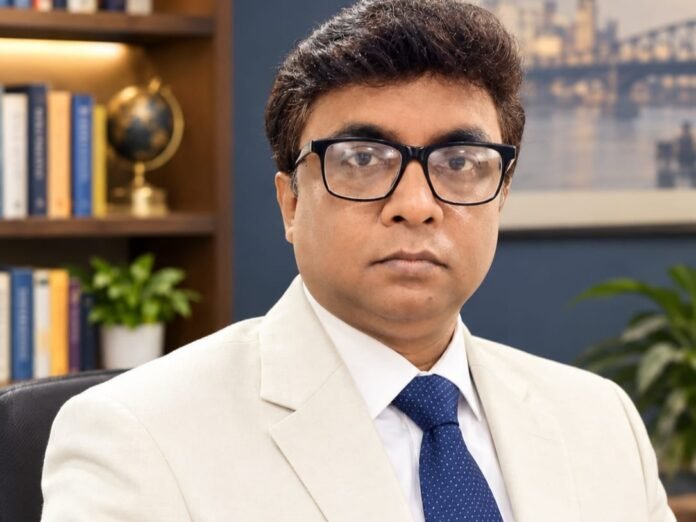
As students face an expanding range of career choices, changing skill requirements, and growing pressure to make early academic decisions, educationist and mentor Goutam Mandal believes career guidance should start not with a list of professions, but with a deeper understanding of the individual.
According to Mandal, Founder of Holistic Rediscovery and author of The Inner Compass, connecting students to their roots and helping them define the purpose of their life can address nearly 80 percent of their career-related confusion.
The remaining journey, he says, depends largely on dedication, determination and discipline.
“When a student is connected to the root and understands the purpose of life, a large part of the confusion about career direction begins to disappear. The rest is about having the dedication, determination and discipline to walk that path,” Mandal says.
The 80 percent figure is Mandal’s own framework for describing the importance he places on self-understanding and purpose; it is not presented as a measured scientific finding.
From ‘Which career?’ to ‘Why this career?’
Mandal’s approach seeks to change the starting question in career counseling.
Instead of asking students only whether they should pursue engineering, medicine, commerce, law, management or another profession, he believes students should first explore questions around purpose, values, strengths, interests and aspirations.
The idea forms a central philosophy behind The Inner Compass, authored by Mandal, whose tagline is “The clarity you seek begins within.”
According to Mandal, a student who understands what drives them can evaluate career options with greater context rather than making decisions primarily because of marks, peer pressure, social status, or parental expectations.
The missing link: purpose
The transition from school to higher education and eventually employment is often treated as a sequence of academic decisions. Mandal argues that the process needs a deeper foundation.
His Holistic Inner Compass Career Counseling Framework connects purpose, values, strengths, goals, milestones, challenges, and long-term impact with career exploration.
The objective is to help students develop an internal reference point before they compare courses, colleges, and professions.
In Mandal’s view, career counseling therefore needs to be more than psychometric testing or providing a list of suitable careers. Assessment can provide information, but the student ultimately needs to understand how that information connects with personal goals and life direction.
Parents need to participate differently
Mandal also believes that the role of parents in a child’s career journey requires more serious and continuous participation.
Parents, he says, cannot limit their involvement to marks, exam preparation, and choosing academic streams. They need to understand the child as an individual and create space for conversations about aspirations, fears, strengths, interests and uncertainty.
“Parents need to participate in their children’s lives, not just in their children’s examinations.”
According to this approach, parental participation does not mean deciding the child’s career. Instead, parents can act as observers, facilitators, and supporters while allowing children to gradually develop ownership of their decisions.
This becomes particularly important when family aspirations and a student’s individual interests do not necessarily point in the same direction.
The pressure of an AI-driven world
The career conversation has become more complicated with the rapid development of artificial intelligence.
Students today are preparing for a professional environment in which job roles, technologies and required skills can change significantly during their working lives. Mandal argues that this makes self-awareness and adaptability increasingly important.
A student may choose a course today, but the professional role associated with that course may look very different several years later.
For this reason, Mandal believes education should help students develop the ability to understand themselves, learn continuously and make informed decisions, rather than simply prepare for a single occupation.
Building career guidance into the school ecosystem
Mandal’s larger objective is to shift career counseling from a one-time intervention to an ongoing process within schools.
Through Holistic Rediscovery, he has been working on integrating career counseling with broader school-governance thinking, with students in Classes 9 to 12 being a key focus.
The approach combines self-discovery, psychometric assessment, career exploration and structured planning, while also bringing parents and schools into the conversation.
The broader philosophy behind The Inner Compass is that a student’s career journey should begin with an understanding of who they are and why they want to move in a particular direction, before deciding exactly where they want to go.
For Mandal, the message is ultimately about creating clarity before creating a career.
“Connect the student to the root. Help the student discover the purpose. Once the direction becomes clear, dedication, determination and discipline can carry the student forward.”
About Holistic Rediscovery
Holistic Rediscovery, founded by Goutam Mandal, works in the areas of career guidance, student mentoring and school governance, with a focus on helping students and families approach career decisions through self-discovery and structured planning.
Website: holisticrediscovery.com
Email: holisticrediscovery@gmail.com
WhatsApp/Phone: +91 63018 80856‘Connect Students to Their Roots’: Goutam Mandal Says Purpose Can Address Much of the Career Confusion
As students face an expanding range of career choices, changing skill requirements, and growing pressure to make early academic decisions, educationist and mentor Goutam Mandal believes career guidance should start not with a list of professions, but with a deeper understanding of the individual.
According to Mandal, Founder of Holistic Rediscovery and author of The Inner Compass, connecting students to their roots and helping them define the purpose of their life can address nearly 80 percent of their career-related confusion.
The remaining journey, he says, depends largely on dedication, determination and discipline.
“When a student is connected to the root and understands the purpose of life, a large part of the confusion about career direction begins to disappear. The rest is about having the dedication, determination and discipline to walk that path,” Mandal says.
The 80 percent figure is Mandal’s own framework for describing the importance he places on self-understanding and purpose; it is not presented as a measured scientific finding.
From ‘Which career?’ to ‘Why this career?’
Mandal’s approach seeks to change the starting question in career counseling.
Instead of asking students only whether they should pursue engineering, medicine, commerce, law, management or another profession, he believes students should first explore questions around purpose, values, strengths, interests and aspirations.
The idea forms a central philosophy behind The Inner Compass, authored by Mandal, whose tagline is “The clarity you seek begins within.”
According to Mandal, a student who understands what drives them can evaluate career options with greater context rather than making decisions primarily because of marks, peer pressure, social status, or parental expectations.
The missing link: purpose
The transition from school to higher education and eventually employment is often treated as a sequence of academic decisions. Mandal argues that the process needs a deeper foundation.
His Holistic Inner Compass Career Counseling Framework connects purpose, values, strengths, goals, milestones, challenges, and long-term impact with career exploration.
The objective is to help students develop an internal reference point before they compare courses, colleges, and professions.
In Mandal’s view, career counseling therefore needs to be more than psychometric testing or providing a list of suitable careers. Assessment can provide information, but the student ultimately needs to understand how that information connects with personal goals and life direction.
Parents need to participate differently
Mandal also believes that the role of parents in a child’s career journey requires more serious and continuous participation.
Parents, he says, cannot limit their involvement to marks, exam preparation, and choosing academic streams. They need to understand the child as an individual and create space for conversations about aspirations, fears, strengths, interests and uncertainty.
“Parents need to participate in their children’s lives, not just in their children’s examinations.”
According to this approach, parental participation does not mean deciding the child’s career. Instead, parents can act as observers, facilitators, and supporters while allowing children to gradually develop ownership of their decisions.
This becomes particularly important when family aspirations and a student’s individual interests do not necessarily point in the same direction.
The pressure of an AI-driven world
The career conversation has become more complicated with the rapid development of artificial intelligence.
Students today are preparing for a professional environment in which job roles, technologies and required skills can change significantly during their working lives. Mandal argues that this makes self-awareness and adaptability increasingly important.
A student may choose a course today, but the professional role associated with that course may look very different several years later.
For this reason, Mandal believes education should help students develop the ability to understand themselves, learn continuously and make informed decisions, rather than simply prepare for a single occupation.
Building career guidance into the school ecosystem
Mandal’s larger objective is to shift career counseling from a one-time intervention to an ongoing process within schools.
Through Holistic Rediscovery, he has been working on integrating career counseling with broader school-governance thinking, with students in Classes 9 to 12 being a key focus.
The approach combines self-discovery, psychometric assessment, career exploration and structured planning, while also bringing parents and schools into the conversation.
The broader philosophy behind The Inner Compass is that a student’s career journey should begin with an understanding of who they are and why they want to move in a particular direction, before deciding exactly where they want to go.
For Mandal, the message is ultimately about creating clarity before creating a career.
“Connect the student to the root. Help the student discover the purpose. Once the direction becomes clear, dedication, determination and discipline can carry the student forward.”
About Holistic Rediscovery
Holistic Rediscovery, founded by Goutam Mandal, works in the areas of career guidance, student mentoring and school governance, with a focus on helping students and families approach career decisions through self-discovery and structured planning.
For more information you can visit on Facebook: https://www.facebook.com/share/19RvxXhVFR/