
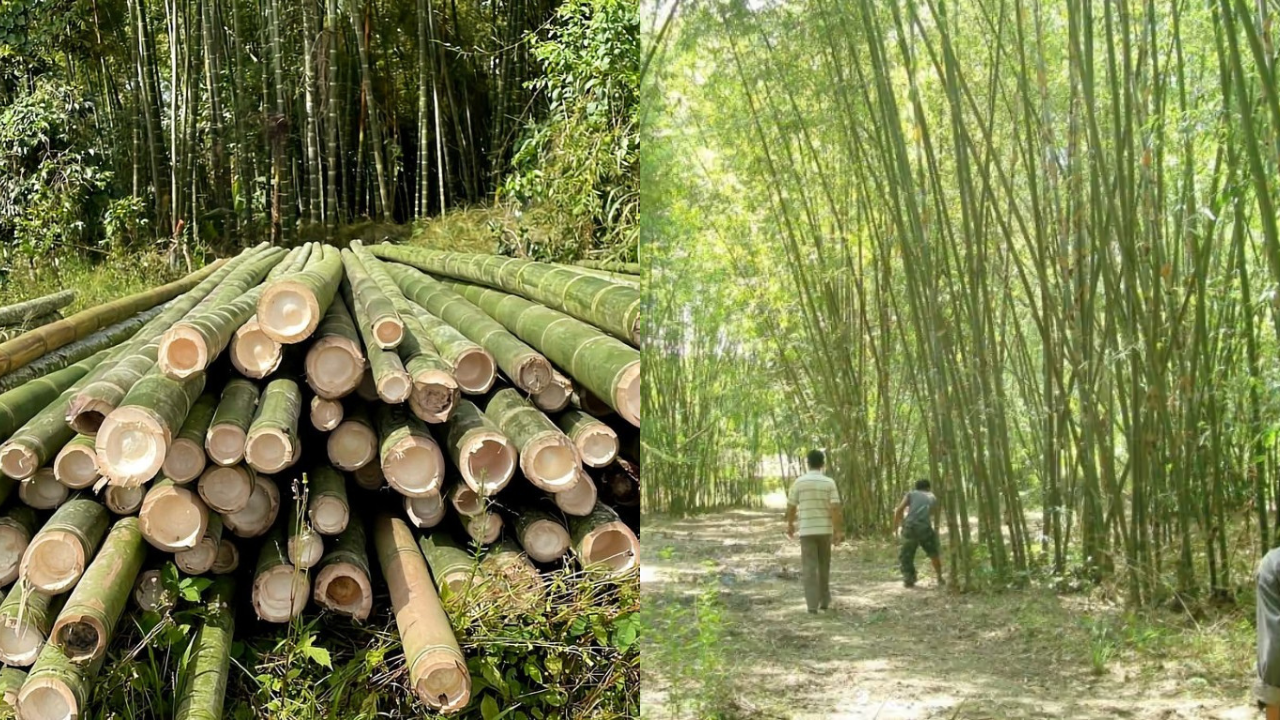

In a significant step toward sustainable growth and rural development, the state government has announced the Bamboo Industry Policy 2025, aiming to attract Rs 50,000 crore in investments and generate up to 5 lakh employment opportunities over the next five years. The ambitious policy focuses on promoting bamboo-based industries, setting up specialized clusters, and encouraging micro, small, and medium enterprises (MSMEs) to harness the potential of India’s rich bamboo resources.
The new policy will play a key role in transforming the bamboo sector into a modern, technology-driven industry that supports both rural livelihoods and environmental sustainability. The government has emphasized that the initiative is designed not just to promote bamboo as a raw material, but to create a value-added ecosystem with end-to-end support for entrepreneurs, craftsmen, and investors.
A vision for sustainable industrial development
Bamboo, often called “green gold,” has long been a part of India’s cultural and economic fabric. The state government’s new policy positions bamboo as a strategic raw material for industrial development, with a clear focus on circular economy principles. It aims to integrate traditional craftsmanship with modern manufacturing technologies such as machine processing, bio-engineering, and design innovation.
According to officials, the Bamboo Industry Policy 2025 aligns with national missions like Make in India and Atmanirbhar Bharat, encouraging domestic production and reducing import dependency for bamboo-based products such as furniture, flooring, packaging materials, and handicrafts.
Key highlights of the Bamboo Industry Policy 2025
The government has outlined several measures under the new policy, including institutional support, financial incentives, and infrastructure creation. Some of the major highlights include:
- Investment target: The policy seeks to attract cumulative investments worth Rs 50,000 crore from both public and private sectors over the next five years.
- Employment generation: An estimated 5 lakh job opportunities will be created across production, processing, design, marketing, and research sectors.
- Bamboo clusters: The state will set up dedicated bamboo industrial clusters in key regions, enabling industries to access raw materials, logistics, and testing facilities in one integrated zone.
- MSME support: Micro and small enterprises will receive special incentives, including subsidies on machinery, power tariff concessions, and low-interest loans.
- Venture capital funding: The government plans to introduce a dedicated Venture Capital Fund to promote startup innovation in the bamboo value chain. This will support entrepreneurs working on sustainable product design, packaging, and technology-driven applications.
- Skill development: Training programs will be launched in collaboration with technical institutes and design centers to enhance the skills of artisans and rural youth.
- Technology adoption: Advanced bamboo processing technologies such as computer-aided design (CAD), 3D printing, and automated weaving will be introduced to improve quality, efficiency, and export competitiveness.
Boosting rural livelihoods and entrepreneurship
The policy places strong emphasis on empowering rural communities and self-help groups (SHGs) that depend on bamboo cultivation and craftmaking. The government will encourage contract farming and promote bamboo plantation on private and degraded lands through incentives and buyback arrangements.
This will help farmers and rural artisans generate higher incomes, while industries gain access to a stable and sustainable supply of raw material. The government also plans to link bamboo growers to cooperative structures and e-market platforms for transparent pricing and trade.
Officials believe that bamboo clusters will become engines of rural entrepreneurship, attracting small-scale manufacturing units, design studios, packaging companies, and export firms. Apart from domestic markets, the policy envisions expanding bamboo exports to regions like the Middle East, Europe, and Southeast Asia, where demand for eco-friendly building materials and organic products is rising.
Supporting innovation and sustainability
Innovation is central to the Bamboo Industry Policy 2025. The government will encourage institutions and research organizations to collaborate on developing new bamboo-based materials such as bio-composites, fiber boards, and biodegradable packaging. These eco-friendly alternatives can replace plastics and other non-renewable resources, helping industries meet global sustainability standards.
Additionally, the policy aims to promote bamboo usage in construction, furniture, interior design, and even energy generation. Pilot projects using bamboo biomass for bioenergy will be supported under green industry initiatives.
Institutional framework and ease of doing business
To ensure effective implementation, the government will establish a Bamboo Industry Development Board that will coordinate efforts between departments such as Industry, Forest, Agriculture, and Rural Development. The board will also create a single-window clearance system to facilitate faster approvals for bamboo-based projects.
Investors will benefit from simplified processes for land allocation, infrastructure financing, and environmental clearances. A robust monitoring system will track industry progress, investment flow, and employment outcomes.
Long-term impact and outlook
Experts say the Bamboo Industry Policy 2025 has the potential to transform the state into a national hub for bamboo-based industries. The initiative will not only create employment but also open doors for innovation-driven manufacturing, boost exports, and support the global transition to sustainable products.
By setting clear targets and providing comprehensive support, the government aims to position bamboo as a symbol of green growth and inclusive industrialization. The success of this policy could also serve as a model for other states to follow in developing eco-industrial sectors that balance economy and ecology.
As the first phase of implementation begins, investors, farmers, and entrepreneurs are optimistic that this new policy will turn the state’s vision of a modern bamboo economy into a reality — one that blends tradition with technology and growth with sustainability.