


Telangana to host ₹1,500 crore eco-friendly steel project under AMSL partnership
In a major development that underscores India’s growing commitment to renewable energy and sustainable industrial growth, the Adani Group has announced plans to invest a staggering $75 billion (approximately ₹6.25 lakh crore) over the next five years in its energy transition initiatives. The conglomerate aims to strengthen India’s clean energy infrastructure through rapid expansion in green hydrogen, solar, wind, and renewable manufacturing ecosystems.
Alongside this, Adani Metaliks and Steel Limited (AMSL) has signed a Memorandum of Understanding (MoU) worth ₹1,500 crore with the Telangana government to set up a new state-of-the-art manufacturing facility. The agreement marks a significant milestone for Telangana’s industrial development, further enhancing Adani Group’s footprint in southern India.
Adani Group’s Green Vision
Adani Group’s planned investment will primarily focus on building a fully integrated renewable energy value chain—spanning from manufacturing solar modules and wind turbines to producing green hydrogen and ammonia for domestic and global markets.
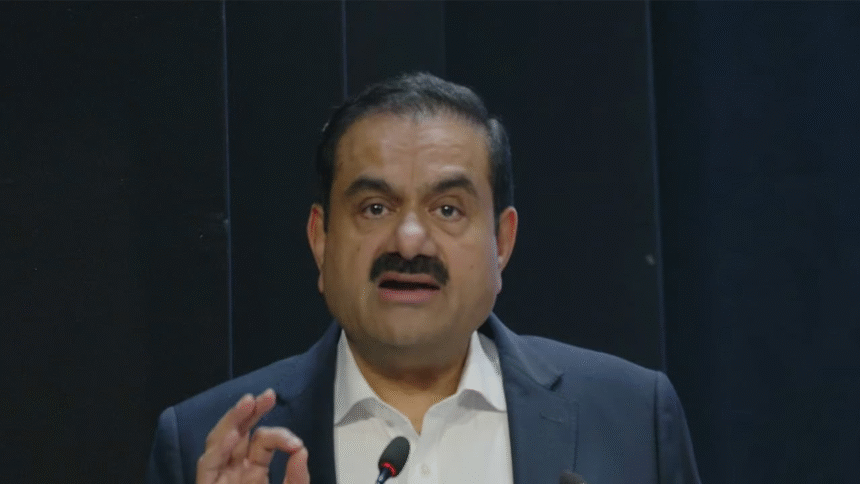
Gautam Adani, Chairman of the Adani Group, stated that this investment represents the company’s vision to make India a global hub for sustainable energy solutions. He emphasized that the Group’s energy transition strategy aligns with Prime Minister Narendra Modi’s goal of achieving net-zero emissions by 2070 and building India’s leadership in clean technologies.
“This is not just about changing how we power our economy—it is about reimagining how we secure our energy future, create jobs, and advance national progress sustainably,” Adani said.
The Group plans to accelerate the growth of its Adani New Industries Limited (ANIL) division, which is spearheading its work in green hydrogen, solar, and wind energy. Investments will also be directed toward infrastructure development, such as renewable-powered data centers, transmission networks, and energy storage facilities.
Focus on Green Hydrogen and Manufacturing
A major portion of the $75 billion investment will go into developing a green hydrogen ecosystem, with the goal of producing up to 1 million tonnes per year of green hydrogen and its derivatives by 2030. This initiative is expected to cut India’s dependency on imported fossil fuels while promoting the use of clean energy in sectors like heavy industry, transportation, and fertilizers.
Adani Group has already initiated several projects in Gujarat, Rajasthan, and Tamil Nadu to scale up renewable energy generation capacities. The new funding will expand solar and wind capacity to over 45 GW (gigawatts) by 2030, making Adani one of the biggest green energy players in the world.
Additionally, the Group is investing in energy storage technologies to ensure the grid stability needed for large-scale renewable adoption.
AMSL’s Telangana Project
In a parallel development, Adani Metaliks and Steel Limited (AMSL) announced the signing of a ₹1,500 crore agreement with the Telangana government for setting up an advanced steel and metals manufacturing plant in the state. The project will likely come up in an industrial cluster near Hyderabad, where the government is promoting green and sustainable industries under its “Make in Telangana” initiative.
Telangana Industries Minister D. Sridhar Babu welcomed the investment, saying it showcases the state’s robust industrial ecosystem and its ease-of-doing-business environment.
“We are delighted that Adani Group has chosen Telangana for setting up another major facility. This investment will generate employment, drive economic growth, and align with our sustainable development goals,” the minister added.
The proposed AMSL facility is expected to create over 2,000 direct and indirect jobs, and will specialize in producing environmentally friendly steel products using renewable energy sources. The plant will incorporate modern technologies to recycle industrial waste, conserve water, and minimize carbon emissions.
Telangana – A Growing Industrial Hub
Telangana has emerged as a frontrunner among Indian states in attracting new industrial and manufacturing investments. The state’s proactive policies, such as the TS-iPASS single-window clearance system and incentives for green industries, have made it a preferred destination for both national and international companies.
Over the last few years, Telangana has drawn substantial investments from automotive, electronics, and renewable energy sectors. The Adani Group’s new project is expected to further boost the state’s industrial diversification and strengthen India’s overall renewable energy ecosystem.
Strengthening India’s Clean Energy Future
The dual announcements from Adani Group—its $75 billion energy transition plan and AMSL’s ₹1,500 crore investment in Telangana—collectively emphasize India’s evolving industrial priorities. The focus is shifting from traditional resources to sustainable and environmentally conscious business models.
Experts believe these moves will help India accelerate its energy independence, reduce carbon intensity, and fuel large-scale employment across clean-tech sectors. They also reaffirm India’s commitment to meeting international climate targets under the Paris Agreement.
Economists and industry analysts view Adani’s long-term bet on renewables as strategically aligned with global trends. With growing ESG (Environmental, Social, and Governance) considerations, the Group’s large-scale investments could attract foreign partnerships, boost exports of green technologies, and position India as a leader in clean manufacturing.
Conclusion
Adani Group’s sweeping energy transition plan and AMSL’s new Telangana pact represent a powerful message: India’s industrial future lies in sustainability, innovation, and self-reliance. From powering cities with renewable energy to building green factories, these initiatives reflect a new era of responsible growth.
As India continues its transformation into a global clean energy powerhouse, the Adani Group’s investments stand as one of the most ambitious corporate commitments to sustainability ever undertaken in the country.