
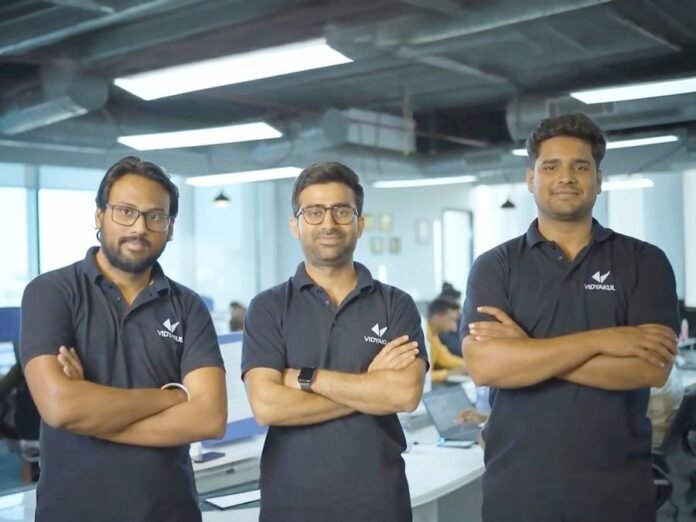
Gurugram-based education technology startup Vidyakul has raised Rs 10 crore in debt financing from the Michael and Susan Dell Foundation to expand its Hindi-first learning platform for state-board students. The company announced the financing on November 24.
The funding will be used to grow its courses, assessments and personalised academic support for students in Classes 9 to 12, and to scale its Hindi-language artificial intelligence tools, which answer students’ questions in Hindi and already resolve about 1.2 million queries every month.
The money is debt, not equity. The foundation is lending the capital, which the company will repay, rather than buying a stake in the business. Vidyakul’s last announced equity round was Rs 12 crore in July 2022, led by JITO Angel Network.
What the funding will be used for
The company said the new financing will support four areas of growth:
– More courses, tests and personal academic support for students in Classes 9 to 12. – Wider use of its Hindi AI tools, which give students answers and personalised help in their own language. – Study and career pathways for students after Class 12. – Expansion of the platform beyond Bihar and Uttar Pradesh, and across India, although the company has not disclosed specific timelines or new geographies.
Vidyakul plans to expand its vernacular learning platform for state-board students as it looks to widen access to affordable education, with a focus on learners in smaller towns and rural areas.
Strong board results behind the raise
The financing comes as Vidyakul reports strong adoption among the students it serves. More than 1.17 lakh students enrolled in its paid programmes during the 2025-26 academic year, and over 11 lakh students access its free educational content every year. Its YouTube channels have more than 15 million subscribers.
The company said 99.8 per cent of its Bihar students who appeared for the 2026 Class 12 board examinations passed, compared with the state’s overall pass rate of 85 per cent. About 70 per cent of its students also secured first division, according to the company.
“I’ve seen what one good teacher can do for a child in a small town. Every year, students from villages in Bihar and Uttar Pradesh achieve results their families once thought were out of reach. That is why Vidyakul exists. With the Dell Foundation’s support, we can reach more of these students and do even more for each one,” said Tarun Saini, founder and chief executive of Vidyakul.
Samar Bajaj, head of education at the Michael and Susan Dell Foundation, said the platform was demonstrating how affordable learning and academic support could be delivered to state-board students in their own language and at home.
“Vidyakul is showing how affordable, high-quality learning can reach state-board students in their own language and at home. We are excited to support its expansion so more students can access the teaching and academic support they need,” Bajaj said. He added that strong Class 12 results can open doors to higher education and meaningful careers.
A Hindi-first model for state-board students
Vidyakul was founded in 2018 by Tarun Saini and Raman Garg. It sells live and recorded courses for students of the Bihar, Uttar Pradesh and Gujarat boards, aimed at students in Tier 2 and Tier 3 towns and rural India.
Its courses cover the science, commerce and arts streams, with Hindi and English medium options for the Bihar and UP boards and Gujarati for the Gujarat board. The platform also offers mock tests, notes, e-books and virtual labs, along with courses for exams such as NDA, CUET and TET. Listed course prices range from Rs 499 after discounts to Rs 13,999 before discounts.
The model rests on three ideas: teaching in the student’s own language, keeping prices low, and reaching students on the mobile phones they already own. Nearly half of Vidyakul’s students are girls, and the company has built Vidya Mitra AI, a Hindi-language AI tool that clears students’ doubts.
The investment highlights the role of vernacular digital education platforms in addressing the needs of students outside India’s English-medium and metropolitan-focused education market. By combining relatively low-cost courses with live teaching, recorded lessons and AI-assisted academic support, companies such as Vidyakul are seeking to expand access to supplementary education among students preparing for state-board examinations.
Debt, not equity
The choice of debt matters for a startup at Vidyakul’s stage. Foundation debt lets the company fund growth without giving up ownership, and it fits a business that already earns revenue from paid programmes.
Vidyakul’s revenue was Rs 17.9 crore in FY25, up 57 per cent on the previous year, with a net loss of Rs 1.9 crore. The Rs 10 crore debt round is worth more than half of that annual revenue, which underlines how significant the financing is for a company of this size.
The company has raised a total of about $2.76 million across seven funding rounds, according to The Company Check, with the latest debt round its largest single raise since the July 2022 pre-Series A. Whether the debt helps Vidyakul turn its strong exam results into a larger paying base across more states is the test for the year ahead.
Frequently Asked Questions
How much did Vidyakul raise?
Vidyakul raised Rs 10 crore, about $1.08 million, in debt financing from the Michael and Susan Dell Foundation. The company announced the financing on November 24, 2026.
What will the funding be used for?
The money will expand courses, assessments and personalised academic support for students in Classes 9 to 12, scale its Hindi AI tools that resolve about 1.2 million student questions a month, and develop study and career pathways for students after Class 12.
Is this an equity round?
No. This is debt funding, not equity. The Michael and Susan Dell Foundation is lending the capital, which Vidyakul will repay, rather than buying shares in the company. Its last equity round was Rs 12 crore in July 2022, led by JITO Angel Network.

