
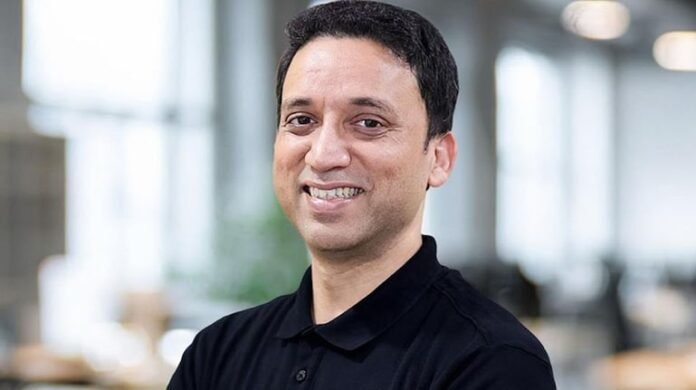
Uber has appointed Rakesh Ranjan, the former chief executive of Zomato’s food ordering and delivery business, as President for India and South Asia. Ranjan will take charge of the ride hailing company’s India and South Asia operations from 4 January 2027, the company said on 26 November.
Ranjan, who is currently the chief executive of Allen Online, will report to Uber’s global leadership. His appointment follows a search process that spanned more than three months, according to an internal communication from Uber.
He succeeds Prabhjeet Singh, who left Uber earlier this year to join OpenAI. The appointment marks a fresh leadership chapter for Uber’s India and South Asia business as the company looks to sharpen its regional strategy and strengthen execution in a fast changing market.
Eight years at Zomato
Ranjan spent eight years at Zomato, joining the food delivery company in 2017 and rising to lead its food ordering and delivery business as chief executive. His departure from Zomato was first reported by Moneycontrol.
At Uber, Ranjan is expected to bring experience in scaling large consumer facing businesses, navigating regulatory and policy challenges, and managing operations in India’s competitive internet economy.
In the announcement, Uber said Ranjan’s understanding of Indian consumers, his hands on approach to business leadership and his experience handling media and policy issues were among the factors that made him a fit for the role.
Key points of the appointment:
– Rakesh Ranjan joins Uber as President, India and South Asia, from 4 January 2027. – He is currently chief executive of Allen Online and spent eight years at Zomato. – He succeeds Prabhjeet Singh, who left Uber earlier this year to join OpenAI. – The search for the role ran for more than three months, Uber said. – Ranjan will report to Uber’s global leadership.
A market under pressure from Rapido
The leadership change comes at a time when competition in India’s ride hailing market has intensified. Domestic player Rapido has taken market share and grown to become the market leader, putting pressure on Uber’s position in the country.
Uber said it now has a more focused strategy for India and South Asia, backed by its local leadership team, organisational structure and technology resources. Ranjan’s appointment is part of that push to defend and grow its share in a market where price sensitive riders and drivers have many choices.
India also remains strategically important to Uber beyond its consumer facing businesses. The country hosts the company’s largest technology centres outside the United States, with teams contributing to both its regional operations and its global business.
Uber’s long term bet on India
Uber said its commitment to India and South Asia remains long term, with the region playing a significant role in its future growth plans. The appointment marks a fresh leadership chapter for the business as the company looks to sharpen its regional strategy and strengthen execution.
The move also underlines how India’s consumer internet sector continues to recycle its most experienced operators. Ranjan moves from food delivery, where he ran one of the country’s largest consumer businesses, to ride hailing, where scale, regulation and competition make the top job one of the most demanding in the sector.
Frequently Asked Questions
Who is the new Uber President for India and South Asia?
Rakesh Ranjan, the former chief executive of Zomato’s food ordering and delivery business, will join Uber as President, India and South Asia, from 4 January 2027. He is currently chief executive of Allen Online.
Whom does Rakesh Ranjan succeed at Uber?
Ranjan succeeds Prabhjeet Singh, who left Uber earlier this year to join OpenAI. The search for Singh’s replacement spanned more than three months, according to an internal communication from Uber.
Why does the appointment matter for Uber in India?
The appointment comes as domestic rival Rapido has taken market share to become the market leader in ride hailing. Uber said it has a more focused strategy for the region, and India also hosts the company’s largest technology centres outside the United States.