
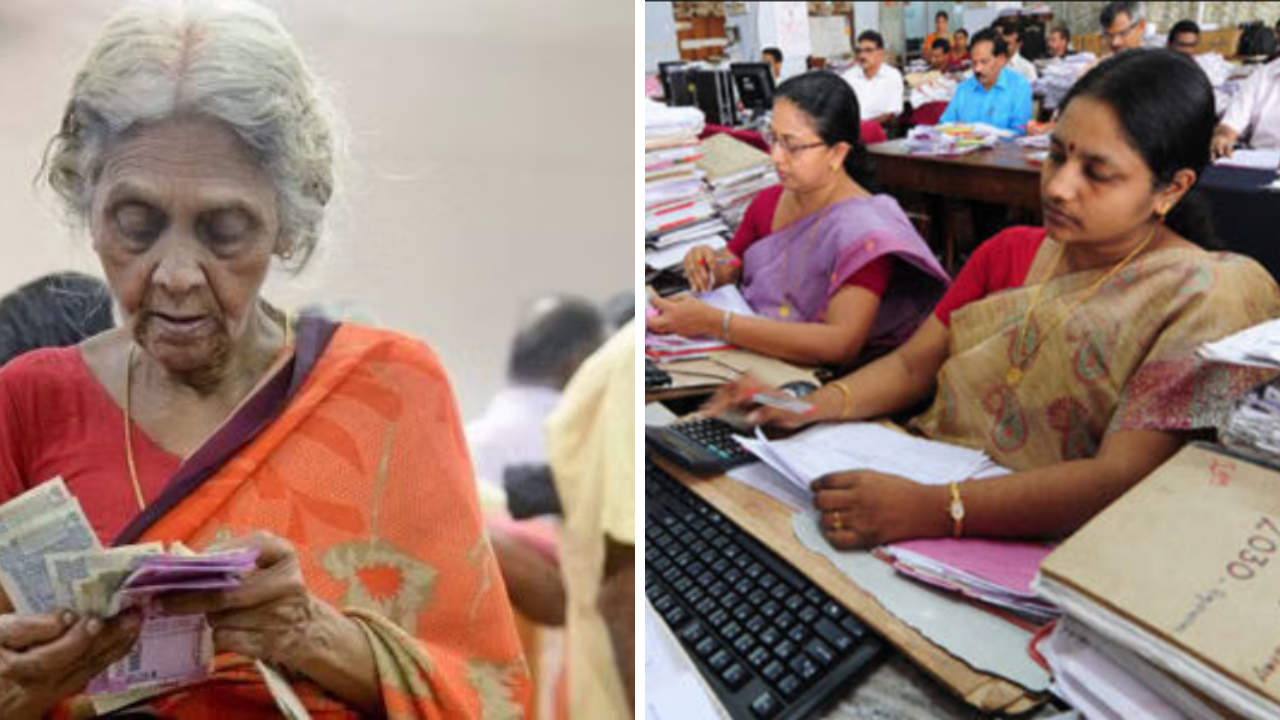
In a major announcement that will directly benefit lakhs of retired state employees, the government has decided to partially revive the Old Pension Scheme (OPS) and extend a 55% hike in Dearness Allowance (DA) to around 4.5 lakh state pensioners. The much-awaited declaration has been widely described as a ‘festival gift’ for pensioners across the country, ahead of the festive season.
A Relief Amid Rising Inflation
For lakhs of retired employees, this development comes as a significant relief at a time when inflation and increased living costs have been affecting households. Dearness Allowance, an essential component of retired employees’ income, is designed to counterbalance the rising prices of commodities and services. With a steep rise of 55%, pensioners who had been demanding parity and financial security under the Old Pension Scheme will now feel substantial support.
The announcement brings immediate cheer, particularly to those dependent entirely on pensions for survival. Experts believe that this move will not only uplift beneficiaries directly but will also have a ripple effect on rural and semi-urban economies where retired employees reside in significant numbers.
Scope of Beneficiaries
The partial implementation of the Old Pension Scheme aims to provide financial stability to around 4.5 lakh state pensioners. These beneficiaries will now see a sharp increase in their monthly pension amounts, giving them greater purchasing power. Many associations representing pensioners have described this move as “justice long awaited.”
While the revival is not universal and limited to defined categories, the government’s step is seen as acknowledgement of the increasing demand from employees and retirees who had been urging for the return of OPS against the limitations posed by the New Pension Scheme (NPS).
Officials Call It a ‘Festival Gift’
Senior government officials described the decision as a goodwill measure during the festive season—the time of year when financial burdens often intensify due to household expenses, religious observances, and social commitments. By aligning the DA hike announcement with upcoming festivals, the government has positioned it as both a welfare measure and a morale booster for pensioners and their families.
Reactions from Pensioner Associations
Several state-level pensioner associations welcomed the move. Leaders of these organizations expressed satisfaction with the “prompt recognition of their needs” and added that the 55% DA hike will directly stabilize the income of retirees struggling with inflationary pressures.
At the same time, some groups indicated that the revival should go beyond partial measures and eventually cover all categories of retirees. They highlighted that a holistic implementation of OPS would ensure complete social security to government employees who dedicated decades of their service to the nation and states.
Economic Impact of the DA Hike
The financial implications of such a large-scale increase in DA are substantial for state governments. However, experts believe that injecting additional income into the hands of lakhs of pensioners will fuel local demand, encourage festive spending, and indirectly support small businesses, traders, and services. With the festive season ahead, retail markets in both cities and towns are expected to see healthier consumption patterns.
Economists describe this as a welfare-driven stimulus that complements broader growth policies. Enhanced pension outflows by governments inevitably benefit consumer-driven industries such as retail, healthcare, and housing, which form the backbone of the Indian economy.
A Political and Social Message
The decision to revive OPS, even partially, carries political undertones as several states governed by different political parties have been demanding the rollback of the New Pension Scheme. Implementation ahead of upcoming elections in a few states is also being perceived as a strategic message by the government, emphasizing sensitivity to social and financial concerns of retired citizens.
The move reflects broader trends across India where the Old Pension Scheme has become a key subject of debate between political parties, employee unions, and governments. With 4.5 lakh pensioners directly benefiting from the hike, the announcement can significantly influence the public perception of welfare-driven governance.
Historical Context: OPS vs NPS
The Old Pension Scheme ensured that retired employees received guaranteed pension amounts linked to their last drawn salary, along with regular Dearness Allowance revisions. This system was gradually replaced with the New Pension Scheme (NPS), which tied pension benefits to market-linked returns.
While the NPS was introduced to create a sustainable pension system for the government, retirees and employees have long argued that the uncertainty of NPS reduces income security post-retirement. This partial revival of OPS suggests a willingness on the part of the government to balance fiscal considerations with the social demands of retired employees.
Calls for Wider Execution
Although this step has been celebrated, leaders of trade unions and government employees’ bodies suggest that a full rollback of NPS in favor of OPS is necessary to truly safeguard financial stability for future retirees. They argue that partial measures may ease the current burden but do not offer complete guarantees for those who are yet to retire under the NPS regime.
Whether today’s decision sets a precedent for wider reforms remains to be seen, but it has certainly rejuvenated discussions on pension fairness, fiscal sustainability, and the balance between welfare and economic reform.
Conclusion
The partial revival of the Old Pension Scheme and the announcement of a 55% Dearness Allowance hike is more than just financial relief—it is a symbolic recognition of the role pensioners play in shaping society. With nearly 4.5 lakh state pensioners set to benefit, the measure provides timely security during the festive season. Seen both as a welfare initiative and a political statement, the announcement rekindles the OPS vs NPS debate while ensuring immediate support to those who need it most.