
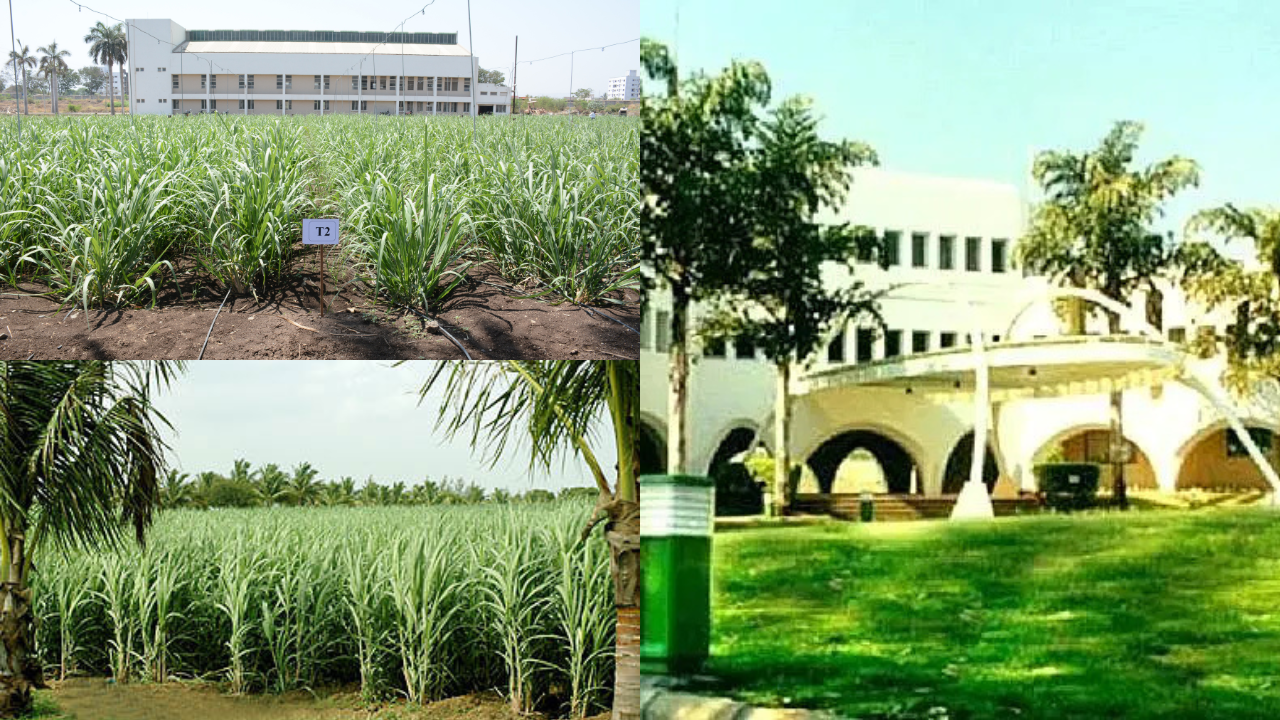
In a significant move aimed at modernizing India’s sugar industry, the Vasantdada Sugar Institute (VSI) has announced the doubling of its Artificial Intelligence (AI) technology subsidy for around 5,000 sugarcane farmers across Maharashtra and surrounding regions. This initiative is expected to accelerate the adoption of AI-based tools in agriculture, enhance sugarcane yield, and ensure sustainable growth for the country’s vital sugar economy.
The announcement underscores VSI’s mission to combine innovative research, technology, and traditional knowledge to strengthen the farming community. By offering enhanced financial assistance, the institute seeks to encourage farmers to integrate AI-driven decision-making systems, smart irrigation management, and predictive crop analysis tools—technologies that can significantly boost productivity and resource efficiency.
A Step Toward Smarter and Sustainable Sugarcane Farming
Vasantdada Sugar Institute, one of India’s premier organizations for sugar sector research and training, has long been a pioneer in bringing scientific advancements to farmers. The doubled AI subsidy reflects VSI’s continued commitment to innovation and farmer welfare.
“Empowering farmers with advanced tools and affordable access to technology is not just a policy—it’s a necessity,” said a senior official from VSI. “Our goal is to help farmers use AI for better crop planning, disease detection, and yield prediction, which can improve both profitability and sustainability in the long run.”
By providing subsidies on AI tools and software, VSI will make it easier for farmers to access smart farming equipment, such as drone-assisted field mapping, soil monitoring sensors, and machine-learning-based harvest prediction systems. These innovations are expected to help farmers optimize fertilizer usage, manage water resources more effectively, and minimize losses caused by unpredictable weather patterns.
Driving Technological Transformation in the Sugar Industry
The sugar industry in India is among the largest agro-based sectors, employing nearly 50 million farmers and workers. However, productivity has often been restrained by factors like traditional farming methods, fluctuating climate conditions, and limited access to modern technologies. VSI’s decision to double the AI subsidy directly addresses these challenges by bridging the technology gap for producers.
With this financial support, more sugarcane farmers will be able to adopt AI-integrated systems that gather and analyze field data in real-time. Such data-driven insights allow for timely decisions on irrigation schedules, pest management, and harvesting cycles. As a result, farm efficiency and sugar recovery rates are expected to increase substantially.
The institute also plans to organize training camps and workshops to help farmers understand how to use these AI tools effectively. Through these sessions, experts from VSI will guide farmers in leveraging digital platforms and mobile apps specifically developed for sugarcane monitoring and productivity forecasting.
Empowering 5,000 Farmers Through Inclusive Growth
Approximately 5,000 sugarcane farmers are expected to benefit from VSI’s newly expanded subsidy program in the first phase. The beneficiaries will be selected based on specific criteria including farm size, technology readiness, and willingness to participate in digital integration programs.
The doubled subsidy aims to make high-end AI-based applications affordable even for small and marginal farmers. By reducing the financial burden associated with technological adoption, VSI encourages a more inclusive model of agricultural modernization—one where innovation reaches every farmer, regardless of economic status.
Many sugar cooperatives working under VSI’s network have already shown interest in collaborating on this program. In doing so, they hope to create a unified, data-driven ecosystem for the sugar industry—one where field-level insights are continuously shared, improving efficiency at every stage from cultivation to processing.
Boosting Productivity and Economic Stability
Adoption of AI in agriculture has already shown remarkable results across pilot projects implemented by VSI and other institutions. Farmers who introduced smart sensors and AI-based irrigation tools recorded up to 15–20% increased productivity, along with reduced input costs. By expanding this support program, VSI aims to replicate these success stories across thousands of farms, thereby contributing to both rural income growth and national agricultural resilience.
The institute believes that AI is not just about automation but about empowering decision-making. Through precision agriculture, farmers can forecast potential yield fluctuations, identify resource gaps, and even simulate multiple crop management strategies before implementing them in real fields. This kind of predictive intelligence helps secure agricultural returns and strengthens India’s position as a global leader in sugar production.
Training, Partnerships, and Long-Term Vision
Vasantdada Sugar Institute’s initiative is part of a larger vision to digitally transform the sugar sector. The institute is working in partnership with technology firms, agri-startups, and cooperative sugar mills to introduce scalable AI solutions. Additionally, VSI plans to expand its research and innovation programs to tailor new models of machine learning specific to sugarcane agronomy.
Future plans include developing local-language farmer apps powered by AI, promoting remote farm-monitoring technologies, and launching an online knowledge portal for real-time expert guidance. These developments will ensure that every farmer trained under VSI’s system has continuous support in navigating their digital journey.
A Landmark Step for India’s Agri-Tech Evolution
By doubling the AI subsidy and empowering thousands of sugarcane farmers, the Vasantdada Sugar Institute has set a new precedent for technology-led agricultural growth in India. The decision aligns with the nation’s broader Digital Agriculture Mission and supports the government’s vision of making farming more data-centric, climate-resilient, and economically viable.