
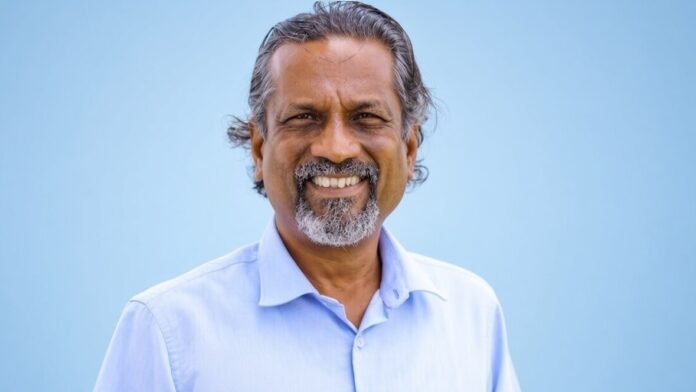
Zoho founder Sridhar Vembu has said artificial intelligence will take over maths and coding entirely, and humans may then have to turn to jobs linked to nature, culture and scripture.
Vembu was responding on X to AI researcher Subbarao Kambhampati, who argued that technological revolutions have historically displaced sections of society, and that the current anxiety is particularly visible because intellectual workers are now being affected.
“The intellectual class never quite experienced the loss of purpose in their lives that many other classes of humans experienced,” Kambhampati wrote.
Vembu agreed with the researcher’s view, and said coders and mathematicians are now facing the same disruption that farmers, weavers and other workers faced when machines first arrived.
AI is doing to coders what machines did to farmers
“What happened to farmers and weavers and carpenters and ironsmiths in the waves of mechanisation and automation is now starting to happen to mathematicians and programmers,” Vembu said.
AI models today can write thousands of lines of code at once. Advanced models from OpenAI and Anthropic have also solved complicated maths problems such as the Navier Stokes Millennium Challenge, though many mathematicians have opposed such developments.
Vembu has been open about the impact AI may have on the workforce. He has warned that any computer-based job faces the risk of one person using AI to perform the work of 10 people.
The upside: new tools for new fields
There is a positive side to it, Vembu added. The same AI tools that can take over complex work can also help humans explore new fields.
He cited how a non-techie in his team used AI to make a CAD design. “He has no engineering background, but has a curious and active mind,” Vembu said.
The point, he suggested, is that AI lowers the barrier to trying work that once needed years of formal training. A curious person with no engineering background can now produce a design that earlier required a specialist.
Nature, nurture, culture and scripture
But what do humans do if AI keeps getting better at such complex work? Vembu wants us to go back into nature. Responding to a comment on his post, he said that in the AI era, humans needed to look at nature and scriptures.
“Nature, nurture, culture and scripture could be the category of jobs humans do in the age of AI,” he wrote. “I am an optimist. We have plenty to keep ourselves busy and engaged.”
It is not the first time Vembu has made this argument. Last month, the Zoho co-founder claimed that religion could become more important after AI ends what he called humanity’s “intellectual pretence.”
“What is left that is truly human? I suggest Nature, Nurture, Culture and Scripture; the core of Sanatana Dharma is that all of these are connected,” he wrote.
A painful rebalancing, not the end of jobs
Vembu does not believe this means jobs will disappear altogether. He said industries that could not previously afford software engineers or digital marketers might begin hiring them as AI makes their work cheaper.
He described the shift as a potentially painful “rebalancing across the economy”, and has predicted productivity gains of 10 or even 100 times.
The warning fits a pattern in Vembu’s recent comments. He has called AI a bubble and said Zoho will avoid big infrastructure investments for now, while also arguing that the technology will reshape who does what work and how much of it one person can do.
For programmers and mathematicians, his message is blunt: the work they do today may soon belong to machines, and the human future may lie in the things machines cannot do.
Frequently Asked Questions
What did Sridhar Vembu say about AI and coding?
Vembu said AI will take over maths and coding entirely, comparing it to how mechanisation displaced farmers, weavers, carpenters and ironsmiths. He was responding on X to AI researcher Subbarao Kambhampati, who argued that intellectual workers are now facing the displacement other classes faced earlier.
What jobs does Vembu think humans will do in the age of AI?
He said nature, nurture, culture and scripture could be the category of jobs humans do in the age of AI. He has also said religion could become more important after AI ends what he called humanity’s “intellectual pretence.”
Does Vembu think AI will destroy all jobs?
No. He believes industries that could not previously afford software engineers or digital marketers might begin hiring them, and has predicted productivity gains of 10 or even 100 times. He described the shift as a potentially painful “rebalancing across the economy.”