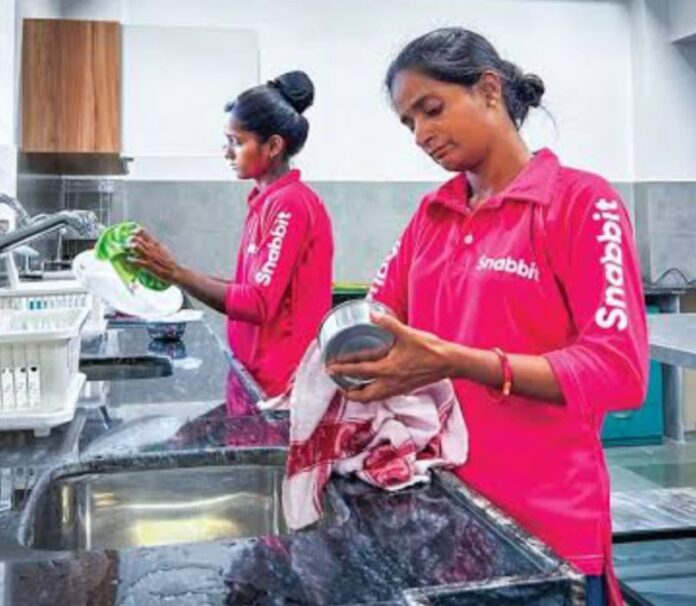
India’s fast-paced urban lifestyle has created a growing demand for reliable, on-demand home services. From last-minute cleaning needs to emergency household repairs, modern families are constantly seeking convenience without compromising trust and quality. Addressing this rising demand, Snabbit, a fast-emerging home services startup, is transforming the concept of instant house-help into what it calls “neighbourhood infrastructure.”According to the latest industry insights, Snabbit’s model goes beyond being just another home services platform. The company is building a hyperlocal ecosystem where trained professionals are available within neighbourhood clusters, enabling faster response times, stronger trust, and consistent service delivery. This shift from gig-based availability to structured local presence is what sets Snabbit apart in India’s competitive home services market.A New Approach to On-Demand House HelpFor years, Indian households have relied on informal networks or large aggregator apps to find house help, cleaners, and maintenance workers. However, these systems often struggle with issues like inconsistent quality, last-minute cancellations, lack of accountability, and safety concerns.Snabbit aims to address these challenges by embedding service professionals directly within neighbourhoods. Instead of assigning workers from far-off locations, the platform ensures that trained personnel operate within defined local zones. This “neighbourhood-first” approach not only reduces waiting times but also builds familiarity between service providers and residents.In practical terms, this means that a family in Bengaluru, Mumbai, Delhi NCR, or Pune could book instant house-help for cleaning, kitchen assistance, or minor repairs and expect prompt service from someone who already operates in their locality. Over time, this familiarity builds trust — something extremely valuable in Indian households.Turning Convenience into InfrastructureThe idea of converting house-help into neighbourhood infrastructure is a bold and forward-thinking strategy. Infrastructure traditionally refers to roads, electricity, and water supply — essential services that form the backbone of daily life. By positioning instant house-help as infrastructure, Snabbit is essentially saying that home services are no longer a luxury; they are becoming a basic urban necessity.With dual-income families becoming the norm and work-from-home culture still prevalent across many sectors, Indian households require flexible support systems. Whether it’s help during festive seasons, emergency deep cleaning before guests arrive, or routine household assistance, the demand is consistent and growing.Snabbit’s infrastructure-like model aims to ensure predictability. Instead of depending on availability fluctuations common in gig platforms, the company focuses on structured workforce management, training modules, and consistent local supply.Empowering India’s Service WorkforceAnother significant aspect of Snabbit’s growth story lies in workforce empowerment. India’s domestic work sector is largely unorganised, with limited access to structured training, financial security, or career progression.By formalising the ecosystem, Snabbit offers training, standardised service protocols, and digital booking transparency. This professionalisation not only enhances customer experience but also improves income stability and dignity for service workers.For many urban service professionals, hyperlocal deployment means reduced travel time and transportation costs. It also allows them to build repeat clientele within a single locality, strengthening long-term earning potential.Building Trust in Urban IndiaTrust plays a critical role in the home services sector, particularly in India where households are cautious about allowing new individuals into their homes. Snabbit’s neighbourhood model naturally fosters a safer environment, as workers become familiar faces in the community.Moreover, digital booking records, verified profiles, and service tracking add an additional layer of transparency. For families with elderly members or children at home, this structure brings peace of mind.Scaling Across Indian CitiesAs India’s urban population continues to expand, especially in Tier 1 and Tier 2 cities, the need for organised home services is expected to grow exponentially. Market analysts predict that the home services sector in India will witness strong double-digit growth in the coming years, driven by rising disposable incomes and lifestyle changes.Snabbit’s hyperlocal infrastructure strategy positions it well to scale efficiently. Instead of spreading resources thin across wide geographies, the company focuses on saturating neighbourhood clusters before expanding outward. This controlled expansion ensures service quality is maintained while building strong community-level presence.The Future of Instant House-Help in IndiaSnabbit’s vision aligns closely with India’s evolving urban aspirations — convenience, reliability, and safety. By treating house-help as neighbourhood infrastructure rather than temporary gig work, the startup is redefining how urban Indians view domestic assistance.If this model continues to gain traction, it could reshape the entire home services industry in India. The blend of technology, structured workforce management, and hyperlocal deployment presents a sustainable path forward.As Indian cities become busier and households seek smarter solutions for daily living, Snabbit’s innovative approach could well mark the beginning of a new chapter in organised home services. In a country where community still matters, building neighbourhood-level infrastructure for instant house-help may be exactly the solution urban India has been waiting for.
Snabbit Is Turning Instant House-Help Into Neighbourhood Infrastructure, Redefining Urban Living in India
Published on