
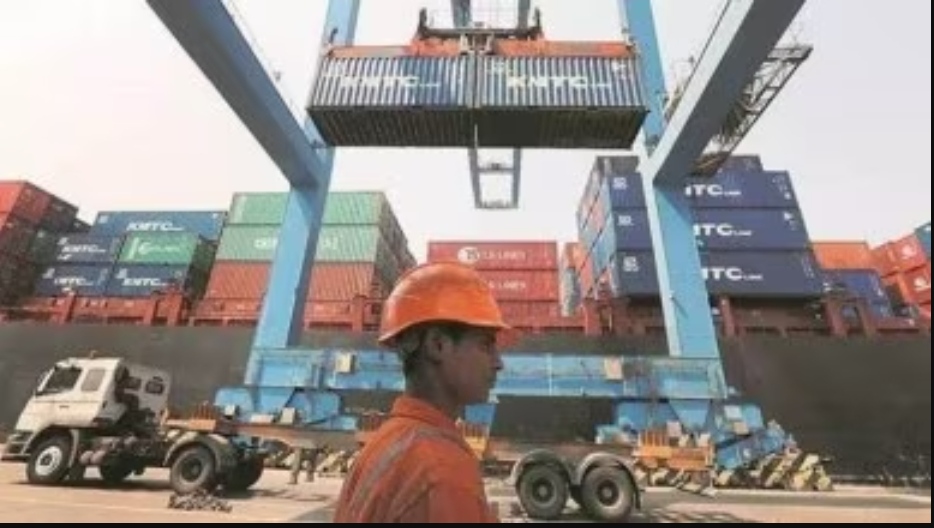

Rising attacks forced shippers to consider the longer route
Indian exporters have asked the central government to help facilitate more credit as freight rates have jumped nearly 300 per cent due to the disruption in the Red Sea route forcing global shipping lines to take longer trade routes, which is ultimately affecting exports of low value items such as Basmati rice.
Increasing attacks on ships sailing in the Red Sea region since November 2023 have forced shippers to consider the alternative, longer route past the Cape of Good Hope, which has not only stretched delivery time by 15 to 20 days, but also increased the transit cost substantially because of incremental freight rates and insurance premium.
Federation of Indian Export Organisations (FIEO) Director General Ajay Sahai told The Indian Express that freight costs have surged by 300 per cent as global shipping lines are taking the Cape of Good Hope route, which is why exporters have sought more credit to match the rising cost of shipments to Europe.
Meanwhile, ratings agency Crisil on Thursday said that players operating in sectors such as agricultural commodities and marine foods could see a significant impact due to the perishable nature of their goods or lean margin profiles, which limit their ability to absorb the risks from rising freight cost.
“Not all sectors are expected to be impacted to the same extent. In fact, for agricultural products like Basmati rice (30-35% of production is shipped to these regions), exporters are feeling the pressure as rising transportation costs have reduced exports. exports and part of their inventory is now sold on the domestic market. leading to censorship of achievements,” the report said.
Indian companies use the Red Sea route via the Suez Canal to trade with Europe, North America, North Africa and parts of West Asia. Crisil said these regions accounted for 50 per cent of India’s exports worth Rs 18 billion and 30 per cent of its imports worth Rs 17 billion in the last financial year.
“Marine foods – mainly shrimp – could also be significantly impacted as 80 to 90% of production is exported, more than half of which via the Red Sea. The perishable nature and low margins leave exporters vulnerable to rising shipping costs and competitive pressure from Latin American suppliers,” the report added. The Indian Express had earlier reported that the Ministry of Finance is scheduled to hold a high-level meeting on February 5 to ensure smooth trade payments amid challenges stemming from regional disruptions. Red Sea area.
For more information, visit at https://happenrecently.com/zepto/?amp=1