
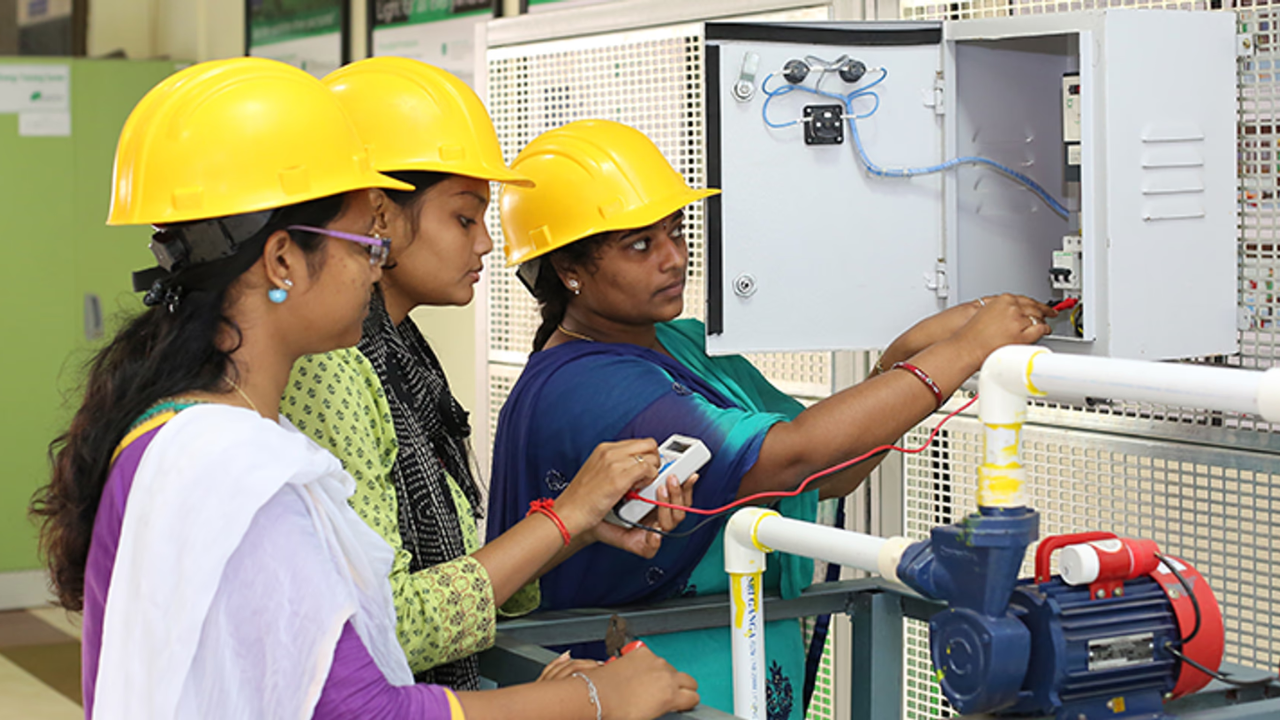
In a significant boost to India’s vision of becoming a global hub for innovation and skilled manpower, Prime Minister Narendra Modi is set to launch the Short-Term Employability Program (STEP) — a landmark initiative aimed at equipping India’s youth with industry-ready skills in cutting-edge technologies. The program will be rolled out across 400 government Industrial Training Institutes (ITIs) and 150 technical high schools, with a special focus on emerging domains such as Artificial Intelligence (AI), Internet of Things (IoT), Electric Vehicles (EVs), and Solar Technology.
Bridging the Skill Gap in Emerging Sectors
The STEP initiative has been developed by the Ministry of Skill Development and Entrepreneurship (MSDE) in collaboration with several industry partners and educational institutions. Its primary goal is to bridge the gap between traditional education and the rapidly changing demands of new-age industries. By introducing short-term, modular training programs, STEP aims to improve employability among students, especially from rural and semi-urban backgrounds, and empower them to participate in India’s growing tech-driven economy.
Each training module under STEP will last between 3 to 6 months, combining theoretical knowledge with extensive hands-on practice. The courses will align with the National Skill Qualification Framework (NSQF) to ensure uniformity and recognition across industries.
Focus on AI, IoT, EVs, and Solar Technology
Under STEP, the government intends to prioritize four key sectors that are shaping the future of technology and employment:
- Artificial Intelligence (AI): Students will gain foundational understanding of AI applications in industries such as healthcare, manufacturing, and agriculture. Training will include modules on machine learning, data handling, and basic algorithm design.
- Internet of Things (IoT): The IoT curriculum will focus on connecting physical devices to digital systems, helping participants understand sensors, automation, and data analytics.
- Electric Vehicles (EVs): With the surge in India’s EV adoption, this segment will equip trainees with skills related to vehicle design, battery maintenance, and smart charging technologies.
- Solar Technology: Recognizing India’s push for renewable energy, the solar training module will focus on installation, maintenance, and management of solar systems for residential and commercial applications.
Empowering Youth and Enhancing Employability
The Short-Term Employability Program will directly benefit over 1.5 lakh students in its first phase. Additionally, training materials and technical resources will be made available through a digital platform accessible to both trainers and students. The initiative emphasizes hands-on learning, including lab simulations, internships, and industry projects.
Speaking about the launch, officials from the Ministry of Skill Development stated that this program underscores the government’s commitment to fostering an “Atmanirbhar Bharat” (self-reliant India) through skill empowerment. The integration of future-ready technologies will open numerous employment avenues for students across fields such as renewable energy, automotive engineering, smart manufacturing, and digital innovation.
Industry and Institutional Partnerships
To ensure that the training remains relevant and up to date, the government has partnered with leading technology companies and industry bodies. Several global tech firms have agreed to assist in developing digital content, designing learning modules, and providing internship opportunities.
In addition, the National Council for Vocational Education and Training (NCVET) will oversee curriculum quality, while Sector Skill Councils (SSCs) will guide the implementation and assessment framework. These partnerships will enable students to gain exposure to real-world challenges through practical workshops, design bootcamps, and on-site experience at tech hubs and industrial clusters.
Digital Infrastructure and Inclusion
One of the key highlights of STEP is its inclusive digital learning approach. The program will include an online learning portal where students can access video lectures, self-assessment tools, and career guidance modules. For learners in remote areas, the platform will offer recorded sessions that can be accessed offline.
Moreover, the government aims to promote gender inclusivity within the program. Special outreach campaigns will encourage participation from girls and women, particularly in technical fields like AI and EV maintenance, where female representation remains low.
Monitoring and Evaluation
To ensure accountability and continuous improvement, a three-tier evaluation system will be established under STEP. This will include periodic assessments at the institutional level, third-party audits for quality assurance, and outcome-based performance tracking using digital dashboards. The data gathered from these evaluations will help policymakers refine the curriculum and scale the initiative based on employment feedback and industrial demand.
Vision for the Future
The launch of STEP marks another milestone in India’s ongoing efforts to transform its educational and vocational training system. By aligning skill programs with the Fourth Industrial Revolution, the initiative is expected to create a robust talent pipeline for industries involved in advanced manufacturing, smart city projects, green energy, and digital services.
Experts believe that such short-term modular courses can significantly reduce unemployment among youth and enhance India’s competitiveness in the global job market. The program also complements other flagship initiatives like Make in India, Digital India, and Skill India Mission, collectively contributing to the nation’s long-term development goals.