
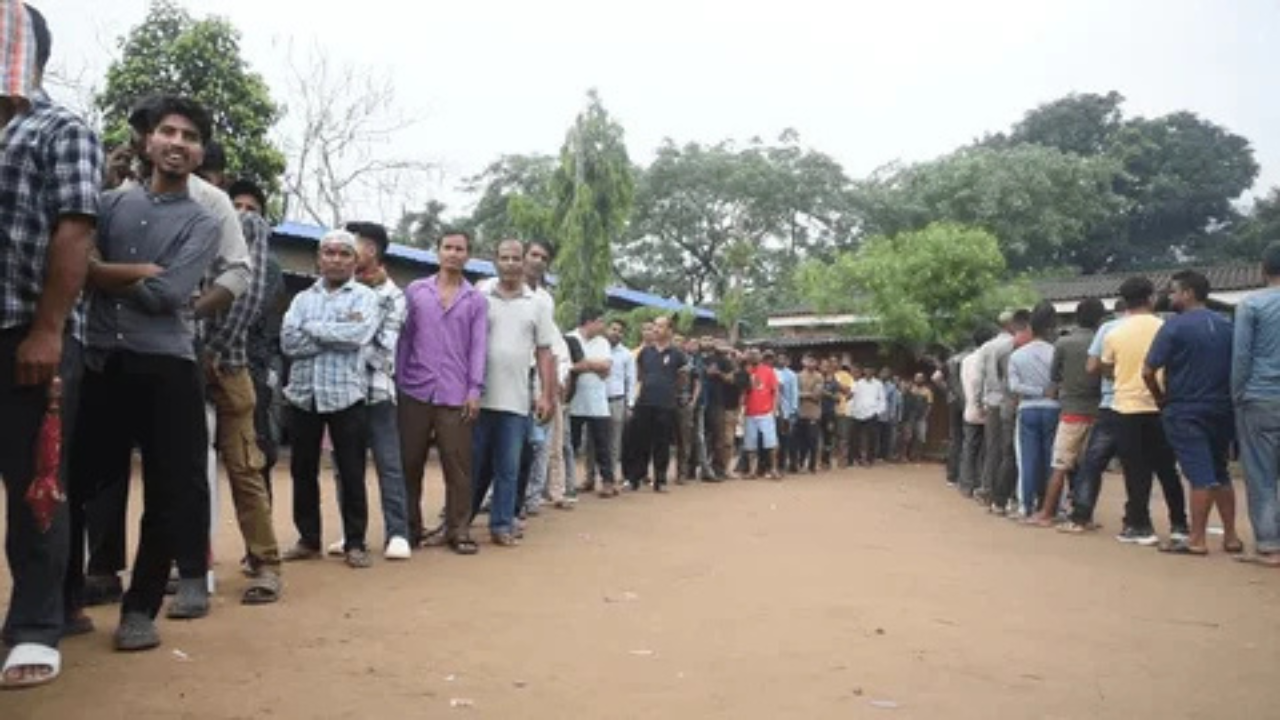

District administration uncovers large-scale misuse of the state’s women welfare scheme; inquiry launched to identify false beneficiaries and tighten digital verification.
Nandurbar, Maharashtra: A startling case of misuse of the Mukhyamantri Majhi Ladki Bahin Yojana has come to light in Nandurbar district, where nearly 710 men reportedly registered themselves online to avail of benefits exclusively meant for women. The revelation has prompted a swift response from the district administration, which has initiated an investigation and warned of strict action against those found guilty of fraudulent applications.
The Mukhyamantri Majhi Ladki Bahin Yojana, launched by the Maharashtra government under Chief Minister Eknath Shinde, aims to provide financial assistance of ₹1,500 per month to eligible women across the state. The scheme targets women aged between 21 and 60 years, offering economic support to enhance their dignity, independence, and participation in the workforce.
However, the misuse of this welfare initiative in Nandurbar has raised concerns about loopholes in the online verification process and the potential exploitation of digital platforms by unscrupulous applicants.
710 Men Registered for the Women’s Scheme
According to officials from the Nandurbar District Collectorate, preliminary data analysis revealed that over 700 male applicants had filled out the form for the Ladki Bahin scheme through online registration portals. These men allegedly managed to submit applications by manipulating or providing incorrect information, thereby attempting to pose as eligible women beneficiaries.
The state government had opened the online registration facility for women to apply for the scheme through the official portal, making the process simple and accessible. However, this accessibility appears to have been misused by a small group seeking unfair benefits.
Local authorities were alerted after data verification teams noticed inconsistencies in applications — particularly mismatched Aadhaar data, gender information, and bank account details. The issue came to light during a random data audit conducted as part of the ongoing process of beneficiary validation.
Officials confirmed that out of the total fraudulent entries, 710 applications were found to be submitted by male applicants, despite the scheme being restricted solely to women residents of Maharashtra.
District Administration Orders Immediate Probe
Following the discovery, the Nandurbar district administration has launched a thorough investigation to understand how these applications bypassed the basic eligibility filters. District Collector Dr. Manisha Patil (name used illustratively) directed all taluka-level officers and data-verification teams to re-examine the database and weed out fake registrations immediately.
In a statement to local media, officials said that various departments — including the Women and Child Development Department, IT Cell, and Gram Panchayat networks — are working in coordination to identify and block fraudulent accounts. Anyone found guilty of deliberately providing false information or aiding such attempts will face legal and administrative consequences.
The Collector further emphasized that “the government’s intention behind this scheme is to uplift women economically and socially. Misuse of the initiative by ineligible individuals not only deprives genuine beneficiaries but also damages the trust between citizens and the administration.”
How the Fraud Was Detected
Sources within the district administration explained that the fraudulent entries were uncovered through a detailed cross-verification of Aadhaar data, gender identifiers, and linked bank accounts. During this process, it was found that certain applications had Aadhaar numbers registered to male citizens, while others showed mismatches in name and gender fields.
Moreover, in a few cases, male applicants are suspected to have used their female relatives’ names but provided their own contact or banking details — raising questions about potential identity misrepresentation.
Officials clarified that despite the online system’s automated checks, certain technical gaps in the early registration phase made it possible for applicants to submit data before deeper verification modules were fully integrated. These gaps are now being closed through enhanced data validation and machine-based screening.
Scheme’s Objective and Importance for Women
Introduced in 2024, the Mukhyamantri Majhi Ladki Bahin Yojana is one of Maharashtra’s flagship welfare programs focusing on women empowerment. The scheme provides a monthly allowance of ₹1,500 to eligible women from different socio-economic backgrounds, particularly from low and middle-income families.
The primary goal is to support women in meeting basic household needs, improving access to education and healthcare, and promoting financial independence. Since its inception, lakhs of women have registered and benefited, particularly in rural and tribal regions.
By simplifying the digital application process, the government intended to eliminate middlemen and ensure that assistance reaches genuine beneficiaries directly into their bank accounts. However, the Nandurbar incident has highlighted areas where stronger cyber verification and ground-level audits are necessary.
Political and Public Reactions
The exposure of this anomaly has triggered widespread debate in state political circles. Opposition leaders have questioned the government’s preparedness and the accuracy of its digital processes, while ruling alliance leaders have emphasized their commitment to ensuring transparency and rectifying system errors immediately.
Several activists have also called for greater digital literacy in rural areas, stressing that many women rely on local intermediaries or cyber cafés for online applications. They argue that poor awareness or technical limitations sometimes make systems vulnerable to misuse.
Citizens on social media expressed mixed reactions — some criticized the fraudulent act as a sign of greed and moral decline, while others blamed weak verification systems. Many users, particularly women beneficiaries, demanded that officials take stern action to deter such malpractices in future registration drives.
Government Strengthens Verification Steps
In response to the Nandurbar incident, the Maharashtra government’s IT department has announced stronger safeguards to prevent similar loopholes elsewhere in the state. These measures include real-time Aadhaar-based gender authentication, integration of biometric verification, and periodic cross-checks with bank KYC data.
The government is also expected to deploy district-level helplines and awareness campaigns to guide women through the correct registration procedures. Panchayat offices and local NGOs may be roped in to assist genuine applicants and ensure that no false beneficiaries slip through the cracks.
Officials believe that while technological innovation has made welfare distribution faster and fairer, human monitoring and social accountability remain equally crucial to prevent system abuse.
Nandurbar’s Case a Lesson for Other Districts
The Nandurbar case serves as a cautionary tale for other districts across Maharashtra. As more welfare schemes become digitized, cyber ethics, local monitoring, and community awareness will play a pivotal role in maintaining transparency.
Authorities have reiterated that such incidents, while concerning, also provide opportunities to strengthen public delivery mechanisms. The focus, they say, should remain on protecting the rights of genuine women beneficiaries and ensuring that public funds reach those who need them most.
Going forward, the district administration has assured that no fraudulent applicant will receive any payment, and the data cleansing process will be completed before the next scheduled disbursement.
Conclusion
The exposure of more than 710 fraudulent applications by men in the Mukhyamantri Majhi Ladki Bahin Yojana has once again highlighted the dual challenge of ensuring accessibility and accountability in digital governance. While the scheme continues to empower thousands of women across Maharashtra, the incident underscores the need for stronger technical safeguards and ethical participation from citizens.