
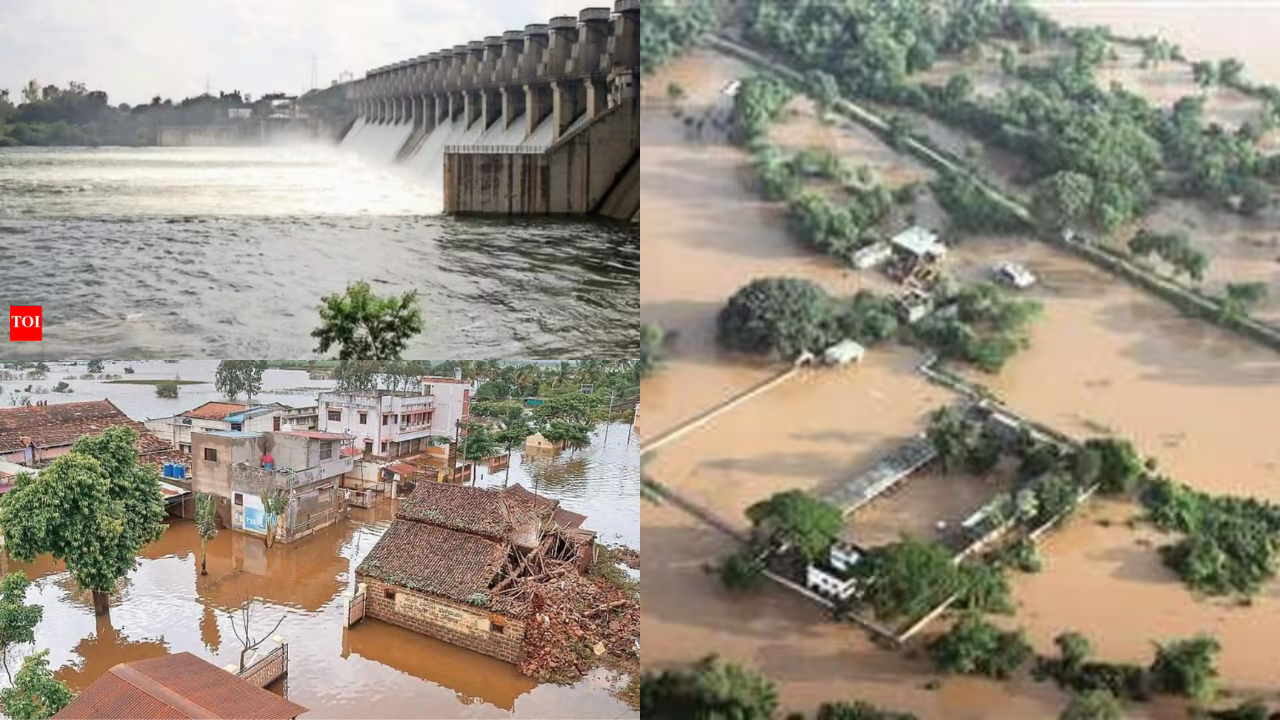
Aurangabad and Beed districts in Maharashtra are grappling with the severe aftermath of heavy rains that battered the region over the past week, resulting in unprecedented water releases from major dams, forced evacuations, and alarming incidents of land subsidence across rural pockets. The situation has highlighted the vulnerability of the region’s infrastructure, strained disaster relief systems, and raised urgent questions about long-term preparedness in the face of intensifying weather events.
Torrential Rainfall Triggers Crisis
The intensity of rainfall witnessed in the Marathwada belt in the past 72 hours has been far above seasonal norms, causing water levels in key reservoirs such as Jayakwadi Dam in Aurangabad and Majalgaon Dam in Beed to surge beyond safe limits. In an attempt to manage inflows and protect dam structures, authorities carried out large-scale water releases—sending thousands of cusecs downstream into rivers and adjoining canals.
This planned release, though essential for dam safety, coincided with high monsoon inflows, leading to inundation of low-lying areas and forcing local administrations to evacuate hundreds of families residing near riverbanks. While advance warnings were issued, the sheer volume of water combined with continuous rainfall created challenging conditions for relief teams.
Evacuations Across Villages
In Aurangabad district, emergency response teams assisted by the State Disaster Response Force (SDRF) were deployed to villages along the Godavari and its tributaries. Dozens of families were relocated to makeshift shelters created in schools and community halls. Medical assistance camps have been set up to prevent waterborne disease outbreaks, and civic bodies are distributing food supplies to displaced residents.
Beed district has reported similar scenes, with the Bindusara and Sindphana rivers swelling beyond danger marks. Particularly vulnerable were households located near embankments weakened by soil erosion. The district administration has confirmed that over 1,200 people have been temporarily displaced, and efforts are underway to arrange rehabilitation support until floodwaters recede.
Land Subsidence Adds to Woes
Apart from flooding, a worrying phenomenon of land subsidence has emerged in both districts, especially in rural and semi-urban regions. Continuous saturation of soil from prolonged rain has destabilized certain patches, leading to cracks in agricultural land, road damage, and structural shifts in houses. Experts have linked this to a combination of waterlogging, poor drainage network maintenance, and underlying geological vulnerabilities.
In Aurangabad’s Paithan taluka, entire stretches of farmland have developed fissures, making them unsafe for cultivation until soil restoration is undertaken. In Beed’s Georai taluka, a cluster of households reported partial collapses, prompting engineers from the Public Works Department to investigate and advise on safety rebuilding options.
Government Response and Relief Measures
Maharashtra’s Chief Minister has taken cognizance of the crisis, directing district collectors to prioritize human safety over asset preservation. Instructions have been given for continuous monitoring of dam water levels, ensuring real-time communication with downstream villages through loudspeaker announcements and mobile alerts.
State-level relief grants are being sanctioned for immediate rehabilitation expenses, while the Public Health Department is deploying mobile medical units to affected sites. The Agriculture Department is beginning preliminary assessments of crop losses, with aim to fast-track compensation processing under crop insurance schemes.
Community Efforts and Volunteer Support
In this crisis, local communities have showcased resilience and solidarity. Volunteer groups from Aurangabad city and Beed’s youth clubs have been assisting in distributing clean drinking water, food packets, and essential medicines to displaced residents. Private transport operators have contributed vehicles for evacuation drives, while local NGOs are arranging counselling sessions for those traumatized by sudden displacement.
Social media platforms have become key channels for sharing flood alerts, locating missing persons, and coordinating resource supply with on-ground volunteers. Several local entrepreneurs are supporting relief efforts by donating materials such as tarpaulin sheets, blankets, and dry grain supplies.
Environmental and Infrastructure Concerns
The incident has reignited discussions over whether dam management protocols and downstream infrastructure are adequately equipped to handle such extreme rainfall events. While dam safety norms were followed, the cascading effect of large water releases points to the need for better floodplain zoning and river embankment reinforcement.
Experts have emphasized that land subsidence in rural Maharashtra is an emerging challenge, often overlooked until major damage occurs. Sustainable drainage improvement, soil compaction monitoring, and disaster-resilient construction practices could play a critical role in reducing future vulnerability.
Long-Term Measures in Consideration
Revenue department officials in Aurangabad and Beed have begun compiling reports to outline both short-term relief needs and long-term infrastructural upgrades. Among measures being considered are:
- Establishment of additional rain gauge stations for hyper-local monitoring.
- Investments in rural embankment fortification.
- Introduction of flood-resilient agriculture practices to safeguard livelihoods.
- Training programs for gram panchayats on immediate evacuation coordination.
These steps are expected to be incorporated into revised district disaster management plans for the 2026 monsoon season.
Human Stories from the Ground
Behind the numbers lie human stories of sudden upheaval. Farmers in Aurangabad who were preparing to harvest soybeans have seen crops drowned. In Beed, schoolchildren in affected villages speak of leaving classrooms mid-day to board boats ferrying them to safer grounds. Many residents recount the anxiety of spending nights listening to the sound of rushing waters, uncertain if embankments will hold.
Despite the grief, there is gratitude among locals for the timely action taken by joint teams of district administrations, police, and SDRF personnel, which has prevented greater loss of life.
Conclusion
The heavy rains in Aurangabad and Beed, coupled with dam water releases, mass evacuations, and land subsidence incidents, have tested the resilience of communities and the readiness of disaster management systems. As waters begin to recede and rehabilitation takes shape, the episode stands as a sharp reminder of the growing need for climate-adaptive infrastructure and robust rural disaster preparedness.