
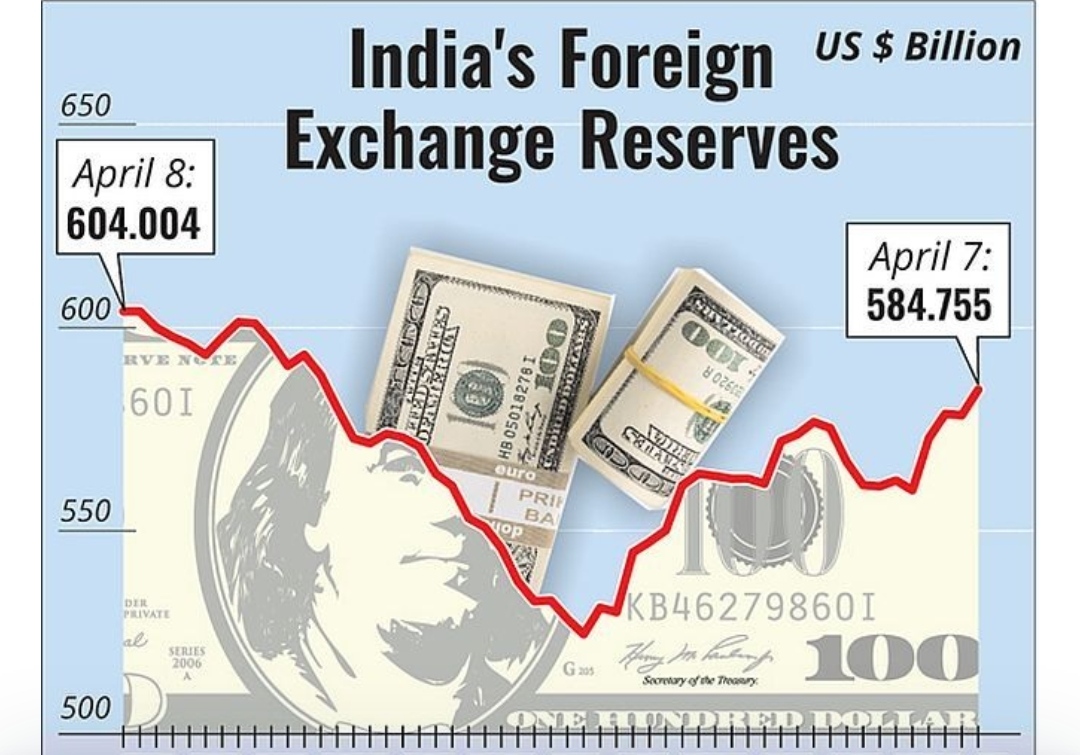

According to the latest data released by the Reserve Bank of India, India’s foreign exchange reserves increased by USD 4.471 billion to USD 620.441 billion in the week ended December 22, 2023, reaching a 21-month high . In calendar year 2023, the RBI added about $58 billion to its foreign exchange fund.
New Delhi [India], December 31:
According to the latest data released by the Reserve Bank of India, India’s foreign exchange reserves increased by USD 4.471 billion to USD 620.441 billion in the week ended December 22, 2023, reaching a 21-month high . In calendar year 2023, the RBI added about $58 billion to its foreign exchange fund.
Last week, India’s foreign exchange assets (FCA), the largest component of foreign exchange reserves, increased by $4.698 billion to $549.747 billion, according to the central bank’s weekly statistical data. In 2022, India’s foreign exchange currency fell by a total of $71 billion.
However, gold reserves during the week decreased by 102 million USD to 474.74 billion USD.
Foreign exchange reserves, or foreign exchange reserves (foreign exchange reserves), are assets held by a country’s central bank or monetary authority.
It is typically held in reserve currencies, typically the US dollar and to a lesser extent the Euro, Japanese Yen and British Pound.
Before last week ending December 15, India’s foreign exchange reserves increased by $9.112 billion to $615.971 billion. In October 2021, the country’s foreign exchange reserves reached an all-time high of about $645 billion. Much of the decline, although not significant on a cumulative basis, since then can be attributed to rising prices of imported goods in 2022.
Furthermore, the relative decline in foreign exchange reserves is largely due to the RBI’s occasional intervention in the market to hedge the subsequent depreciation of the rupee against the appreciation of the US dollar.
In general, the RBI sometimes intervenes in the market through liquidity management, including selling dollars, to avoid sharp depreciation of the rupee.
The RBI closely monitors the foreign exchange market and intervenes only to maintain orderly market conditions by preventing excessive volatility in exchange rates without reference to an established target level or band. Predefined.
For more information, visit at https://happenrecently.com/zepto/?amp=1