
The Ministry of Education today revealed the much-anticipated the National Institutional Ranking Framework (NIRF) 2025 results, marking the 10th edition of India’s most respected evaluation of higher education institutions. The latest rankings reaffirm the leadership of the Indian Institutes of Technology (IITs) in technical education, while also recognizing the achievements of other universities and colleges across the country.
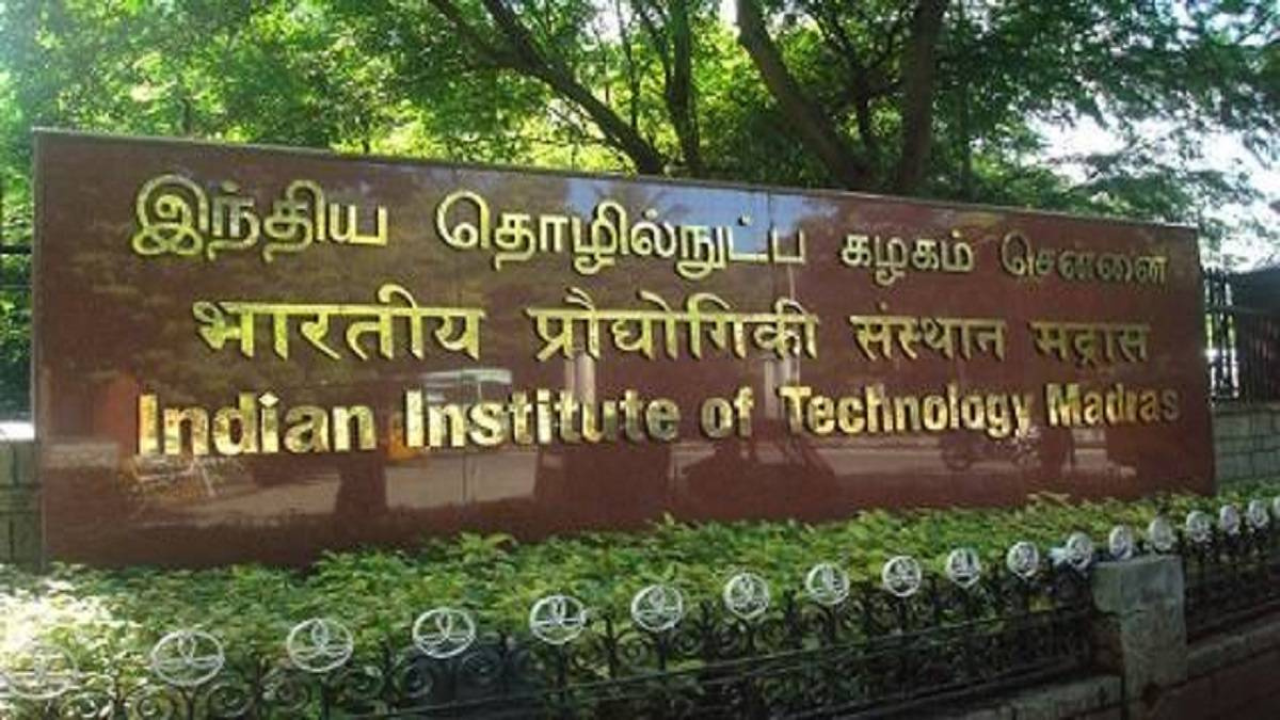
IIT Madras Continues Its Winning Streak At the forefront of the engineering category, the Indian Institute of Technology Madras (IIT Madras) has once again secured the number one position. This achievement reflects the institute’s long-standing commitment to innovation, research, and global academic excellence. IIT Delhi followed in second place, while IIT Bombay retained its third rank, demonstrating the dominance of the IIT ecosystem in shaping India’s future engineers.
This year’s engineering ranking underlines IIT Madras’s unwavering commitment to innovation and excellence. For the seventh consecutive year, the institute claims the first position among engineering institutions, followed closely by IIT Delhi and IIT Bombay, which continue to uphold their reputation for academic rigor and research output. The prominence of IITs this year signals their growing influence in global higher education standards.
Spotlight: NIT Trichy Joins Elite Company
A standout achievement is the ascent of NIT Tiruchirappalli (NIT Trichy), which proudly enters the top 10, ranked ninth, and shines as the only National Institute of Technology (NIT) represented in this esteemed bracket. This remarkable rise demonstrates the institution’s enhanced focus on teaching, research, and industry collaboration, proving that the NITs remain pivotal players in shaping the future of Indian engineering talent.
The Top 10 engineering institutions in the NIRF 2025 list are:
IIT Madras
IIT Delhi
IIT Bombay
IIT Kanpur
IIT Kharagpur
IIT Roorkee
IIT Hyderabad
IIT Guwahati
NIT Tiruchirappalli (Trichy)
IIT (BHU) Varanasi
Among these, the entry of NIT Trichy at ninth rank has drawn special attention. It is the only National Institute of Technology in the top 10, reaffirming its place as one of India’s most respected non-IIT engineering institutions.
Broader Highlights of NIRF 2025
The NIRF was introduced in 2015 to evaluate and rank higher education institutions across India using objective and transparent criteria. Over the past decade, it has become an essential benchmark for students, policymakers, and institutions.
The rankings are based on five core parameters:
- Teaching, Learning, and Resources (TLR)
- Research and Professional Practice (RP)
- Graduation Outcomes (GO)
- Outreach and Inclusivity (OI)
- Perception (PR)
In the engineering segment, additional weightage is given to factors such as research output, employability, and international collaborations, ensuring that institutions are measured on both national relevance and global competitiveness.
Universities Category – IISc Leads Again
In the universities category, the Indian Institute of Science (IISc), Bengaluru retained its top position, reaffirming its role as India’s premier hub for advanced research and innovation. Jawaharlal Nehru University (JNU), New Delhi, stood at the second position, while the Manipal Academy of Higher Education (MAHE) and Jamia Millia Islamia (JMI) secured third and fourth ranks, respectively.
Colleges Category – Delhi University Dominates
In the colleges category, institutions under the University of Delhi once again dominated the list. Hindu College emerged as the top-ranked college in India, followed by Miranda House at second place and Hansraj College at third. Kirori Mal College and St. Stephen’s College completed the top five, showcasing Delhi University’s consistent academic excellence at the undergraduate level.
Research Institutions – IISc and IIT Madras Shine
The research institutions category highlighted the country’s strongest players in innovation and discovery. IISc Bengaluru led the way, while IIT Madras secured the second position, reinforcing its strength not only as a teaching institution but also as a research powerhouse with global collaborations.
Open Universities – IGNOU Retains Leadership
The open universities category saw the Indira Gandhi National Open University (IGNOU), New Delhi, once again claim the top spot, followed by the Karnataka State Open University, Mysuru. This recognition underscores the vital role open universities play in making education accessible to millions, including working professionals and learners in remote areas.
A Decade of NIRF – Transforming Higher Education Benchmarks
Since its launch, the NIRF framework has become a cornerstone of India’s education policy. By combining parameters such as inclusivity, teaching resources, and perception, it has provided a holistic measure of institutional performance. For students, the rankings act as a guide for selecting the right institution, while for universities, they create a healthy environment of competition and continuous improvement.
Speaking at the event, officials from the Ministry of Education noted that the NIRF rankings have had a transformative impact on higher education. Institutions are increasingly prioritizing research, employability, and innovation ecosystems, aligning India’s education sector with global standards.
Key Takeaways from NIRF 2025
IIT Madras continues its reign as India’s top engineering institute.
- NIT Trichy breaks into the top 10, standing out among non-IIT institutions.
- IISc Bengaluru dominates both universities and research categories.
- Delhi University colleges secure the top five positions in the colleges category.
- IGNOU leads in open universities, reinforcing its role in inclusive education.
The NIRF 2025 rankings offer a comprehensive picture of India’s higher education landscape. The performance of IITs and IISc highlights India’s growing strength in science, technology, and research. At the same time, the recognition of institutions like NIT Trichy, Jamia Millia Islamia, and Delhi University colleges reflects the breadth and diversity of academic excellence across the nation.
As India enters a new decade of global competition in higher education, the NIRF rankings will continue to serve as both a benchmark and a catalyst, encouraging institutions to innovate, expand inclusivity, and pursue excellence.