
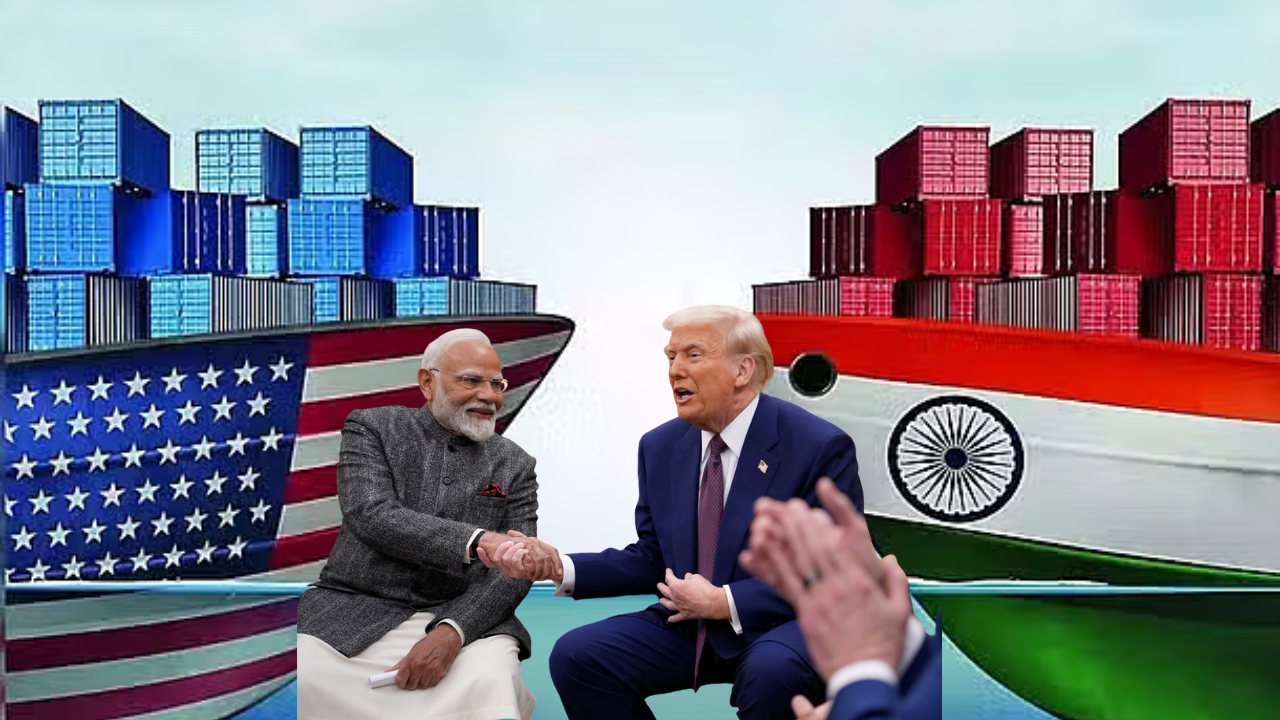

PM Modi hails pact as a milestone that boosts manufacturing, enhances export competitiveness, and supports India’s economic growth.
In a landmark development set to reshape India–US trade relations, the United States has officially removed the additional 25% tariffs on a broad range of Indian goods effective February 7, 2026. The move comes after India agreed to gradually scale down its imports of Russian crude oil while entering into an interim trade pact that further reduces overall tariffs to 18%. The agreement is aimed at boosting bilateral trade to an ambitious $500 billion within the next five years, marking a new chapter in the economic partnership between the two nations.
Prime Minister Narendra Modi hailed the breakthrough as a victory for Indian exporters, calling it a “transformative trade pact that not only deepens the spirit of friendship between the world’s two largest democracies but also creates new pathways for job creation, investment, and innovation under the Make-in-India initiative.”
This historic decision follows months of high-level negotiations between the two governments and is expected to benefit industries spanning manufacturing, agriculture, textiles, pharmaceuticals, and technology.
A Turning Point in Indo–US Trade Relations
The decision to withdraw the 25% tariffs underscores Washington’s intent to strengthen strategic trade ties with India at a time when both countries seek to reinforce global supply chain resilience. India’s calibrated approach in balancing its energy security concerns with its diplomatic commitments has earned appreciation from global trade observers.
According to Commerce Ministry officials, the interim agreement not only ensures tariff reduction across key sectors but also facilitates greater market access for Indian agricultural products, renewable technology components, and manufactured goods.
For Indian exports, this move is especially significant. Several categories — including steel, aluminum, auto components, chemicals, and organic farm produce — had faced high tariffs under earlier protectionist measures. With the rollback, Indian exporters now gain a level playing field in the American market, which is currently India’s largest trading partner.
Focus on Manufacturing, MSMEs, and Job Creation
The Indian government expects this development to give a strong push to the Make-in-India and Atmanirbhar Bharat initiatives. Reduced tariff barriers will make Indian goods more competitive in the global market, attracting fresh investments in sectors like semiconductors, renewable energy equipment, and electric vehicles.
Commerce and Industry Minister Piyush Goyal described the deal as “a win-win for both nations,” adding that the tariff reduction will “stimulate growth in small and medium industries, generate employment, and promote cutting-edge innovation.”
Industry bodies such as FICCI and CII welcomed the decision, noting that lower tariffs would restore confidence among exporters who had faced cost escalation due to additional duties since 2018. MSMEs producing value-added metal goods, machinery parts, and packaging materials stand to gain immediately as they will now have easier access to American buyers.
The pact also includes a special working group to identify new investment zones in India that could attract US companies interested in local manufacturing partnerships, technology transfers, and skill development.
US Farm Markets Open Up for Indian Produce
A major highlight of the deal is America’s agreement to open its agricultural markets to a wider range of Indian farm products. This includes rice, spices, organic tea, sesame seeds, basmati, marine produce, and processed food products that had previously faced strict entry barriers due to tariff and non-tariff issues.
Prime Minister Modi hailed this as a “historic win for India’s farmers,” emphasizing that the inclusion of Indian agro-products in US markets will enhance rural incomes and encourage sustainable agricultural practices.
“India’s farmers will now have the opportunity to directly reach one of the world’s most sophisticated consumer markets, backed by our government’s commitment to high-quality food standards and traceability,” Modi said.
Officials also revealed that both sides are working on mutual recognition agreements (MRAs) to simplify certification and logistic procedures, ensuring faster market entry for Indian products.
Strategic Impact: Energy and Global Supply Chain Alignment
The trade pact follows India’s decision to gradually reduce dependence on Russian oil imports and diversify its energy portfolio with greater imports from the US and allied countries. This strategic alignment not only strengthens India’s global energy security but also positions it as a responsible stakeholder in maintaining global stability.
In line with the agreement, India is expected to increase its investments in US-based clean energy projects, hydrogen research, and critical minerals extraction. In return, the US will facilitate technology transfers in green hydrogen, lithium-ion battery manufacturing, and carbon capture — sectors critical to India’s low-carbon growth vision.
Analysts see this move as part of a broader Indo-Pacific strategy where both nations aim to create resilient, democratic supply chains that are less dependent on volatile markets.
Bilateral Trade Vision of $500 Billion
Currently, India–US bilateral trade stands at around $200 billion. The new trade framework has set an ambitious target of reaching $500 billion by 2031, powered by liberalized tariffs, emerging technology cooperation, and sustainable energy partnerships.
Key sectors identified for growth include:
- Information Technology and Electronics: Expansion in semiconductor manufacturing and design.
- Defense and Aerospace: Joint production and R&D in unmanned systems and advanced avionics.
- Pharmaceuticals and Healthcare: Streamlined approvals for Indian generics and vaccines in the US market.
- Agricultural Exports: Greater access and clearer certification standards for Indian commodities.
- Education and Skill Exchange: Opportunities for student mobility and joint research programs.
To achieve this target, a Bilateral Trade and Technology Council (BTTC) will regularly review progress and investment flows, ensuring transparent policy frameworks.
Strong Political and Economic Message
The removal of the 25% tariffs carries symbolic weight, signaling Washington’s recognition of India as a trusted trade partner. It also marks India’s growing influence in global trade diplomacy, as the country balances strategic autonomy with pragmatic economic partnerships.
Experts believe this could lead to a ripple effect, encouraging other countries to re-engage with India on favorable trade terms. For India, which has prioritized self-reliant growth and value-added exports, this development reinforces its position as one of the world’s most promising manufacturing hubs.
Political observers note that this agreement highlights India’s rising global stature and its ability to translate diplomatic goodwill into tangible economic advantages.
The Road Ahead
The next phase of the deal involves finalizing a comprehensive Free Trade Agreement (FTA) to cover digital trade, services, e-commerce, and intellectual property protections. Preliminary drafts are already under discussion and are expected to mature within the next two years.
As India and the United States continue to deepen their cooperation, both nations are set to benefit from mutual trust, strong leadership, and shared economic vision. The reduction in tariffs not only revitalizes trade but also creates momentum for a new era of sustainable, inclusive, and technology-driven growth.
In Prime Minister Modi’s words, “This agreement is more than a trade pact — it is a bridge of prosperity that connects two great democracies, empowering our industries, farmers, and youth with new possibilities.”