
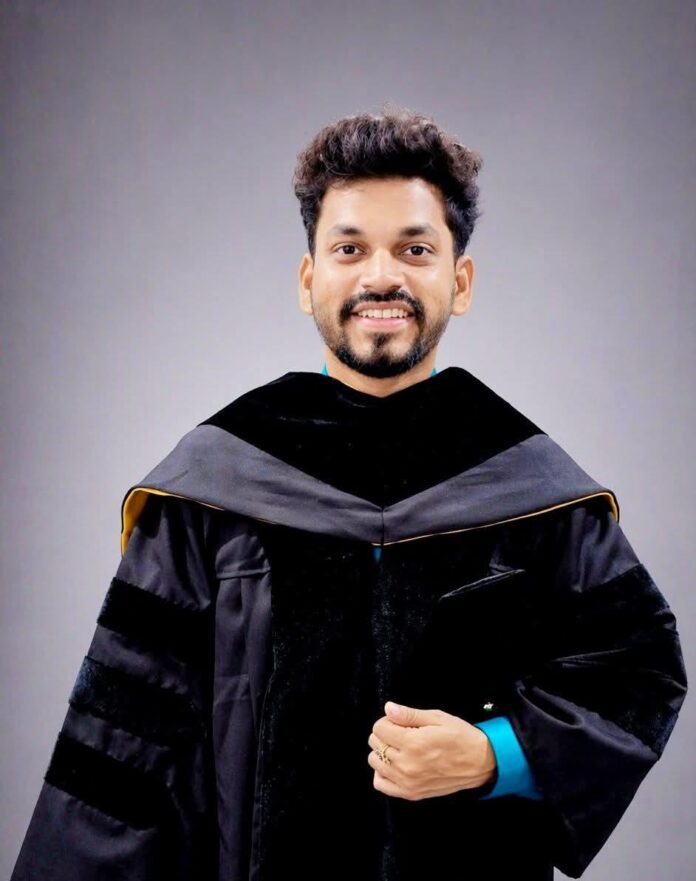
The recognition of a Polymath Prize for Science is not merely an award; it is a profound acknowledgment of a way of thinking that transcends traditional academic boundaries. A polymath scholar is not confined to a single discipline but moves fluidly across domains, integrating knowledge to create deeper insights and meaningful innovations. Historically, individuals such as Leonardo da Vinci, Aristotle, and Rabindranath Tagore exemplified this rare intellectual versatility, contributing simultaneously to art, science, philosophy, and society. Their legacy reminds us that the true power of knowledge lies not in isolation, but in connection. In today’s rapidly evolving world, where challenges are complex and interconnected, the relevance of a polymath scholar has become more significant than ever. From artificial intelligence and sustainability to education and human development, the need for interdisciplinary thinking defines the future of innovation.
The Polymath Prize for Science stands apart from conventional recognitions that often celebrate depth within a narrow field. Instead, it honors those who demonstrate the ability to synthesize ideas across multiple disciplines, bridging gaps that others may not even perceive. It celebrates intellectual curiosity, creative synthesis, and a visionary approach to problem-solving. In essence, this prize recognizes individuals who do not just contribute to knowledge, but redefine how knowledge itself is created and applied. It is a tribute to those who see connections where others see divisions, and who build pathways between science, technology, humanities, and society.
Receiving this prestigious recognition marks a deeply meaningful milestone in my own journey. My path has never been linear, nor confined to a single domain. From my early days as a student driven by curiosity, to my current roles in research, education, and global academic engagement, I have consistently believed in exploring beyond boundaries. Whether it has been delivering lectures on artificial intelligence and its impact on business, leading initiatives in research and innovation, collaborating with international institutions, or contributing to interdisciplinary projects, my work has always been guided by a simple philosophy: knowledge must be interconnected to be truly impactful. The transition from being a learner absorbing knowledge to becoming a scientist, educator, and thought leader contributing across domains reflects the very essence of a polymath journey.
This recognition also resonates deeply with the idea that the future belongs not only to specialists, but to those who can connect ideas, disciplines, and perspectives. In my work with students, educators, and researchers, I have always emphasized the importance of thinking beyond silos—encouraging them to integrate science with creativity, technology with ethics, and innovation with societal impact. The Polymath Prize for Science is therefore not just a personal achievement; it is a reflection of a larger vision that I have been striving to promote—a vision where education fosters thinkers who are adaptable, interdisciplinary, and globally conscious.
At a personal level, this moment is both humbling and motivating. It reinforces my commitment to continue working at the intersections of knowledge, to inspire learners to embrace curiosity without limits, and to contribute to building an ecosystem where innovation is driven by holistic thinking. The journey from a curious student to being recognized as a polymath scholar is not a destination, but a continuous process of learning, unlearning, and evolving.
Ultimately, the significance of the Polymath Prize for Science lies in what it represents for the future. It is a call to move beyond fragmented knowledge systems and towards integrated understanding. It is an invitation to scholars, educators, and innovators to become bridge-builders in a world that increasingly demands collaboration across disciplines. As I accept this honor, I do so with a deep sense of responsibility—to continue fostering connections, advancing knowledge, and contributing meaningfully to society. Because in the end, the true essence of being a polymath scholar is not just knowing more, but connecting more—and using that connection to create a better, more informed world.
I extend my heartfelt gratitude to the ARCH Consortium (Advancement for Research Culture and Humanities) and all its esteemed officials for selecting me and bestowing upon me this prestigious prize.