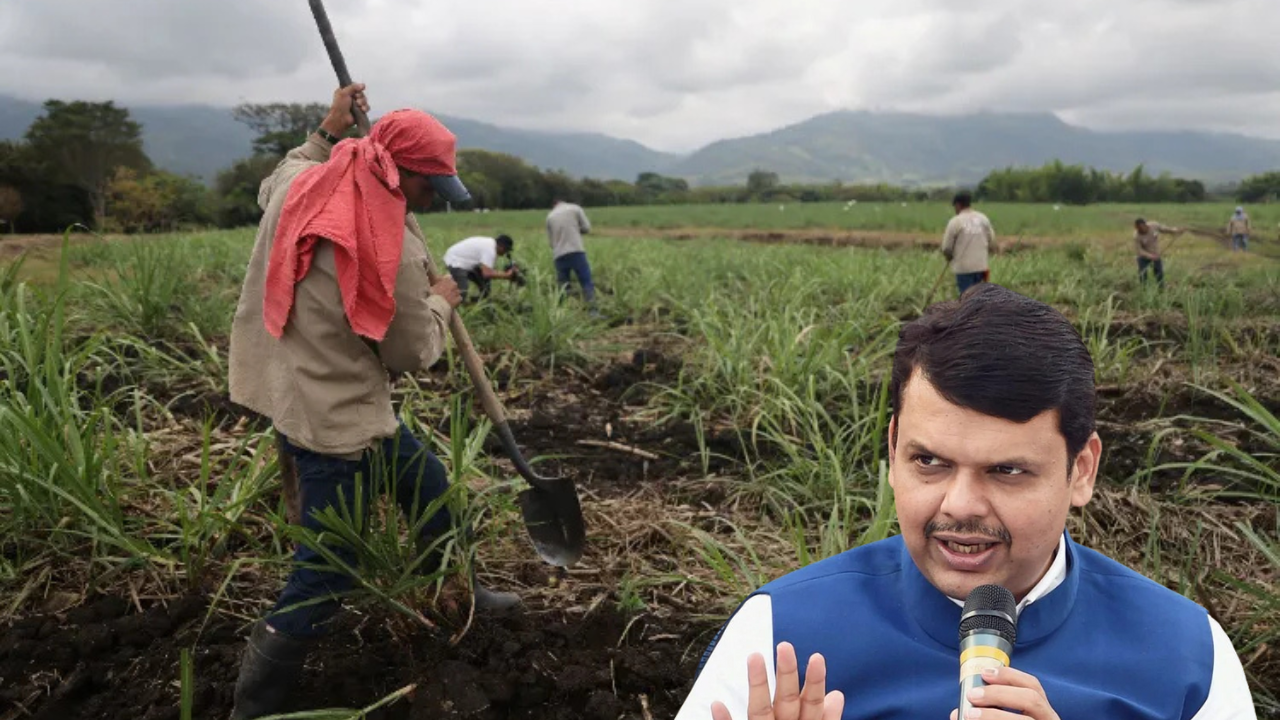
In a bid to put an end to the growing controversy surrounding the recently announced sugarcane levy, Maharashtra Deputy Chief Minister Devendra Fadnavis clarified that the levy imposed to generate funds for Marathwada flood relief will come from sugar mill profits and not from the earnings of sugarcane farmers. Fadnavis’s statement comes amid sharp criticism from opposition leaders, including Sharad Pawar, and several farmer advocacy groups, who had expressed concern that the levy would reduce farmers’ incomes ahead of the crucial crushing season.
Addressing reporters and state officials, Fadnavis said that the ruling government is fully committed to protecting farmers’ interests while ensuring that necessary funds are raised to assist flood-affected regions. “The government stands firmly with our farmers. The levy being collected for Marathwada flood relief will be drawn from the sugar factories’ profit margins. Farmers will not be affected in any way,” he emphasized.
Relief for Marathwada Flood Victims
The Marathwada region experienced widespread devastation due to torrential rains and flash floods in recent weeks, resulting in severe damage to farmlands, infrastructure, and village homes. The Maharashtra government announced a dedicated flood relief fund to support rehabilitation and compensation efforts across districts such as Latur, Beed, Osmanabad, and Nanded. The sugarcane levy was introduced as a temporary measure to raise emergency resources for these activities.
According to government officials, the levy is part of a multi-pronged strategy to mobilize funds for rebuilding efforts without putting any additional burden on rural families already affected by natural calamities. “Our intent is to ensure a fair contribution from all stakeholders in the sugar sector. We are not touching the Fair and Remunerative Price (FRP) paid to farmers,” the Deputy Chief Minister assured.
Opposition Raises Concerns
The initial announcement of the levy sparked strong responses from Sharad Pawar, president of the Nationalist Congress Party (NCP), and several leaders from farmer unions. They accused the state government of planning to divert funds from farmers’ rightful dues, warning that such a move would worsen the already fragile condition of sugarcane cultivators in drought-prone areas.
Pawar demanded transparency in how the levy was structured and said the government should find alternate mechanisms to mobilize aid without linking it to cane payments. “Any form of levy on sugarcane or FRP is unjust to farmers who are already struggling with rising costs and erratic rainfall,” he said at a recent gathering in Pune.
Responding to such criticisms, Fadnavis reiterated that misinformation was being spread to create political unrest and that the official notification clearly stated the levy would be limited to the sugar factories’ net profit. He emphasized that opposition parties should refrain from misguiding farmers on sensitive policy decisions meant purely for humanitarian relief.
Government’s Clarification Brings Relief to Farmers
Following the official clarification, several farmer groups and sugar cooperatives welcomed the assurance, stating that it was important to protect farmers’ share while contributing collectively to disaster aid. Industry representatives noted that sugar factories, which have recovered well in the post-pandemic market, are capable of absorbing such levies without impacting their operations or procurement rates.
Experts from the cooperative sugar sector explained that the mechanism is similar to past instances when the government imposed small levies on mill profits to fund welfare schemes or regional infrastructure projects. Since profit margins have improved this year due to stable sugar prices and higher ethanol demand, most mills are expected to comply smoothly.
Focus on Unity and Support for Flood-Affected Regions
Fadnavis used the occasion to call for unity among all political parties and stakeholders to support rehabilitation efforts in Marathwada, rather than engaging in controversy. He said that the floods had destroyed thousands of hectares of standing crops, including cotton and soybean, and affected lakhs of rural families who now need shelter, relief materials, and financial support for rebuilding.
“The government’s first duty is to ensure no family is left behind,” Fadnavis stated. “Our administration is coordinating with the Centre and local authorities to expedite relief work. The sugar mill contribution is one way to show solidarity with those facing hardship.”
He added that Chief Minister Eknath Shinde and other senior ministers are personally monitoring field-level relief operations, and that funds raised through the levy will be directly channeled to district administrations for emergency infrastructure repair and agricultural support.
Transparency and Accountability Measures
To address concerns of misuse or misallocation, the state government plans to maintain a transparent tracking system for the collected levy. Regular reports will be published detailing the amount collected, mills involved, and implemented projects under the relief scheme. This approach, officials said, ensures accountability while maintaining public confidence in the initiative.
The Finance Department has also proposed auditing mechanisms to confirm that sugar mills deduct levy contributions solely from their profits, without altering payment schedules to farmers.
Broader Agricultural Context
The clarification also comes at a time when Maharashtra’s sugar sector is preparing for the 2025–26 crushing season, expected to yield around 110 lakh metric tonnes of sugar. The state remains one of India’s top sugar producers, employing millions of rural workers. Ensuring that financial obligations such as FRP payments remain steady is critical for maintaining farmer trust and rural economic stability.
Experts suggest that Maharashtra’s approach could serve as a model for crisis-based funding, where industries contribute part of their profits to local welfare initiatives, aligning economic and social responsibilities.
Commitment to Farmers’ Welfare
Reaffirming the government’s pro-farmer stance, Fadnavis concluded that development and disaster recovery cannot come at the cost of rural livelihoods. He assured that all future tax or levy decisions will continue to prioritize transparency, equity, and direct consultation with farmer associations.