
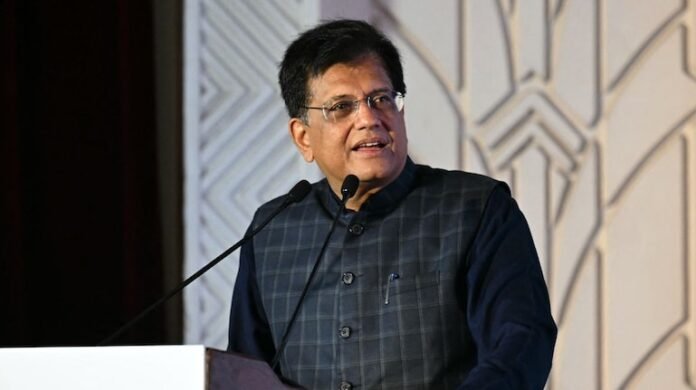
Commerce and Industry Minister Piyush Goyal said on Friday, 27 November 2026, that the long-pending trade deal between India and the United States is close to culmination, signalling a breakthrough in talks that have stretched through most of the year.
“The US trade deal is close to culmination. The process and pathway, which was always something which held back finalising the deal, is now taking some shape,” Goyal said while addressing the India Debt Capital Market Summit 2026 virtually.
His remarks came two days after the US Trade Representative proposed fresh tariffs of up to 25 per cent on Indian goods, while offering to bring them down to 17 per cent if the two countries agree to a bilateral trade deal.
What the US proposed
The proposed tariffs followed a Section 301 investigation by the US Trade Representative into structural excess capacity and production in manufacturing sectors across 14 economies, including India, China, the European Union, Japan, South Korea, Vietnam, Taiwan, Bangladesh, Indonesia, Malaysia, Thailand, Cambodia, Singapore, Switzerland and Norway.
The report proposed tariffs of up to 25 per cent on Indian goods, net of existing Section 301 tariffs, the second highest rate among the economies covered. The tariffs would be reduced to 17 per cent if India and the US conclude a trade agreement. The proposed levies are subject to a period of public comment before they take effect.
For comparison, the US proposed 18 per cent tariffs for Bangladesh, Cambodia, Indonesia, Malaysia and Thailand, and 15 per cent for the European Union, Japan, South Korea, Switzerland and Taiwan. The 17 per cent rate would give Indian exporters a relative edge over several Asian competitors, though some exporters said the gap was too narrow to make a meaningful difference and that New Delhi may need to push for better terms in further negotiations.
A deal nearly a year in the making
India and the US finalised the framework for the first phase of the bilateral trade agreement in February 2026. An interim understanding reached on 2 February 2026 would have brought US tariffs on Indian goods down to 18 per cent from a combined rate of 50 per cent, but the deal was not signed, and changes in the US tariff landscape led to further negotiations.
Earlier in November, Goyal had asserted that India will clinch one of the best trade agreements with the US, with preferential access to the American market compared with competing economies. “We have negotiated a very good set of outcomes. In every aspect, we will have one of the best deals with the US,” he said, adding that India will have the “most preferred market access” with the US once the deal is in place.
On 18 November, Commerce Secretary Rajesh Agrawal had also said the two sides were close to finalising negotiations for the bilateral trade agreement, but that the deal will not be signed until Washington sets up a new tariffs framework. The USTR proposal this week appears to be part of that framework taking shape.
What it means for exporters
A deal capped at 17 per cent would matter most for labour intensive export sectors that compete directly with Asian suppliers in the US market, including textiles, gems and jewellery, leather goods and marine products. Even a small tariff advantage can decide orders in price sensitive categories, though exporters have cautioned that the one percentage point gap over some rivals may not be enough on its own.
Trade experts said the USTR report may spur intensive negotiations in the coming weeks, with both sides now having a clearer picture of the tariff outcome if talks fail and the relief available if they succeed.
India-EU pact also on track
In the same address, Goyal said the India-European Union free trade agreement is likely to be signed later this year in December and could come into effect by March or April 2027. The two agreements together would anchor India’s trade access to its two largest Western markets.
The government has said it remains committed to working closely with the United States towards the early conclusion of the India-US Bilateral Trade Agreement.
Frequently Asked Questions
What did Piyush Goyal say about the India-US trade deal?
Goyal said the deal is close to culmination and that the process and pathway which had held back finalisation is now taking shape.
What tariffs has the US proposed on Indian goods?
The US Trade Representative proposed tariffs of up to 25 per cent on Indian goods, which would fall to 17 per cent if India and the US reach a trade agreement.
When could the deal be signed?
No date has been announced. Commerce Secretary Rajesh Agrawal said the deal will not be signed until Washington sets up a new tariffs framework, and the proposed tariffs face a public comment period first.

