
From Farmer Power Grids to Innovation City – Jobs and Sustainability Take Off
Maharashtra is charging ahead as India’s green energy powerhouse, fueled by blockbuster deals worth nearly ₹30 lakh crore sealed at the World Economic Forum (WEF) in Davos 2026. Chief Minister Devendra Fadnavis announced these initial agreements, spotlighting solar, renewables, and cutting-edge industrial projects that promise lakhs of jobs and a groundbreaking “Innovation City.”
Davos Triumph: Massive Green Investments Locked In
At Davos, Maharashtra stole the show with Memorandums of Understanding (MoUs) totaling around ₹30 lakh crore, a lion’s share flowing into green and new-age sectors like solar power, renewable energy, and sustainable industries. Reports highlight that about 83% of these commitments involve foreign direct investment (FDI), underscoring global confidence in the state’s progressive policies. On Day 1 alone, 19 MoUs worth ₹14.5 lakh crore were inked across renewables, data centres, green steel, and more, setting the stage for explosive growth.
Key players like Yoki Green Energy Pvt. Ltd. signed a ₹4,000 crore MoU for renewable projects in Palghar and the Mumbai Metropolitan Region (MMR), eyeing 6,000 direct jobs. Adani Group and Essar Renewables also jumped in with big renewable bets, aligning with Maharashtra’s push for round-the-clock clean power, especially for electric vehicles and green mobility. These deals aren’t just numbers—they’re a blueprint for Maharashtra to hit 52% renewable energy in its power mix by 2030, saving billions in costs while slashing carbon emissions.
Solar Surge: Asia’s Largest Farmer-Focused Network
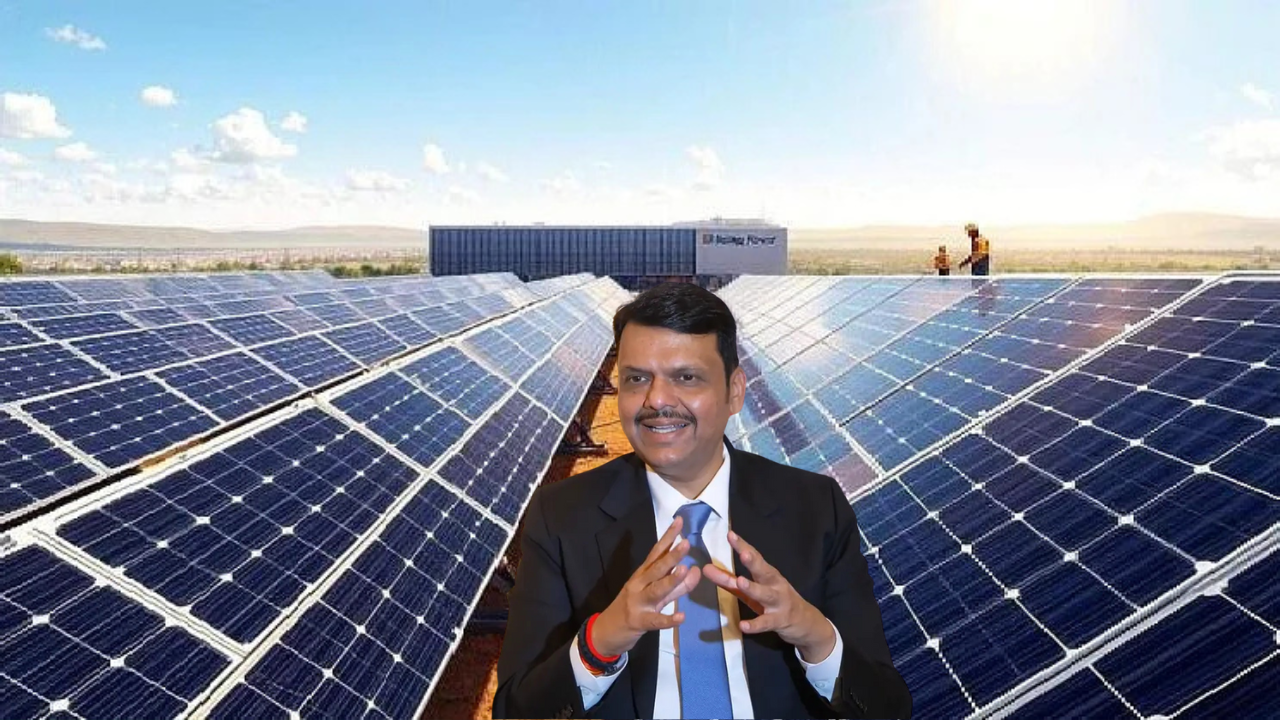
Maharashtra’s solar story is the real headliner, with Asia’s—and potentially the world’s—largest decentralized solar program already powering farmers with 16 GW capacity by year-end. Under the Mukhyamantri Saur Krushi Vahini Yojana (MSKVY) 2.0 and PM Surya Ghar Scheme, the state has solarized agricultural feeders, delivering daytime power at just ₹3 per unit. This has housed 60% of India’s solar pumps, cut diesel dependence, and is projected to save $10 billion in power purchase costs over five years.
CM Fadnavis showcased this at Davos, earning applause from the International Solar Alliance, with ministers from Zimbabwe and others eyeing it as a global model. Over ₹65,000 crore in private investments are fueling 16,000 MW of solar parks near substations, reducing losses and boosting farm productivity in drought-hit areas like Marathwada and Vidarbha. By March 2026, the full rollout will transform agriculture, create 700,000 jobs statewide, and position Maharashtra as a green energy leader.
Innovation City: Mumbai’s High-Tech Green Hub Takes Shape
Adding sparkle to the green narrative, Maharashtra unveiled plans for India’s first “Innovation City” near Navi Mumbai International Airport—a 100-acre plug-and-play haven for AI, quantum computing, data centres, and renewables. Tata Sons committed $11 billion (₹91,000 crore) for core infrastructure, including massive data centres powered by small modular reactors (SMRs). This state-of-the-art urban-industrial concept will decongest Mumbai, foster circular economy practices, and attract global innovators.
The city aligns perfectly with green goals, integrating sustainable aviation fuel, EV ecosystems, and biotech under one roof. CM Fadnavis noted talks with Indian and Russian nuclear firms for SMRs to meet data centre demands, thanks to the new SHANTI Bill. Slated to break ground in 6-8 months, it promises thousands of high-skill jobs and positions Maharashtra as Asia’s innovation epicentre.
Regional Boost: Jobs and Growth Across Maharashtra
These Davos wins are spread statewide, ensuring balanced development. Konkan gets ₹3.5 lakh crore, Nagpur division ₹2.5 lakh crore, Marathwada ₹55,000 crore, and backward Vidarbha 13% of total investments—covering Nashik, Dhule, and more. North Maharashtra hubs like Nashik and Ahmednagar will see agro-tech and food processing boom, while MMR and Palghar lead renewables.
Expect 30 lakh jobs overall, from solar technicians in rural belts to AI experts in urban hubs. Carlsberg’s ₹500 crore food sector MoU adds 750 jobs, Lodha’s data parks scale to ₹1.3 lakh crore with 16,000 roles. This green job wave will empower youth, women, and farmers, driving inclusive growth.
National Vision, Local Impact: PM Modi’s Green Push
Maharashtra’s feats echo PM Narendra Modi’s vision for a Viksit Bharat, with renewables at the core. The state boasts a 75% MoU conversion rate from last Davos, proving its execution prowess through single-window clearances and land banks. India pitched $300-350 billion in clean energy at WEF, but Maharashtra’s slice is transformative—₹82,000 crore savings, massive emission cuts, and energy security.
For farmers in Maharashtra’s sun-drenched fields—from Nashik’s vineyards to Solapur’s cotton belts—this means reliable power, higher yields, and extra income from surplus solar sales. Industries gain cheap green power, EVs charge sustainably, and cities breathe cleaner air.
Path Forward: Sustainability Meets Prosperity
As work kicks off on these projects, Maharashtra eyes leadership in green steel, sustainable aviation, and circular economies. Challenges like grid integration and skilled manpower are on radar, with training under green skill initiatives. The Davos momentum, backed by 400+ global investors, signals a brighter, greener future.
This isn’t just investment—it’s a revolution blending dharma with development, powering dreams from villages to skyscrapers. Maharashtra’s green leap will inspire India and the world, proving sustainability and prosperity go hand-in-hand.