During his Europe visit, the Congress leader engaged in a detailed dialogue on India’s economy, youth challenges, and global partnerships.
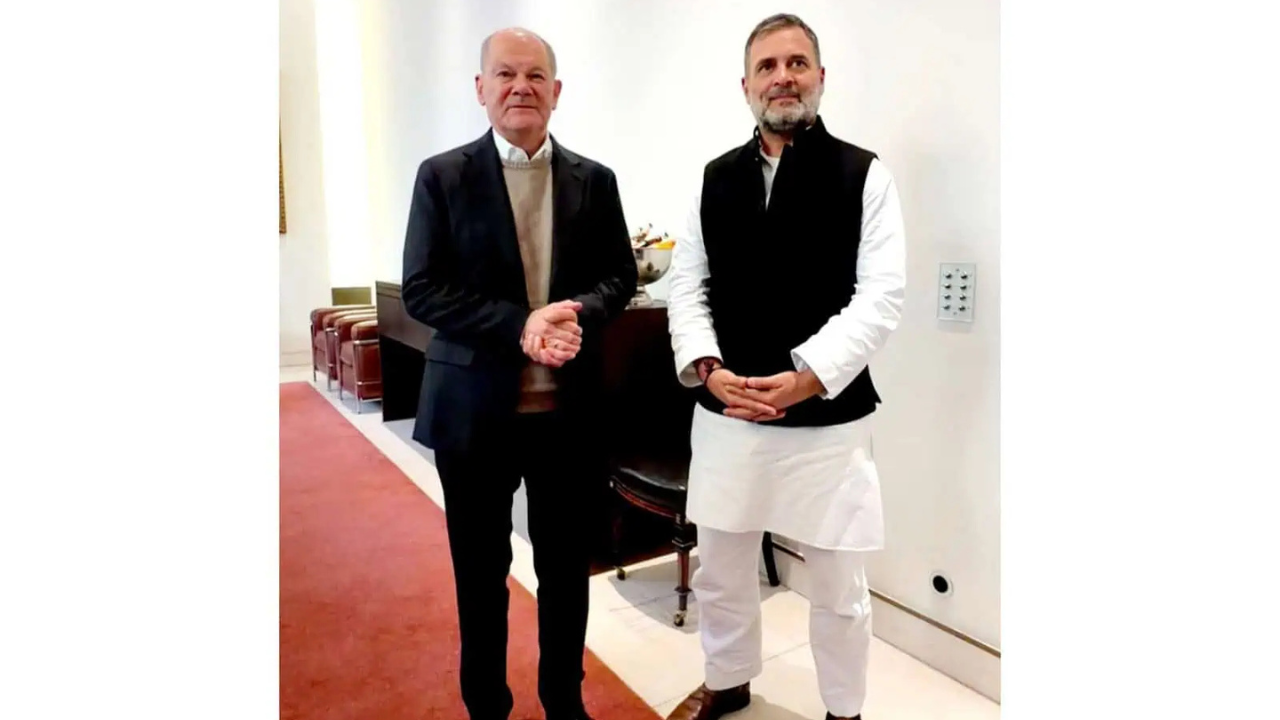
In a significant development during his ongoing visit to Europe, Congress leader Rahul Gandhi held meetings with a prominent German think tank, engaging in in-depth discussions about India’s democratic values, economic challenges, and global positioning in a rapidly changing world. The meeting marks another effort by the senior Congress leader to connect India’s political and developmental trajectory with international experts and policy communities.
A Thoughtful Discourse in Germany
Rahul Gandhi, known for his global outreach and continued engagement with international institutions, met members of a reputed policy think tank in Germany earlier this week. While the specific name of the organization has not been publicly disclosed, sources indicate it specializes in political economy, governance reforms, and sustainability studies.
According to attendees, the conversation covered India’s evolving political landscape, economic inclusivity, youth empowerment, and the importance of protecting democratic institutions. Gandhi reportedly highlighted the challenges faced by India’s middle class, farmers, and small businesses amidst global economic shifts and automation-driven transitions.
“The world is watching India closely. Our choices today will define not just our growth, but also our democracy’s strength in coming decades,” Gandhi was quoted as saying during his address to the experts.
Focus on Democratic Values and Global Cooperation
The Congress leader emphasized that India’s global influence relies not only on economic growth but also on the strength of its democratic framework and diversity. He urged international partners to view India as both a strategic and moral force in a world where democratic principles are being tested.
In his discussion, Rahul Gandhi called for renewed cooperation in education, climate transition, and digital governance between India and the European Union. He stated that as India continues to grow as an economic power, its partnerships with European nations will play a vital role in balancing development with social justice and environmental sustainability.
His remarks reflect a continued effort to position India within a global value system rather than purely as an economic participant. Gandhi reportedly argued that countries like Germany could play a key role in knowledge-sharing that benefits both societies.
Highlighting Youth and Employment Concerns
One of the major segments of the discussion centered on India’s youth population, which Gandhi described as its “biggest strength and most urgent responsibility.” He noted that India’s economic strategy must focus more on generating real employment, rather than relying solely on indicators like stock market performance or GDP.
“True progress must be measured by opportunity and dignity, not just numbers,” he reportedly remarked.
Experts at the think tank echoed similar concerns about youth unemployment rates across emerging economies and discussed possible collaborative programs between German institutions and Indian educational setups to foster skill exchange.
Engagement Beyond Borders
This meeting forms part of Rahul Gandhi’s broader international outreach, which has included visits to the United States, the United Kingdom, and several European countries over the past few years. These global interactions have consistently focused on dialogues about democracy, technology, social justice, and sustainable growth.
Political observers believe such interactions strengthen Gandhi’s image as a forward-looking leader whose approach extends beyond partisan politics. His global dialogues often contrast with his domestic critics’ perception, as they portray him as someone interested in learning from international systems and applying those lessons to India’s policy framework.
Congress party sources say this visit aims to build awareness among global think tanks about India’s current internal challenges and to explore shared strategies on issues like digital privacy, agricultural transformation, and equitable growth.
Broader Implications for Indian Politics
Back home, Rahul Gandhi’s meeting in Germany has garnered attention from political analysts, with many interpreting it as part of his consistent outreach ahead of key political developments in 2026. Congress leaders have welcomed his visit as a sign of proactive diplomacy from the opposition, seeking ideas beyond national boundaries.
They argue that international conversations help broaden India’s political imagination and can inspire fresh policy thinking at a time when domestic debates often remain limited to election-centered narratives.
Meanwhile, social media has seen mixed reactions — Congress supporters have praised his initiative to raise India’s issues globally, while critics have questioned the outcomes of such visits. Nonetheless, the event continues to generate discussion across the political spectrum.
Looking Ahead: A Visionary Exchange
As Rahul Gandhi wraps up his Europe leg, his meeting with the German think tank stands as an example of how intellectual diplomacy is becoming increasingly important in contemporary politics. Rather than focusing merely on trade or defense, such meetings underline the significance of exchanging ideas and values that define a nation’s development model.
Experts view this as a positive direction for Indian politics — where leaders engage in dialogue not only within the country but also on global platforms that shape policy and governance trends.
Ultimately, Gandhi’s interaction in Germany represents his continuing attempt to connect Indian realities with global perspectives, blending domestic leadership with international insights. His outreach aims to underline that India’s story — its democracy, economy, and diversity — belongs as much to the world’s conversations as it does to its domestic debates.