
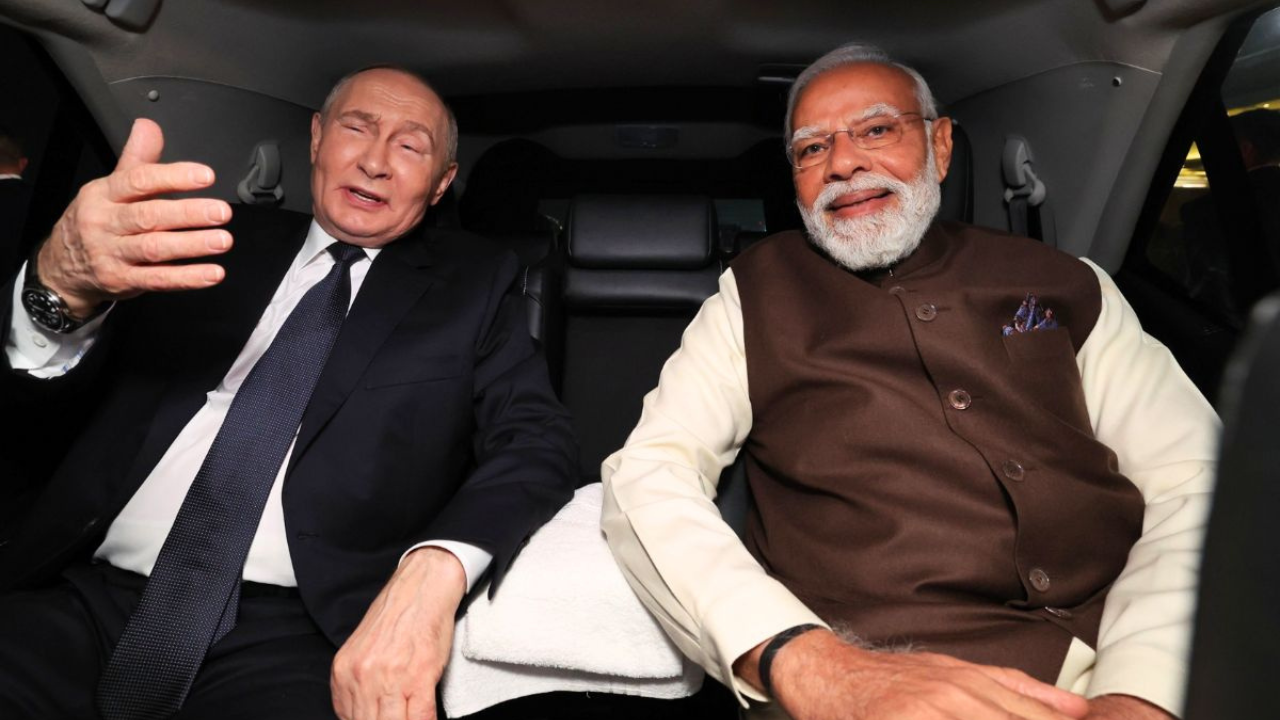
The long-standing friendship between India and Russia is set to enter a new chapter as Russian President Vladimir Putin begins his official visit to India. The visit, which carries both symbolic and strategic significance, aims to reinforce decades of cooperation and trust that have defined the relationship between the two nations since the days of the Soviet Union.
Putin’s trip is expected to bolster key partnerships in defense, energy, trade, and technology — the four pillars of the Indo-Russian relationship. The Indian government, led by Prime Minister Narendra Modi, has prepared a series of meetings and discussions designed to deepen mutual collaboration and explore new frontiers for joint development.
Strengthening Historical Ties
India and Russia have shared a special and privileged strategic partnership for over seven decades. From defense cooperation to cultural exchanges, both countries have consistently supported each other in times of need. The Soviet Union played a major role in supporting India’s industrial and space development in the early decades after independence, while India maintained close diplomatic ties even after the fall of the USSR in 1991.
Putin’s visit reinforces this legacy, emphasizing that India remains a key ally for Russia in South Asia, while Russia continues to be a critical defense and energy partner for India. Both nations view this relationship as a steady anchor in an uncertain global environment.
Strategic Discussions Expected
During his stay, President Putin is scheduled to hold bilateral talks with Prime Minister Modi and other senior Indian leaders. Key areas of discussion include trade, energy security, defense production, and emerging technologies such as artificial intelligence and cybersecurity.
The two leaders are likely to sign several agreements aimed at deepening economic and defense cooperation. There is a strong possibility of announcements related to joint military exercises, nuclear energy collaborations, and expansion in space research programs. India and Russia are also exploring the potential for greater use of national currencies in bilateral trade to reduce dependency on third-country payment systems.
Focus on Energy and Defense Cooperation
Energy remains a cornerstone of Indo-Russian cooperation. Russia is one of India’s leading suppliers of crude oil, natural gas, and coal. Discussions during Putin’s visit are expected to revolve around long-term energy contracts, new exploration opportunities, and increased participation of Indian companies in Russia’s energy sector.
Defense ties are equally strong. Russia continues to be India’s major partner in arms manufacturing, supplying advanced systems such as the S-400 missile defense system and jointly producing aircraft and tanks. Talks may include further joint production in India under the “Make in India” and “Atmanirbhar Bharat” initiatives, supporting local manufacturing and self-reliance in defense technology.
Expanding Trade and Technology Collaboration
Trade diversification is another major focus. Both India and Russia have expressed interest in boosting bilateral trade to new heights by 2030. Currently, trade is heavily centered on energy and defense, but both governments are now looking to expand cooperation into areas like pharmaceuticals, agriculture, digital technology, and education.
Technology collaboration is likely to receive special attention. India’s fast-growing digital economy and Russia’s expertise in advanced scientific research present huge opportunities for joint innovation. Experts suggest that artificial intelligence, space technology, and cybersecurity will be major themes of future cooperation.
People-to-People and Cultural Relations
Beyond politics and economics, both nations share deep-rooted cultural ties. Russian literature, cinema, and education have long held a place in Indian academic and cultural circles. Similarly, Indian films and yoga have become increasingly popular in Russia. Putin’s visit is expected to highlight this cultural connection, with possible announcements regarding new educational exchanges, tourism cooperation, and cultural programs.
The Indian Ministry of External Affairs has indicated that people-to-people engagement forms the emotional core of Indo-Russian friendship — a bond that continues to thrive even as global political alignments shift.
A Partnership in a Changing World
Putin’s India visit comes at a time when global dynamics are rapidly changing. With emerging power centers and shifting alliances, both India and Russia seek to recalibrate their roles while maintaining strategic autonomy. India continues to walk a careful path between traditional alliances and new global partnerships, emphasizing a balanced foreign policy guided by national interest.
In this context, Russia’s outreach to India is a reaffirmation of mutual trust. Despite geopolitical challenges, both nations remain committed to maintaining stability, promoting multipolarity, and working towards an equitable global order.
Expected Outcomes and Future Outlook
Observers believe that Putin’s visit will deliver tangible outcomes across multiple sectors. Memorandums of Understanding (MoUs) in defense manufacturing, energy investment, and technology will likely be announced. Additionally, new frameworks for trade in local currencies and greater cooperation in logistics — including the International North-South Transport Corridor (INSTC) — are expected.
Beyond specific agreements, the visit symbolizes continuity. It underscores that Indo-Russian relations, rooted in trust and shared interests, go beyond immediate strategic concerns. As both nations look ahead, they aim to create a future marked by mutual growth, regional stability, and innovation-driven partnership.
Conclusion
President Vladimir Putin’s India visit once again reaffirms that the friendship between India and Russia is not just historic — it is evolving with time. As the two countries engage in meaningful dialogue and open new avenues of cooperation, the world watches a partnership that continues to stand firm amid global changes.