
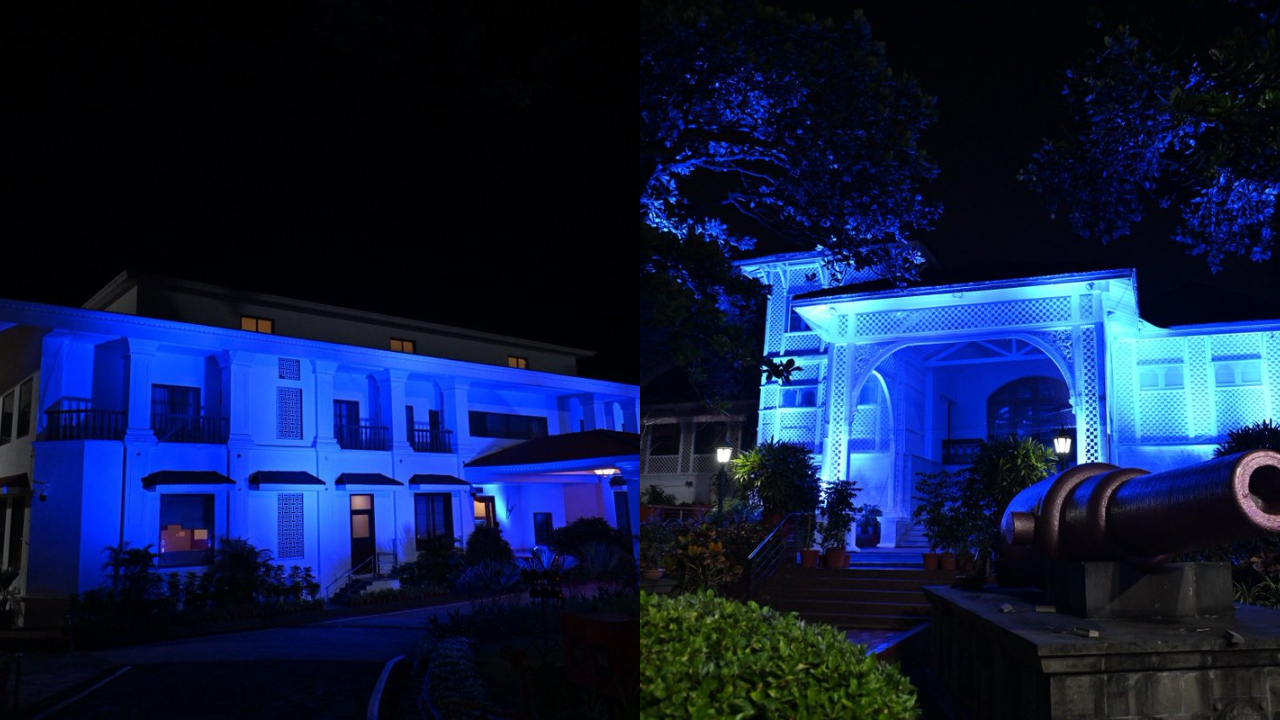
In a symbolic gesture that highlights commitment to child rights and social awareness, the iconic buildings ‘Jal Vihar’ and ‘Jal Bhushan’ inside Raj Bhavan, Mumbai, were illuminated in vibrant blue light on the occasion of UNICEF’s World Children’s Day. The event, marked globally every year on November 20, celebrates the United Nations’ Convention on the Rights of the Child and emphasizes creating a better, safer world for every child.
The illumination of the two historic structures served as a visual tribute to the importance of equality, protection, education, and opportunity for children across India. The Raj Bhavan initiative reflected the government’s commitment to social responsibility, combining heritage, technology, and governance with compassion and community awareness.
A Message of Hope and Inclusion
The glowing blue facade of Jal Vihar and Jal Bhushan drew attention to the message of inclusion — urging citizens, leaders, and organizations to ensure that every child thrives, no matter their background. According to UNICEF, World Children’s Day is not only a celebration but also a reminder of the work still needed to guarantee every child’s rights to health, education, and dignity.
This year’s theme focused on empowering young voices and using innovation and technology to address children’s issues such as digital learning, mental well-being, and protection from online risks. The symbolic lighting at Raj Bhavan was more than an aesthetic display; it represented the connection between policy, social purpose, and a forward-looking vision for child development.
Speaking about the initiative, officials at Raj Bhavan mentioned that the illumination was part of an international campaign encouraging institutions and landmarks to “Go Blue” in solidarity with children. This global movement has seen famous monuments across the world—from the Empire State Building to the Eiffel Tower—lit up in blue as a mark of commitment to children’s welfare.
Raj Bhavan’s Blend of Tradition and Technology
Raj Bhavan Mumbai, the official residence of the Governor of Maharashtra, carries rich historical significance and has always stood as a symbol of leadership, service, and inclusivity. The decision to light up Jal Vihar and Jal Bhushan fuses this legacy with modern values.
The adoption of energy-efficient LED lighting technology for the illumination also underlines the state’s focus on sustainability and eco-conscious practices. The gleaming blue hue represented not only compassion for children but also a message of environmental awareness that complements the broader goals of sustainable governance.
Maharashtra’s Role in Supporting Child Welfare
In recent years, Maharashtra has taken several steps toward improving child welfare indicators. From initiatives promoting girl child education to schemes offering nutritional support and health infrastructure, the state government aligns closely with UNICEF’s global call to action.
Officials working with UNICEF India have frequently noted Maharashtra’s progress in improving access to education and digital resources, especially in rural and tribal regions. The illumination of Raj Bhavan adds another layer to this ongoing effort—an artistic reminder combined with administrative will.
As part of World Children’s Day, various activities across Mumbai and other cities included school events, art competitions, social media campaigns, and outreach programs aimed at raising awareness about children’s rights. NGOs, local authorities, and citizens joined forces to amplify the visibility of the cause, encouraging everyone to play a part in building a child-friendly society.
Connecting Governance with Humanity
The visual grandeur of Jal Vihar and Jal Bhushan glowing in blue symbolized the balancing act between modern governance and humanity. Technology-driven administrations today are not limited to infrastructure or digital policy—they also seek to nurture human growth and inclusivity.
By participating in an international campaign like UNICEF’s World Children’s Day, Raj Bhavan demonstrated how public institutions can use their influence and visibility to drive meaningful communication around social causes. The blue lighting, therefore, became more than illumination—it became dialogue, reflection, and a symbol of hope.
Over the years, World Children’s Day has gained momentum as not only an observance day but also a platform for children and youth to express their perspectives. Across India, schools and universities joined UNICEF campaigns by organizing discussion panels, student delegations, and short film screenings. The Mumbai event harmonized these global aspirations with local significance, showing that Maharashtra continues to stand at the forefront of social awareness movements.
Citizens Encouraged to Participate
Raj Bhavan officials encouraged citizens to take inspiration from the event and contribute to building a positive environment for children in their communities. Small actions such as supporting local schools, helping underprivileged children with learning materials, or spreading awareness on child health can collectively make a large impact.
Social media platforms also played an important role in spreading awareness, as images of the illuminated buildings quickly went viral under hashtags promoting World Children’s Day. Netizens appreciated the beauty and symbolism of the gesture, congratulating the state administration and UNICEF for their collaboration.
A Global Promise, A Local Commitment
World Children’s Day originated from the adoption of the UN Convention on the Rights of the Child in 1989, which remains one of the most widely accepted human rights treaties in history. India continues to reaffirm its pledge toward upholding these rights through national policies and state-led efforts.
By lighting up Jal Vihar and Jal Bhushan in blue, Raj Bhavan Mumbai reinforced the idea that every child deserves a voice, a safe home, and a chance to dream. The gesture encapsulated a universal truth — that progress is sustainable only when the youngest citizens are empowered and protected.
As the blue light shimmered across the walls of Raj Bhavan, it carried a silent promise — a promise of hope, equality, and a brighter future for every child in Maharashtra and beyond.