
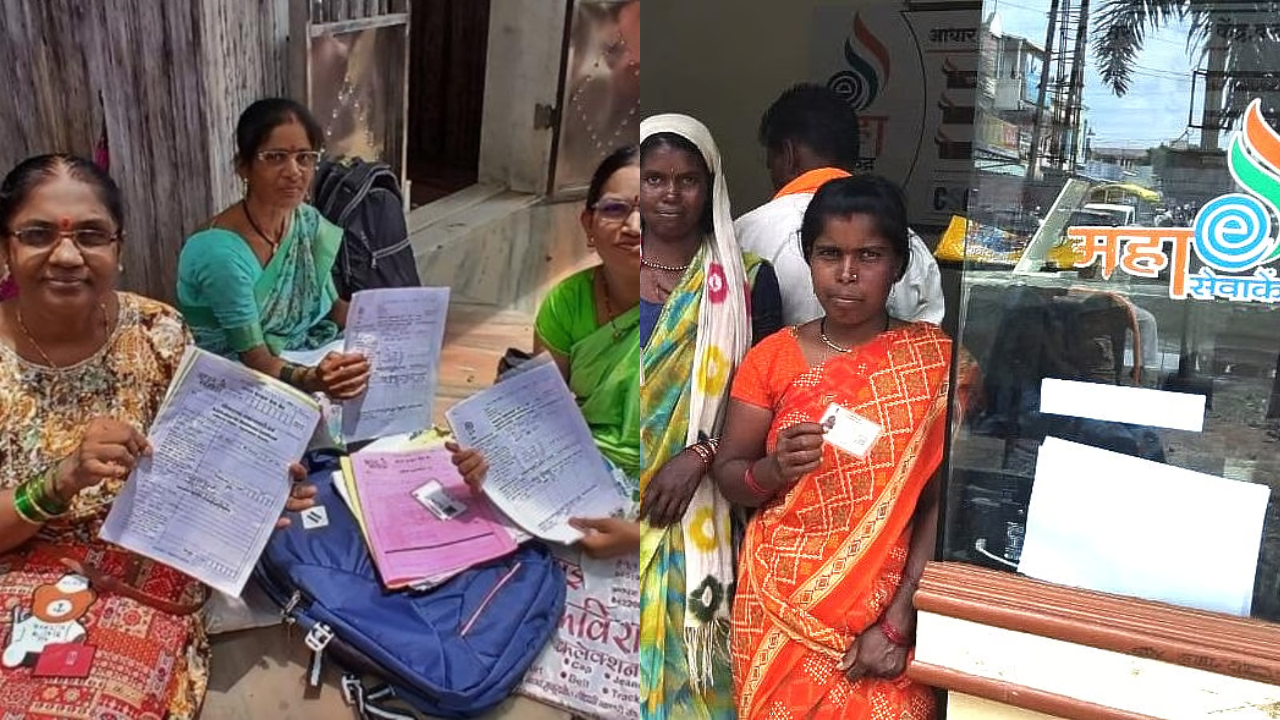
The Government of Madhya Pradesh has officially begun the e-KYC (electronic Know Your Customer) compliance process for its flagship “Ladki Bahin Yojana”, a welfare scheme designed to provide monthly financial support to women across the state. Starting this month, beneficiaries are mandated to complete Aadhaar-based authentication, with the added requirement that their husbands’ Aadhaar details must also be linked to the scheme for continued eligibility.
The initiative aims to streamline direct benefit transfers (DBT), curb irregularities, and ensure that welfare assistance reaches the intended female beneficiaries without duplication or misuse.
Background of the Ladki Bahin Scheme
The Ladki Bahin Yojana is one of Madhya Pradesh’s most ambitious social welfare programs launched to empower women, particularly those from low-income households. Under the scheme, eligible women receive a fixed monthly financial grant directly in their bank accounts to support household expenses, education of children, and basic livelihood needs.
Over the past year, the scheme has grown in popularity, with lakhs of women registered as beneficiaries across urban and rural areas. By introducing an Aadhaar-linked e-KYC process, the state government hopes to reinforce transparency and strengthen accountability within the program.
Aadhaar Linking With Husbands: Key Requirement
In a significant policy update, the government has emphasized that to continue receiving benefits under the Ladki Bahin Yojana, women must complete Aadhaar verification not only for themselves but also for their spouses.
Officials from the State Women and Child Welfare Department explained that the measure is intended to:
- Prevent duplicate registrations under different family heads.
- Ensure authenticity of family income criteria by cross-verifying Aadhaar of both husband and wife.
- Promote household-level financial clarity, preventing misuse of benefits.
State officials clarified that this requirement will not disqualify widows, separated women, or single women beneficiaries. In such special cases, Aadhaar verification will be required only for the woman applicant herself.
e-KYC Process for Beneficiaries
Beneficiaries are expected to complete their e-KYC within the given time frame this October. The state government has set up multiple channels to simplify the process:
- Online KYC through Aadhaar login: Beneficiaries can visit the official portal and authenticate their details with an OTP received on their Aadhaar-linked mobile number.
- CSC Centers and Gram Panchayat offices: Rural beneficiaries can approach nearby Common Service Centers or panchayat offices where operators will assist them with biometric Aadhaar authentication.
- District Welfare Offices: Urban residents may also complete the process at designated district and block-level offices.
Women beneficiaries have been advised to keep their Aadhaar numbers, bank account details, and husbands’ Aadhaar cards (where applicable) ready for successful verification.
Timeline and Deadlines
Authorities have set October 31, 2025 as the tentative deadline for completing the e-KYC exercise. Beneficiaries who fail to complete Aadhaar-linked verification by the stipulated date may face temporary suspension of monthly financial credits under the scheme until compliance is completed.
Local bodies and ward officers have been instructed to conduct information campaigns to ensure maximum awareness and participation within a short period. Door-to-door awareness drives and help centers in rural parts of Madhya Pradesh are also being launched.
Government’s Statement
State Women and Child Welfare Minister, speaking at the launch of the e-KYC initiative, said, “The Ladki Bahin scheme has been a lifeline for women across Madhya Pradesh. With Aadhaar-linked transparency and the new e-KYC requirements, we are ensuring that support reaches only genuine beneficiaries. The additional Aadhaar linking with husbands will make the process more reliable and eliminate misuse of public resources.”
She further assured that exceptions for widows and single women would be processed smoothly to safeguard their benefits without causing distress.
Beneficiary Response
While many registered women have welcomed the e-KYC initiative as a step toward transparent governance, there are also concerns among some rural households about technical challenges. Limited internet access, digital illiteracy, and lack of awareness could slow adoption in interior villages.
To overcome this, the government has announced mobile KYC vans that will visit rural clusters and tribal areas. These vans will be equipped with biometric devices and Aadhaar servers to facilitate on-the-spot verification.
Beneficiaries from previous phases of the scheme emphasized that timely completion of KYC gave them confidence in continued financial assistance. “It is very helpful for household needs. If e-KYC makes the system stronger, we are ready to follow the rules,” said Rekha Bai, a beneficiary from Sehore district.
Impact and Future Scope
The move is expected to enhance efficiency in the state’s direct benefit transfers and ensure the Ladki Bahin scheme reaches genuine households. Analysts note that linking Aadhaar details of both spouses could also help the government in developing household-based welfare databases for future schemes.
The enhanced e-KYC framework may also set a precedent for other Indian states implementing similar welfare programs aimed at women’s empowerment and socio-economic security.
Technology integration such as Aadhaar authentication, biometric checks, and digital transparency is increasingly becoming the backbone of social welfare governance in India.
Conclusion
The rollout of the Aadhaar-linked e-KYC compliance for the “Ladki Bahin Yojana” marks a new phase in the Madhya Pradesh government’s women-centric welfare efforts. By ensuring both beneficiary and spousal Aadhaar details are verified, the state hopes to reinforce transparency, prevent misuse, and channel benefits directly to deserving women.