
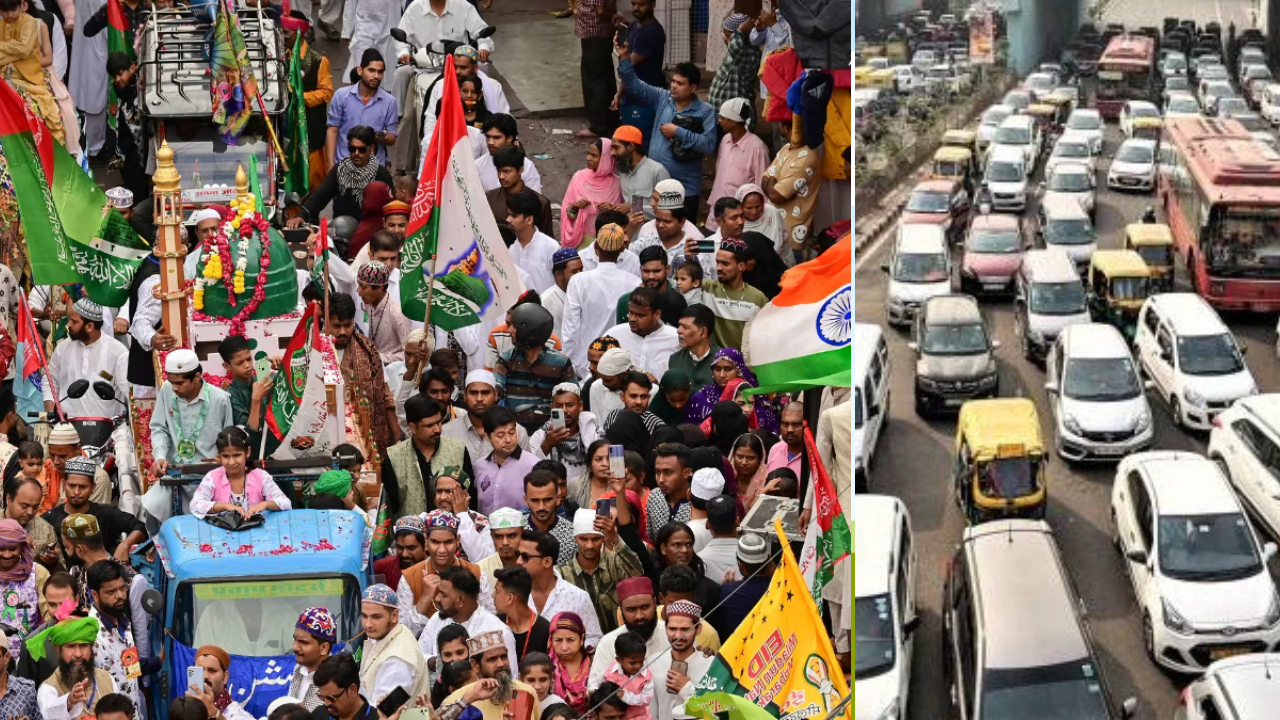
In observance of the Holy Prophet Muhammad’s birthday, a significant religious procession is scheduled to take place on September 5, 2025, in the Central Range area of Delhi. With thousands of devotees expected to participate, the Delhi Traffic Police has proactively issued comprehensive traffic advisories, including route diversions and restrictions, to manage congestion and ensure the safety and convenience of commuters and participants alike.
Large-Scale Procession and Expected Participation
This year’s procession, an important event commemorating Eid Milad-un-Nabi, is anticipated to draw between 3,000 to 3,500 participants initially, with possibilities of the crowd swelling to as many as 10,000 to 12,000 attendees as the event progresses. The procession is a prominent religious occasion celebrated by the Muslim community with prayers, gatherings, and public processions that mark the birth anniversary of Prophet Muhammad (Peace Be Upon Him).
Given the scale of the event and the expected footfall, the authorities are leaving no stone unturned to facilitate the event’s smooth conduct while minimizing traffic disruptions in one of Delhi’s busiest civic zones.
Detailed Procession Route
The procession will commence from Pahari Dheeraj and proceed through several key localities that are central to Old Delhi’s historic and commercial landscape.
The designated procession route includes:
Pahari Dheeraj
Bara Tooti Chowk
Sadar Bazar
Lahori Gate
Khari Baoli Road
Fatehpuri Masjid
Katra Baryan
Lal Kuan
Hauz Qazi
Chawri Bazar
These areas are known for their cultural and commercial significance and are usually bustling with daily activities. Therefore, managing traffic on these routes during the procession is critical.
Traffic Diversions and Control Measures
To effectively handle the increased public movement and reduce traffic congestion, the Delhi Traffic Police has established multiple diversion points along the procession route. These diversion points will help redirect vehicular traffic away from the core procession areas, allowing uninterrupted passage for the crowd while maintaining road usability for other commuters.
Key diversion points to note are:
Azad Market Chowk
DCM Chowk
Sadar Thana Chowk
Naya Bazar
These points will serve as strategic nodes to divert vehicles through alternative routes, easing pressure on the procession path.
Roads Under Traffic
Restrictions Several roads along and around the procession route will have enforced traffic restrictions for the duration of the event. These restrictions may include temporary closures, no-entry zones, or one-way controls to prioritize pedestrian movement and procession safety. Affected stretches include:
Pahari Dheeraj Road
Sadar Road
Qutub Road
Khari Baoli Road
Motorists are advised to avoid these roads during the procession hours to prevent traffic snarls and delays.
Additional Roads
Likely to Experience Congestion The large public turnout is expected to cause traffic congestion on some adjoining arterial roads. These include:
Rani Jhansi Road
Idgah Road
Naya Bazar Road
SPM Marg
Commuters who regularly use these roads should anticipate delays and plan alternative travel routes.
Parking Restrictions and Public Advisory
To facilitate smooth movement and avoid bottlenecks, no parking will be allowed on several critical roads on the day of the procession. Key no-parking roads are:
Bara Hindu Rao
Pahari Dheeraj Road
Sadar Thana Road
Qutub Road
Authorities urge vehicle owners to refrain from parking in these zones ahead of the event to prevent impoundments and traffic disruptions.
Instructions to the Public
The Delhi Traffic Police request the cooperation of all citizens and commuters in abiding by the traffic guidelines and respecting the diversion routes. Residents and office-goers in the affected areas should plan their travel accordingly to avoid inconvenience.
Avoid traveling on or near the procession route during the scheduled timings.
Use alternate routes as recommended by traffic personnel and official advisories.
Stay updated with real-time traffic information through official Delhi Traffic Police social media handles and news updates.
Follow instructions from traffic police officers stationed at various points for both safety and smooth traffic flow.
Importance of the Event
Eid Milad-un-Nabi is one of the most significant religious observances for Muslims worldwide. Marking the birth of the Prophet Muhammad, the day is celebrated with spiritual gatherings, processions, and communal prayers. The event promotes values of peace, unity, and goodwill, drawing people from diverse backgrounds to partake in remembrance and festivity.
Given the cultural and religious sensitivity, the Delhi administration is committed to facilitating an orderly, peaceful, and secure environment for all participants and residents.
Coordination and Safety Measures
Delhi Police have coordinated extensively with community representatives, religious organizations, and local authorities to ensure the procession proceeds without interruption or incident. Safety protocols, crowd management strategies, and emergency services have been put in place.
Additional police personnel will be deployed along the route to manage crowd flow and assist commuters. Ambulance and medical aid teams will be on standby to respond to any unforeseen medical emergencies promptly.
Final Notes and Contact Information
Citizens are encouraged to remain patient and understanding during the event and to cooperate with law enforcement officers for mutual benefit.
For more information or updates related to traffic management during the Prophet’s birthday procession, residents can visit the official Delhi Traffic Police website or follow their verified social media handles.
Including local context and significance of Eid Milad-un-Nabi in Delhi, consider the following points:
- Eid Milad-un-Nabi is deeply rooted in the cultural and religious fabric of Delhi’s Muslim community, celebrated with great fervor especially in historic and old city areas like Old Delhi, which host some of the largest processions. This local tradition underscores a sense of community identity and cultural heritage there.
- The procession route passes through iconic and historical markets and mosques in Delhi, such as Fatehpuri Masjid and Chawri Bazar, places that have been central to Muslim religious life in the city for centuries, adding historic depth and cultural significance to the event.
- The day is not only religious but also social, where families gather for prayers, charity, and communal meals, fostering inter-community harmony and reflecting Delhi’s pluralistic society.
- Including how local authorities collaborate with community leaders to ensure the event’s peaceful observance reflects Delhi’s commitment to religious harmony and public safety.
- Mentioning the involvement of local traders, residents, and volunteers in organizing and managing the event highlights community participation and solidarity.
- This local cultural and social context will help readers appreciate the importance of Eid Milad-un-Nabi beyond its religious significance, connecting them emotionally and culturally to the event.