
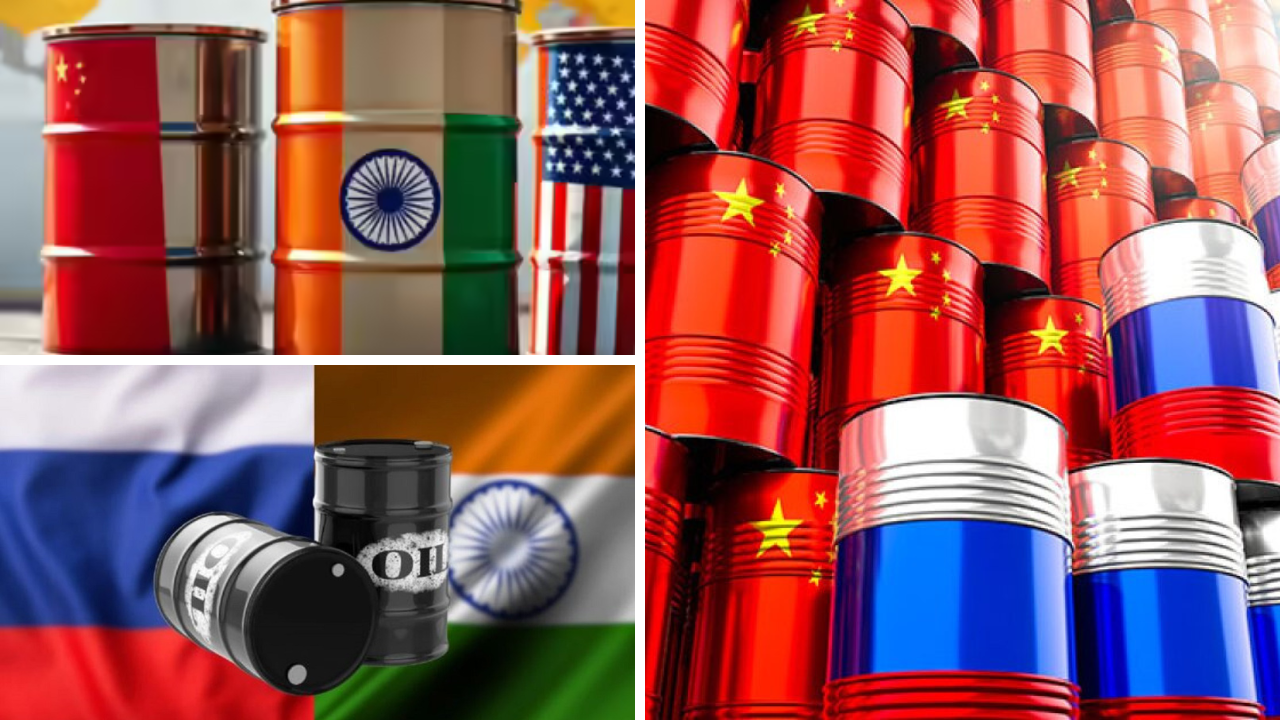
Global energy markets are once again witnessing a realignment as China has significantly increased its imports of Russian Urals crude oil, while India has scaled back its purchases amid mounting tariff-related pressure from the United States. This development underscores the evolving balance of power in the energy trade and highlights how geopolitics is shaping economic and strategic decisions across Asia.
China Doubles Urals Crude Imports
According to the latest trade data, China has more than doubled its intake of Russian Urals crude oil compared to the same period last year. This surge comes despite Western sanctions on Russia’s energy sector and signals Beijing’s determination to deepen its energy cooperation with Moscow.
Energy analysts suggest that discounted Russian crude continues to be highly attractive to Chinese refiners, particularly as global oil prices remain volatile. Russia has offered steep price reductions to key buyers, and China has emerged as the most reliable partner willing to absorb these flows.
“China’s doubling of Urals crude imports demonstrates both opportunism and strategy,” said Dr. Li Wen, an energy economist at the Beijing Institute of International Studies. “On one hand, it allows Chinese refiners to secure cheaper feedstock. On the other, it strengthens the energy corridor with Russia, reducing reliance on Middle Eastern suppliers that remain vulnerable to US influence.”
The move also highlights the growing Sino-Russian energy nexus, which has already expanded through pipelines such as the Power of Siberia gas project and long-term oil supply agreements.
India Pulls Back Amid US Tariff Pressures
In stark contrast, India has sharply reduced its purchases of Russian crude, bowing to heightened tariff and regulatory pressures from Washington. The United States has recently signaled stricter scrutiny on countries importing Russian oil, introducing tariff-related penalties and secondary sanctions mechanisms that complicate trade financing and shipping.
India, the world’s third-largest oil importer, had previously emerged as one of the biggest buyers of discounted Russian crude following the Ukraine conflict. However, this position is increasingly difficult to sustain.
“New Delhi has been navigating a delicate balance between energy security and diplomatic relations with Washington,” explained Professor Anil Mehta of Jawaharlal Nehru University. “While Russian crude offered cost savings, the long-term risk of jeopardizing India-US strategic and trade relations has outweighed short-term economic benefits.”
Reports indicate that Indian refiners are shifting their procurement mix back toward Middle Eastern suppliers, including Iraq, Saudi Arabia, and the United Arab Emirates, while also increasing spot purchases from Africa to diversify supply lines.
Strategic and Geopolitical Implications
The divergence in China and India’s approaches underscores contrasting geopolitical priorities.
- China is deepening its energy and economic partnership with Russia, thereby reinforcing a strategic bloc that seeks to counterbalance Western dominance in global trade.
- India, on the other hand, appears to be prioritizing long-term ties with the US and its allies, particularly in technology, defense, and trade, even at the cost of higher crude import bills.
For Russia, the shift presents both opportunities and challenges. While China’s doubling of imports helps offset revenue losses from reduced Western markets, India’s retreat underscores the limitations of Moscow’s pivot-to-Asia strategy.
“The new energy alignment shows that Russia is increasingly dependent on Beijing, making China the senior partner in their bilateral trade,” observed Dr. Natalia Petrova, a Moscow-based energy analyst. “India’s reduction of purchases is a setback, but it also reflects the broader geopolitical reality where Moscow has fewer options outside of China.”
Market Reactions
Global oil markets have reacted cautiously to the shifting trade flows. Analysts note that the reduction in Indian imports from Russia is likely to tighten demand for Middle Eastern crude, raising premiums in the Asian market. Conversely, China’s increased purchases may keep Urals crude prices relatively stable despite broader sanctions pressure.
Shipping and insurance companies are also closely monitoring the situation, as the US has hinted at expanding restrictions on vessels transporting sanctioned Russian oil. This could add to costs and complicate logistics for countries maintaining ties with Moscow.
The evolving dynamics of the China–Russia–India energy triangle raise important questions for global trade and security:
- Will India’s reduction of Russian crude imports accelerate its energy diversification strategy, including renewables and US LNG?
- Can China sustain its increasing reliance on Russian oil without provoking harsher sanctions from the West?
- How will Russia balance its growing dependence on China with the need to diversify its customer base?
For policymakers and businesses, the message is clear: energy trade is no longer just about economics but is deeply intertwined with diplomacy and strategic alignment.
As China doubles down on Russian crude and India scales back under US pressure, the Asian energy landscape is undergoing a profound transformation. The interplay of geopolitics, economics, and national security will continue to shape how major powers secure their energy needs.
In the coming months, the world will be watching closely to see whether these trends solidify into long-term strategies or shift again under the weight of new geopolitical realities.