
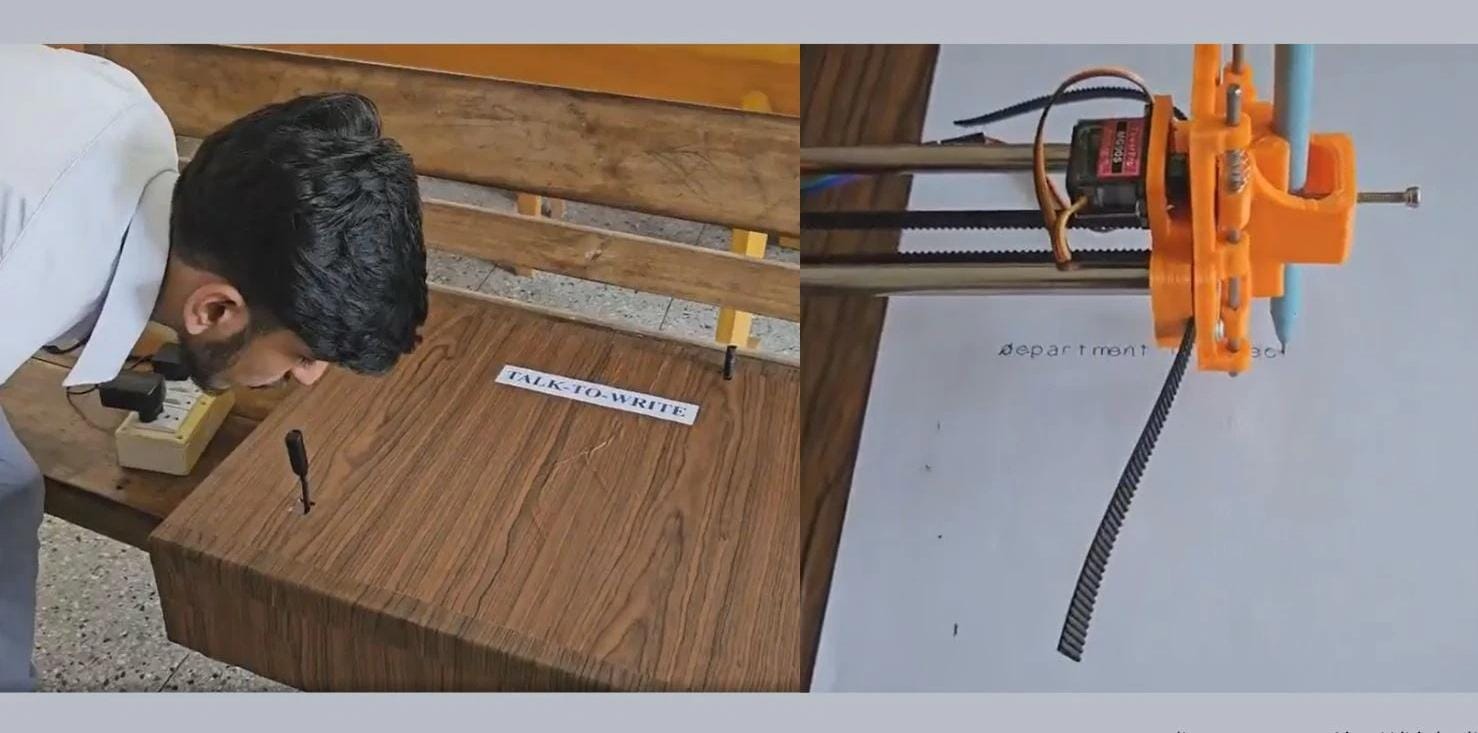
Alappuzha, Kerala — August 2025 — In a remarkable breakthrough combining artificial intelligence, embedded systems, and a passion for social impact, Ajay H, an Electronics and Communication Engineering graduate from Kerala, has developed an innovative device called “Talk-to-Write” — a tool that converts spoken words into handwritten text.
Designed to aid individuals who are unable to write due to physical disabilities or neurological conditions, the device is being lauded as a game-changer in assistive technology and a proud example of India’s growing innovation ecosystem.
A Voice That Writes
“Talk-to-Write” is powered by a unique combination of Raspberry Pi, Arduino GRBL, and Python programming, enabling it to listen to voice commands and write them line-by-line on an A4 paper. The heart of the system lies in its use of a CNC pen plotter, which acts like a digital hand — replicating the handwriting function with precision, accuracy, and elegance.
“Imagine being unable to hold a pen, yet still being able to write a letter in your own voice,” said Ajay. “That’s the vision I had — to give back the joy of writing to those who miss it most.”
Unveiled at Ente Keralam Expo 2025
Ajay presented the device at the prestigious Ente Keralam Expo 2025, held in Alappuzha, where it received widespread appreciation from attendees, innovators, and government officials alike. Demonstrations of the device in action drew large crowds and sparked conversations around how AI can transform the future of accessible education, communication, and personal expression.
Attendees were visibly moved by the simplicity and power of the invention. “This is not just a product — it’s a lifeline for many,” said one onlooker at the expo.
Inclusive Tech with a Purpose
The device has been designed with affordability, scalability, and real-world impact in mind. By combining open-source hardware with efficient programming, Ajay aims to make this solution accessible for NGOs, schools for differently-abled children, and rehabilitation centers across India.
Ajay’s vision is rooted in empathy. “I didn’t just want to build a device. I wanted to build dignity. I wanted people to feel seen, heard, and empowered through technology,” he said in a recent LinkedIn post that has gone viral among the Indian tech community.
Make in India in Action
This innovation reflects the true spirit of the ‘Make in India’ initiative, where homegrown talent is building solutions to local and global challenges. Ajay’s project not only champions self-reliance and grassroots innovation but also sets a benchmark for how engineering can be harnessed for social good.
Industry experts have praised the initiative for its potential integration into speech therapy programs, AI-driven learning tools, and even post-stroke rehabilitation efforts.
What’s Next for ‘Talk-to-Write’?
Ajay plans to collaborate with assistive tech startups, academic institutions, and disability advocacy groups to refine the product, collect feedback, and scale manufacturing. The next versions aim to support multiple languages, include Bluetooth and cloud syncing, and even replicate personalized handwriting styles using ML training.
Call to Action
Ajay invites collaborators, researchers, and NGOs to reach out and help bring “Talk-to-Write” to those who need it most. His goal is simple yet powerful — to ensure that no one loses their voice, even if they cannot write with their hands.
About the Innovator:
Ajay H is an electronics and communication engineer from Kerala with a strong interest in AI, embedded systems, and social innovation. Through his passion for inclusive technology, he hopes to build tools that make the world more accessible — one innovation at a time.