
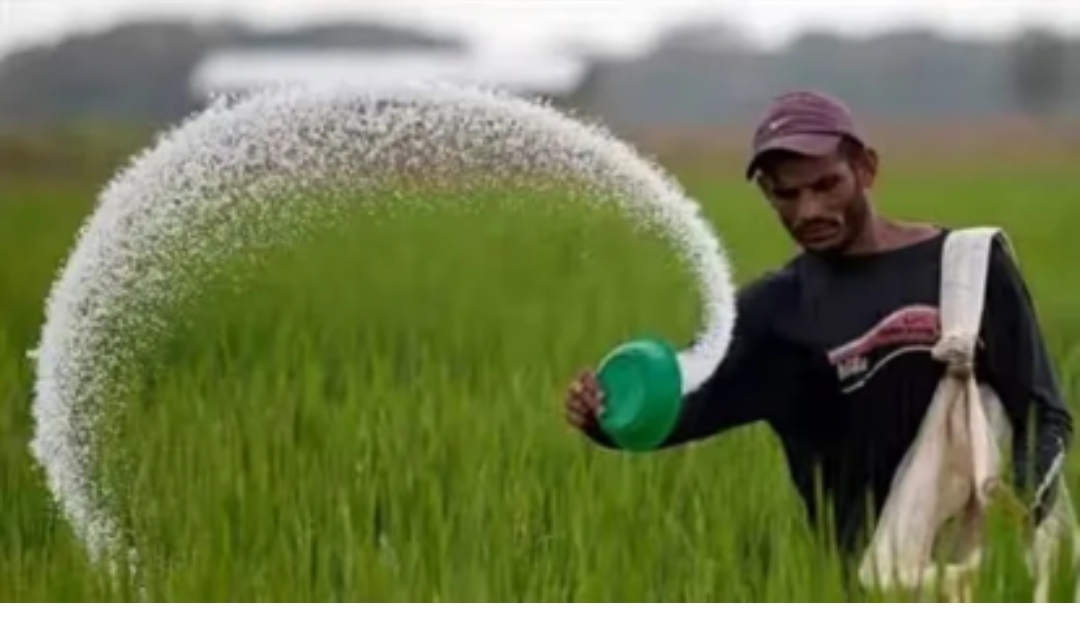
Fertilizer subsidy, which stood at Rs 81,124.33 crore in 2019-20, increased to Rs 1,27,921.74 crore in 2020-21, Rs 1,53,758.10 crore in 2021-22 and Rs 2,51,339 crore .35 crore by 2022-23, while it is editorial budget. at Rs 1,75,099.92 crore for the current financial year.
According to industry data, erratic monsoons could impact tractor sales, which fell 3.8% during April to October 2023 compared to April to October 2022 (from June, 2023). 11 lakh to 5.88 lakh units). However, fertilizer sales are increasing, with corresponding annual growth of 7.5% for urea, 17.9% for diammonium phosphate (DAP) and 6% for potash (MOP). . ), 5.4%. for simple superphosphate and 22.7% for complexes containing variable proportions of nitrogen (N), phosphorus (P), potassium (K) and sulfur (S). “Sales this kharif season have been good (sowing from May to July and harvesting from September to October), but we are not sure whether it will translate to actual consumption in the fields. , to what extent?
A clear picture will emerge only in March, towards the end of the rabi season (sowing from October to December and harvesting from March to April),” N. Suresh Krishnan, president, Fertilizer Association of India (FAI) .
Fertilizer sales increased despite erratic monsoon
Fertilizer subsidy, which stood at Rs 81,124.33 crore in 2019-20, increased to Rs 1,27,921.74 crore in 2020-21, Rs 1,53,758.10 crore in 2021-22 and 2 at Rs 1,75,099 crore. Rs.92 crore for the current financial year.
The prices of imported ammonia and phosphoric acid (intermediate for DAP) also reached 1,575 USD/ton in April 2022 and 1,715 USD/ton in July-September 2022, respectively. According to industry data, erratic monsoons could impact tractor sales, which fell 3.8% during April to October 2023 compared to April to October 2022 (from June, 2023). 11 lakh to 5.88 lakh units). However, fertilizer sales are increasing, with corresponding annual growth of 7.5% for urea, 17.9% for diammonium phosphate (DAP) and 6% for potash (MOP). . ), 5.4%. for simple superphosphate and 22.7% for complexes containing variable proportions of nitrogen (N), phosphorus (P), potassium (K) and sulfur (S). “Sales this kharif season have been good (sowing from May to July and harvesting from September to October), but we are not sure whether it will translate to actual consumption in the fields. , to what extent? N. Suresh Krishnan, president of the Fertilizer Association of India (FAI), said: “A clear picture will emerge only in March, near the end of the rabi season (sowing from October to December and harvesting from March to April). Express delivery in India.
This year’s southwest monsoon is erratic. Although precipitation was 5.6% below the historical average (technically “normal”) for the entire season (June-September), it was poorly distributed over time. (shortage in June and August) and spatially (below average in eastern Uttar Pradesh, Bihar). , Jharkhand, West Bengal, Assam, Karnataka, Western Maharashtra and Marathwada). The northeast monsoon season (October-December) also recorded an average light rainfall to date of 11.5%.
Krishnan points out that international fertilizer and raw material prices have fluctuated significantly over the past year and beyond.
DAP import spot prices, which peaked between $950 and $960 per ton in July 2022, fell to $440 a year later, before rising to the current level of $595. Imported ammonia and phosphoric acid (intermediate for DAP) prices also reached $1,575/tonne in April 2022 and $1,715/tonne in July-September 2022, respectively. These have fallen to $285 and 875 USD in July-August 2023, then only rebounded to 600 USD and 985 USD respectively.
Agronomists consider the ideal N:P:K fertilization ratio for Indian soil to be 4:2:1. In contrast, the actual ratio during the 2023 kharif season is pegged at 10.9:4.9:1. The industry attributes the nutritional imbalance to higher MRP of potassium-containing fertilizers, leading to sales of Sales of their products decreased.
For more information visit at https://happenrecently.com/zepto/?amp=1